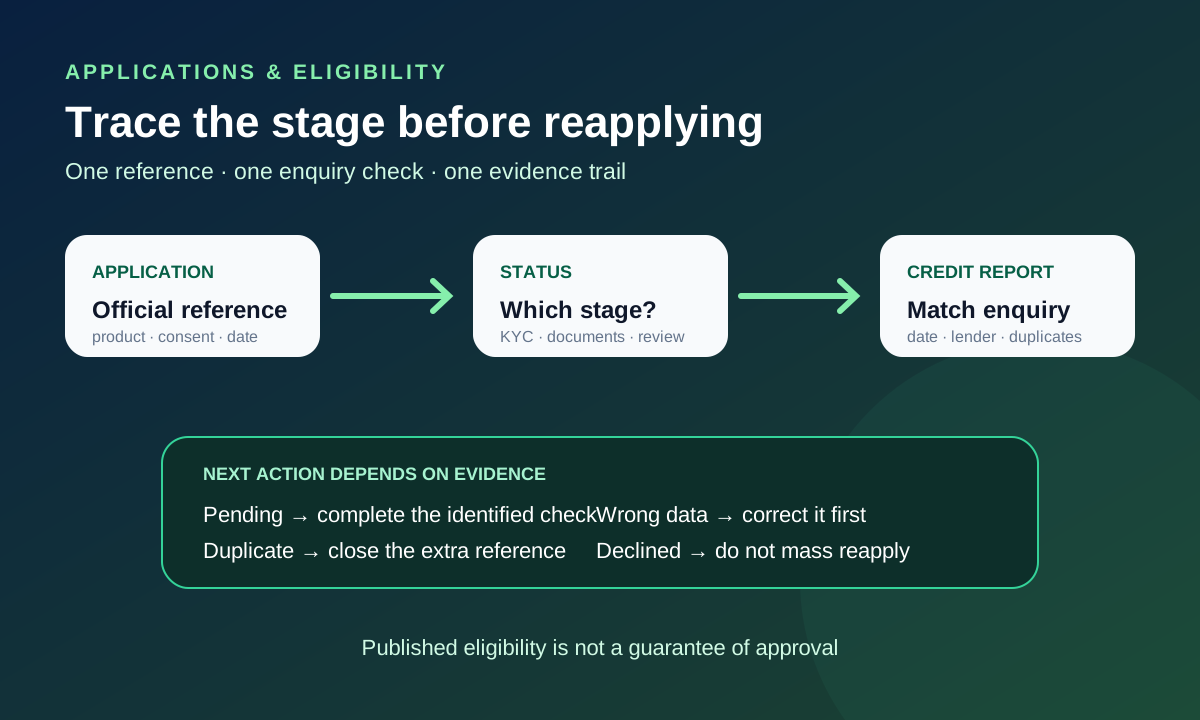
A credit-card application can remain pending because a document is missing, identity details do not match, a verification call failed, the application is duplicated or the issuer has not completed underwriting. A decline is different: the issuer completed enough of its process to decide not to extend the requested credit at that time.
Neither status tells you, by itself, that your credit score is “bad”. Nor does it justify submitting the same application repeatedly. The useful next step is to identify the application, the stage reached and the data the issuer used.
Start with the official application reference
Use the issuer’s official website, app, branch or published phone number. Search by the application reference sent when you applied—not by links in unsolicited messages.
| Status wording | What it may mean | Useful question to the issuer |
|---|---|---|
| Submitted/received | Application exists but review may not have begun | What is the reference and normal next step? |
| Pending documents | A required record is absent or unreadable | Which document and secure upload channel? |
| Verification pending | Employment, address, identity or contact check incomplete | Which verification attempt failed? |
| Under review | Automated/manual underwriting not complete | Is any action required from me? |
| Declined/not approved | Issuer chose not to approve under current policy | Can you identify data errors or incomplete verification? |
| Duplicate | Another recent application exists | Which reference remains active? |
| No application found | Submission may have failed or used another channel | Was a bureau enquiry made? |
Do not pay an individual who promises to change an internal status or guarantee approval. Fees, deposits and documentation should be confirmed through the issuer’s official process.
Confirm what you consented to
RBI’s credit-card FAQ states that unsolicited cards are prohibited and prior explicit consent is required. An application is also not permission for an agent to change the product, create multiple submissions or activate a card for you.
Keep:
- the application form or screen summary;
- selected card/product and network choice;
- consent text and timestamp;
- application reference;
- submitted income/employment category;
- document-upload acknowledgement;
- issuer communications.
If a card arrives that you did not request, do not activate it merely to inspect the account. Raise a written complaint and use the unsolicited-card process described in the RBI FAQ.
Check your credit report for enquiries and data errors
A lender enquiry records that an institution accessed your credit file for an application. It is not an approved account and is not proof that you owe money.
Obtain your report and check:
- whether the issuer enquiry appears;
- whether its date matches your application;
- whether duplicate or unknown enquiries exist;
- whether existing account balances, overdue status and ownership are accurate;
- whether recently closed accounts are updated.
CIBIL’s official enquiry page lets a consumer initiate a dispute for an enquiry they do not recognise. CIBIL also explains that the reporting lender must verify source information; a bureau cannot simply rewrite lender-supplied data without confirmation.
Do not dispute a genuine enquiry just because the application was declined. Challenge it only if it is unauthorised, duplicated incorrectly or otherwise inaccurate.
Correct data before applying again
If a report contains a wrong overdue, unknown account, identity mismatch or unupdated closure, file a precise dispute with the bureau and reporting institution. Our credit-report correction checklist explains the evidence and 30-calendar-day compensation framework.
Wait until the corrected field appears in the report. A “dispute closed” email is not enough if the underlying account remains wrong.
If the report is accurate, do not manufacture a correction. Focus on the issuer’s published eligibility and your existing obligations.
Review the application itself
Small inconsistencies can stop automated verification:
| Field | Common mismatch to check |
|---|---|
| Name | Initials, order or spelling differs across PAN, bureau and bank records |
| Date of birth | Typo or mismatched source document |
| Address | Current, office and KYC addresses mixed |
| Employment | Salaried/self-employed category selected incorrectly |
| Income | Monthly versus annual figure or unsupported source |
| Phone/email | Not accessible for OTP or verification |
| Existing relationship | Customer ID or prefilled data is stale |
| PAN | Transposition or another person’s identifier |
Use accurate, supportable information. Do not inflate income or change employment merely to satisfy an online threshold. If a correction is needed, ask whether the issuer can update the active application rather than opening a duplicate.
Why immediate reapplication can be unhelpful
A second application made before the first one is resolved can:
- create duplicate records or another enquiry;
- route to the same unchanged underwriting policy;
- restart document checks;
- make it harder to identify which reference is valid;
- expose you to fraudulent “approval assistance”.
There is no universal waiting period that guarantees a different result. Ask the issuer whether it has a reapplication interval, resolve known errors and apply again only when something relevant has changed or the issuer confirms the earlier application is closed.
Pending for too long: a clean escalation
Write to the issuer with:
- application reference and submission date;
- current official status;
- dates of document uploads or verification attempts;
- whether an enquiry appears;
- the precise action requested: status, missing requirement, closure of duplicate, or correction of an unauthorised application.
Do not send identity documents through public social media. Use an authenticated upload or official email channel after verifying the destination.
RBI’s current 2025 card directions consolidate conduct requirements for covered commercial-bank issuers. Complaint escalation depends on the issuer type and the response received; identify the correct regulated entity before citing a document.
If approved with a different card or limit
Approval for another product is a new decision to review, not automatically a better outcome. Check:
- exact product and annual fee;
- credit limit and cash limit;
- network and benefits;
- whether you explicitly consented to the substitution;
- whether activating it closes or duplicates another application.
Do not activate first and investigate later. Ask for written terms and decline a product you do not want through the issuer’s process.
Frequently asked questions
Does pending mean I will be approved?
No. It means the process has not reached a final visible decision or requires another step.
Does decline mean my credit score fell?
Not necessarily. Underwriting uses more than a score, and a decline does not itself reveal the reason. Check the report for the enquiry and accurate account data.
Can customer support tell me the exact underwriting formula?
Usually not. It can identify incomplete verification, duplicate applications and process status, but internal risk policy may not be disclosed.
Should I apply through another agent immediately?
No. First close or resolve the existing reference and verify the official application route. Another agent can create a duplicate submission.
What if I see an enquiry but never applied?
Contact the named institution using official details, secure your identity/accounts as appropriate and dispute the enquiry with the bureau. Preserve the report and complaint numbers.
Can I force approval after correcting a report?
No. Correct data ensures the decision uses accurate information; it does not require the issuer to approve credit.
The practical answer
Trace the application before repeating it. Verify consent, the official reference, missing documents, bureau enquiries and source data. Correct actual errors, close duplicates and reapply only when the earlier process is complete and the information being assessed is accurate.
Approval remains the issuer’s decision. The goal of this checklist is not to promise a result; it is to prevent an unresolved process or wrong data from being mistaken for a reason to submit more applications.
RBI and CIBIL materials checked on 31 July 2026. Source material was paraphrased; issuer eligibility and underwriting processes can change.