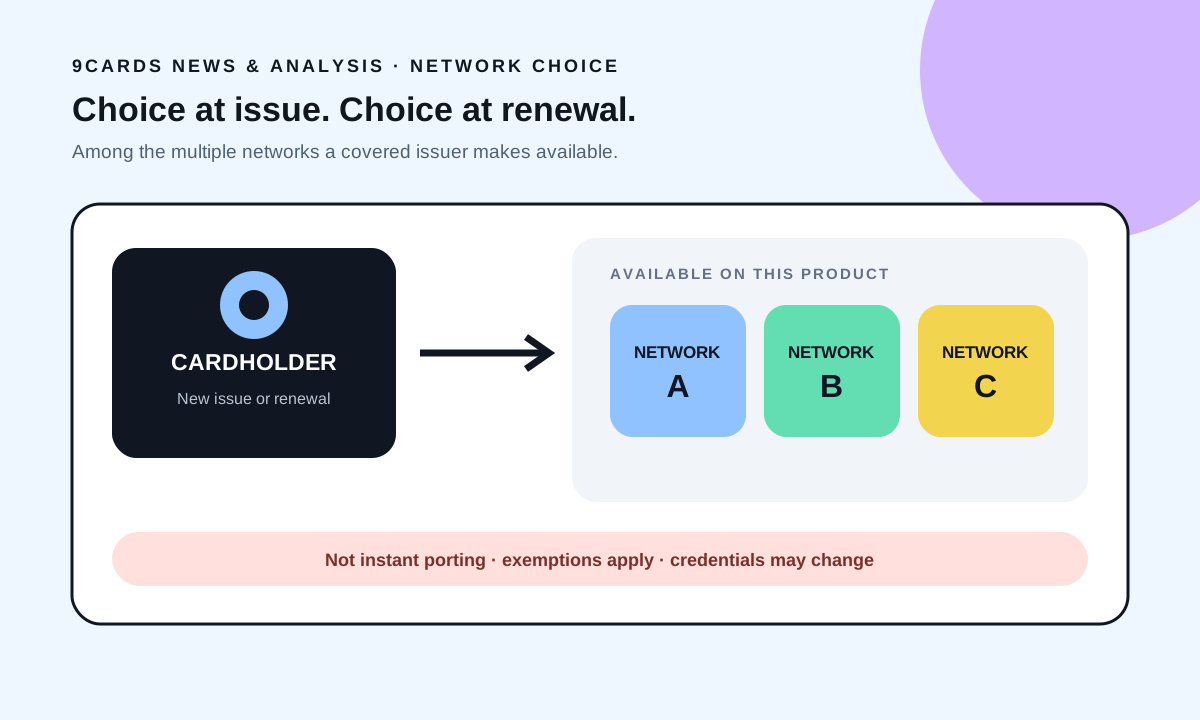
RBI's card-network-choice rule changed who gets a say in the network printed on a credit card. For covered issuers, network selection can no longer be only the outcome of a restrictive bilateral arrangement. Eligible customers must be offered a choice from multiple available card networks when a new card is issued, while existing cardholders receive the choice at the time of their next renewal.
The rule is narrower than “port your Visa, Mastercard or RuPay card whenever you want”. It applies to credit cards, contains issuer exemptions, and gives a choice among the networks the issuer makes available—not necessarily every authorised network in India. A switch can also require a newly issued card credential rather than a software toggle on the existing plastic.
The RBI circular and its effective date
RBI's final circular, Arrangements with Card Networks for issue of Credit Cards, is dated 5 March 2024 and was published in March 2024. Its customer-choice requirement took effect six months later, in September 2024. The restriction on agreements that prevent an issuer from using other networks is part of the same policy direction.
| Part of the rule | Requirement | Practical meaning |
|---|---|---|
| Issuer-network agreements | Issuer must not enter an arrangement that restrains it from using other card networks | Exclusive or restrictive tie-ups cannot defeat network competition |
| New credit-card issue | Covered issuer offers eligible customer a choice from multiple networks | Choice should be part of issuance, subject to product availability |
| Existing credit card | Choice is provided at the next renewal | No promise of an immediate mid-validity switch |
| Existing agreements | Issuers review them when amended or renewed | Transition follows contractual milestones |
| Small-issuer exemption | Customer-choice direction does not apply where active cards are 10 lakh or fewer | Not every issuer is in scope |
| Own-network exemption | Issuers using their own authorised network are outside the stated choice requirement | A separate statutory exception |
The final rule focuses on credit cards. Earlier discussion or draft coverage of debit and prepaid cards should not be mistaken for the scope of the final circular.
What “choice from multiple networks” means
A network carries authorisation, clearing and settlement messages between the acquiring and issuing sides of a card transaction. The network logo can affect acceptance reach, routing features and compatibility with network-specific services. The issuer still owns the credit relationship: application approval, limit, bill, interest, rewards and service remain issuer matters.
The RBI rule does not say that every cardholder can demand every network. The covered issuer must offer a choice from the multiple networks it supports. Product design and technical certification matter. A particular premium, co-branded or legacy product may not exist on every rail.
A useful question at application is therefore:
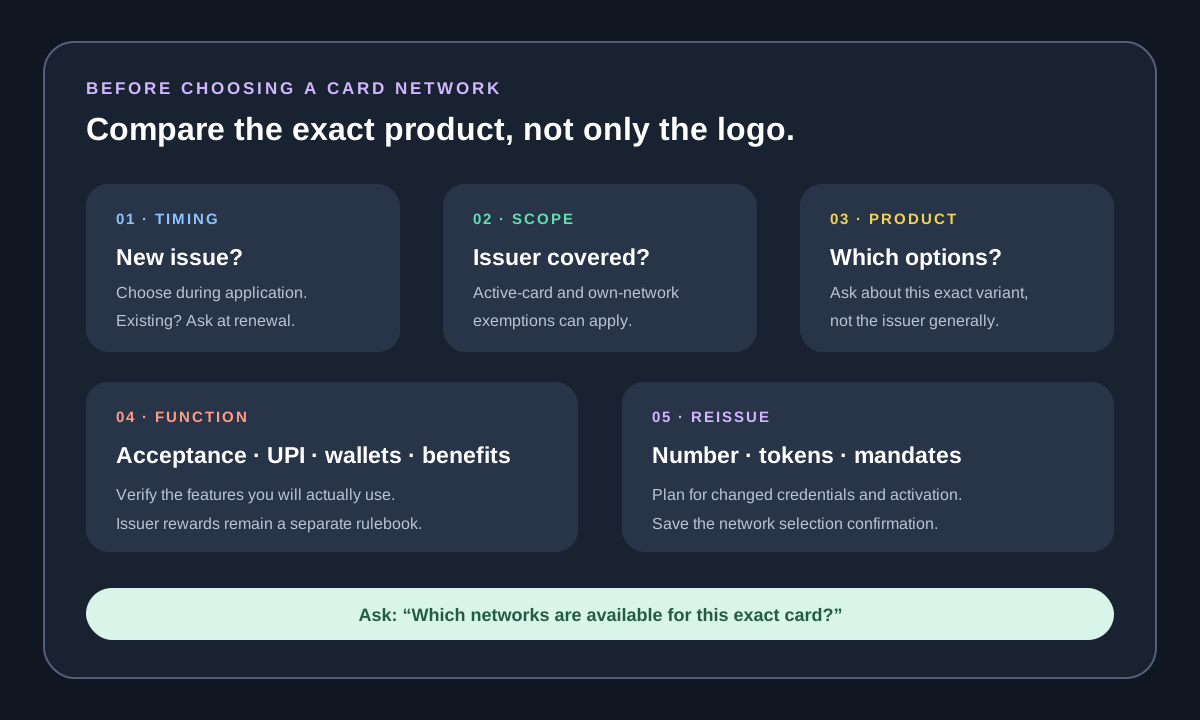
Which networks are available for this exact card variant, and where in the application can I record my choice?
A generic list of networks used somewhere by the issuer is not an answer about the product being offered.
New issuance versus renewal
The timing is deliberately different.
Applying for a new card
A covered issuer should present the eligible network options during issuance. Save the application screen or written selection. When the card arrives, check that its logo matches the chosen network before activating it.
If the issuer substitutes another network, ask whether the selected network was unavailable for that product and request the consent/application record. Do not share the full card number in a complaint.
Holding an existing card
The circular places the choice at the next renewal. Renewal is normally linked to expiry and replacement of the card credential. The rule does not require an issuer to rebuild every valid card in the middle of its term merely because the holder asks.
Ask several weeks before expiry:
- which networks are available on renewal;
- whether the card variant, fee and benefits stay the same;
- whether the card number changes;
- what happens to tokens, mandates and saved credentials;
- when the old card stops working;
- whether the replacement needs fresh activation.
A network change is operationally closer to reissuance than to changing a billing date.
Who is exempt?
The customer-choice instruction does not apply to a credit-card issuer whose number of active cards is 10 lakh or fewer. It also does not apply to an issuer that issues credit cards on its own authorised card network.
These are issuer-level exemptions, not cardholder spending thresholds. A small issuer can lawfully have no network-choice flow under this circular even if a larger issuer does. The active-card count can change over time, so an old article's scope assessment may become stale.
The non-restrictive-agreement policy and the customer-choice requirement should also not be collapsed into one sentence. The circular sets obligations around issuer arrangements and then specifies applicability for the choice direction.
What choosing a network can change
The network matters, but it does not determine everything printed in a card advertisement.
| Feature | Mainly determined by | What to verify after choosing |
|---|---|---|
| Credit limit and underwriting | Issuer | Approval and sanctioned limit |
| Interest, annual fee and billing | Issuer/card terms | MITC and schedule of charges |
| Base and bonus rewards | Issuer programme, sometimes network offer | Current reward terms for exact variant |
| Domestic/international acceptance | Network plus merchant acceptance | Places and channels you actually use |
| Credit card on UPI | Network/product/issuer/app support | Current linking and merchant-payment eligibility |
| Contactless and tokenisation | Issuer, network, wallet and device support | Supported wallet/device list |
| Lounge or other network benefit | Product and benefit programme | Enrolment, visits, spend gates and validity |
| Dispute handling | Issuer process under network/regulatory rules | Issuer contact and evidence requirements |
A RuPay network option can be relevant for merchant UPI payments when the issuer, card and UPI app support the feature. Our RuPay credit-card-on-UPI guide explains why that still does not enable person-to-person transfers.
International acceptance cannot be reduced to one universal ranking. It depends on the countries, websites and merchants you use, plus whether international transactions are enabled. A network with a broad global footprint can still be declined by an individual merchant or issuer control.
What network choice does not change
Changing the network does not automatically:
- improve a credit score;
- erase card history or dues;
- increase the credit limit;
- make the annual fee disappear;
- preserve every old reward or offer;
- transfer standing instructions without action;
- guarantee lounge access;
- enable every UPI QR;
- convert one issuer's card into another issuer's product.
If the card number changes, merchant tokens and recurring mandates may need to be updated. RBI's choice rule addresses network availability; it does not promise seamless migration of every subscription.
How to compare network options neutrally
Start with the feature you actually need rather than a logo preference.
- List your acceptance needs. Domestic stores, specific international destinations, online merchants and recurring payments.
- Check network-specific functionality. UPI linking, tokenised wallet support or a benefit you will genuinely use.
- Compare the exact card terms. Ask whether reward rates, fees or benefits differ by network variant.
- Check replacement consequences. Card number, expiry, CVV, mandates, tokens and autopay.
- Save the chosen option. Retain the application or renewal selection and the issuer confirmation.
Do not choose solely for a temporary network campaign unless the underlying card works for you after the campaign ends. Network offers and issuer rewards can have different eligibility, caps and dates.
If the issuer does not offer a choice
First determine whether the issuer is covered. Ask the issuer to state:
- its available networks for that card variant;
- whether the card is a new issue or renewal;
- whether it relies on the active-card-count or own-network exemption;
- where the selection was captured;
- what resolution it offers if the wrong network was issued.
Raise the issue through the issuer's grievance officer with the application evidence and the RBI circular. If the complaint remains unresolved under the applicable process, consider the RBI complaint route. A complaint that ignores an exemption or demands an unsupported network will be weaker than one tied to the actual rule.
Interaction with co-branded cards
A co-branded card can involve an issuer, a brand partner and a card network. The issuer remains responsible for issuance and billing, while the partner's programme and the network can shape product features. Technical or commercial design can mean only certain network variants exist.
The choice rule does not necessarily require a co-branded product to be recreated on every network. Ask which multiple options are available for the exact issuance. If only one network is offered, the issuer should be able to explain the product and scope position rather than presenting a network as a cardholder choice when none was given.
Frequently asked questions
Can I change my credit-card network today?
For an existing card, the circular places choice at the next renewal. An issuer may voluntarily offer earlier reissuance, but that is not the same as an unconditional regulatory right to instant switching.
Must every issuer offer Visa, Mastercard and RuPay together?
No. Covered issuers offer a choice from multiple networks they make available. The rule does not require every authorised network on every product.
Does the rule apply to debit cards?
The final March 2024 circular is about issue of credit cards. Do not apply draft proposals or commentary about debit/prepaid cards to the final scope.
Are small credit-card issuers exempt?
The customer-choice direction exempts issuers with 10 lakh or fewer active cards. Check the issuer's current scope rather than relying on an old count.
Will changing network close my credit account?
Normally it is a card reissuance within the issuer relationship, not repayment and closure of the account. Confirm how the issuer reports and migrates the card.
Which network is best?
There is no universal answer. Compare acceptance where you spend, required features, exact card benefits and reissuance consequences. The issuer's fees and rewards can matter more than the logo.
The practical answer
RBI's rule opened network selection for eligible customers of covered issuers and restricted arrangements that shut other networks out. It created meaningful choice, but not unlimited porting.
At a new application, ask for the networks available on the exact product and record your selection. For an existing card, raise the question before renewal and plan for changed credentials. Then compare the actual functionality and terms—not assumptions attached to a logo.
RBI materials checked on 31 July 2026. Issuer scope, active-card counts, supported network variants and network benefits can change.