Almost every complaint about a credit card fee comes down to the same thing. Someone was told the card was free, and it was free, right up until the first anniversary. Nothing was hidden. The information was on the fee page the whole time, arranged in a way that made it easy to read the good number and miss the condition attached to it.
A fee page is short. It is worth ten minutes before you apply, and this is what to do with them.
The four numbers, and how they differ
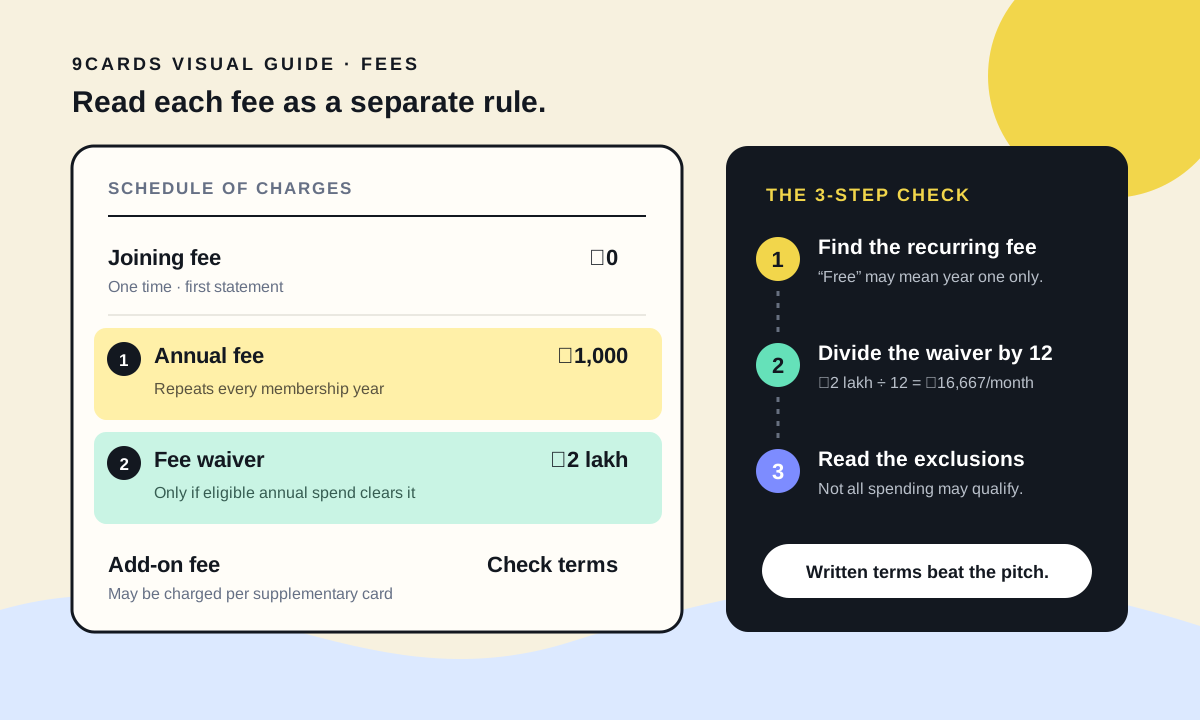
The block of text labelled "fees and charges" usually contains four separate things. They are independent of each other, and confusing any two of them is where the trouble starts.
| Line on the fee page | What it actually is | When it hits your account |
|---|---|---|
| Joining fee | A one-time charge for opening the card | On your first statement |
| Annual or renewal fee | A recurring charge for each membership year | On the anniversary statement, every year |
| Fee waiver condition | The spend that cancels the renewal fee | Assessed across the membership year |
| Add-on card fee | A charge per supplementary card | With the renewal fee, where applicable |
The two that get conflated are the joining fee and the annual fee. "No joining fee" is a statement about the first statement and nothing else. A card can carry no joining fee and a substantial annual fee, and that combination is common, because it makes the card easy to sell and the cost arrives long after the conversation that sold it.
The phrase to look for is lifetime free. That means no annual fee under the card's terms, not merely none in the first year. If a card was described to you as lifetime free, check that the phrase appears in the written terms rather than only in the pitch.
The waiver is a spend target, not a promise
Most fee-bearing cards will waive the renewal fee if you spend enough during the membership year. This is genuinely useful and it is also where most of the misunderstanding lives, because a large annual threshold sounds achievable in a way that the same number divided by twelve does not.
Divide it. That is the entire trick.
| Illustrative annual fee | Illustrative waiver threshold | Qualifying spend needed per month |
|---|---|---|
| ₹500 | ₹1,00,000 | ₹8,334 |
| ₹1,000 | ₹2,00,000 | ₹16,667 |
| ₹2,500 | ₹3,00,000 | ₹25,000 |
| ₹5,000 | ₹5,00,000 | ₹41,667 |
Those are illustrative bands rather than any particular card's terms, but they are the shape the market tends to take. Once the number is monthly, you can compare it against what you actually put on a card, which is a question you can answer honestly. An annual figure invites optimism; a monthly figure does not.
There is a second thing the monthly view reveals. If the threshold sits slightly above your natural spending, the card will quietly encourage you to close the gap — and manufacturing spending to avoid a fee costs more than the fee. A card whose waiver you will comfortably clear is worth more than one whose waiver you will chase.
"Qualifying spend" is doing a lot of work in that sentence
The waiver is measured on qualifying spend, and that phrase excludes more than most people assume. The exclusions vary between issuers, but the pattern is consistent enough to be useful.
| Spend type | Usually counts towards the waiver | Worth knowing |
|---|---|---|
| Ordinary retail purchases | Yes | The base case |
| Utility and telecom bills | Usually | Increasingly excluded on some cards |
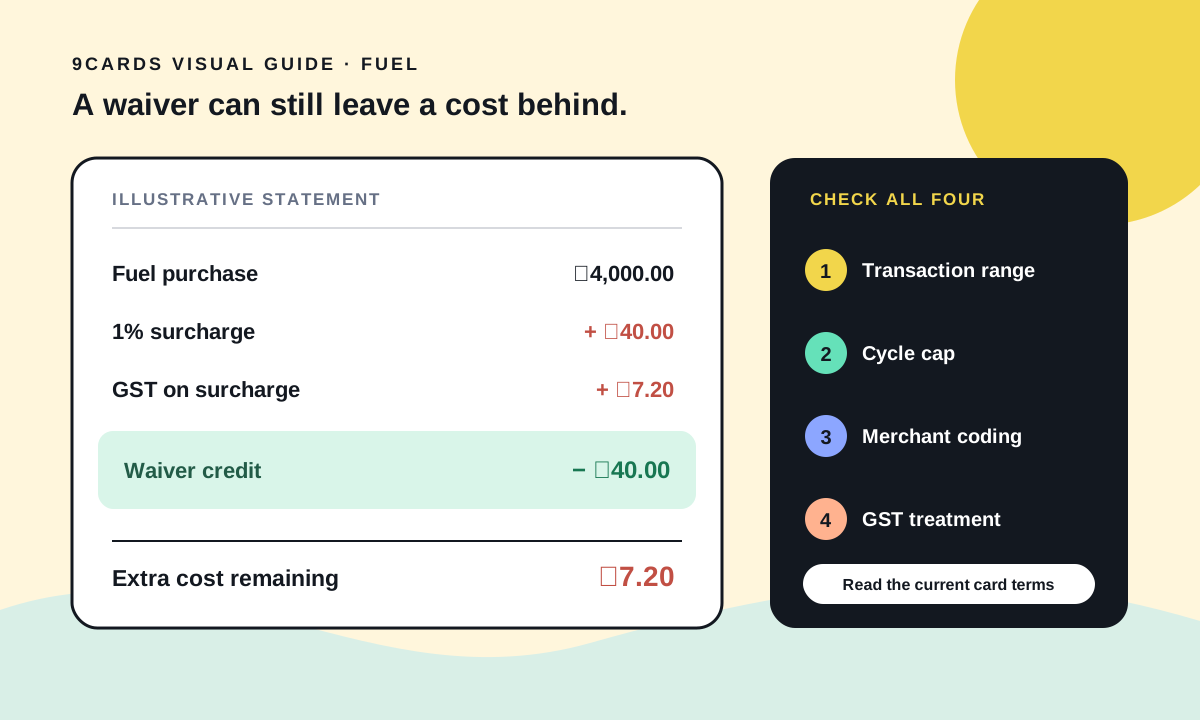
| Fuel | Often not | Commonly excluded, the same way it is excluded from earning |
| Rent | Rarely | Frequently excluded, and often surcharged as well |
| Wallet loads and gift cards | No | Treated as cash equivalents |
| EMI conversions | Usually not | Converting can remove the original transaction |
| Cash withdrawals | No | Never qualifying, and expensive for other reasons |
| Refunds and reversals | Reduce the total | The measure is net spend, not gross |
Two of those rows matter more than the others. If you were counting on fuel or rent to reach a threshold, check the terms specifically, because those are the two most likely to be excluded and the two most likely to be large.
The membership year is not the financial year
Your membership year runs from your card anniversary, not from April, and not from January. If your card was issued in September, your waiver is measured September to September.
This produces a specific and avoidable mistake. Someone checks their spending in March, sees a comfortable total, and assumes the fee is covered — when the year they should be looking at ends in September and the spending they are counting belongs partly to the previous one. If you are relying on a waiver, find the anniversary date and count from there.
Tax is charged on the fee
Fees attract GST, which is applied on top of the fee rather than included in the advertised figure. A fee quoted as ₹1,000 costs more than ₹1,000 once tax is added. The same applies to most other charges on the card, including the forex markup and late payment fees. The current rate is in the fee schedule; the point here is simply that the advertised number is not the final number.
What a good check looks like
Before applying, find the issuer's own fee page — not a comparison site, including this one — and write down five things:
- The joining fee, and whether it is genuinely nil or merely waived on a current offer.
- The annual fee, and the year it starts.
- The waiver threshold, divided by twelve.
- Whether fuel, rent and utilities count towards that threshold.
- The anniversary month, so you know when the year turns.
If those five are comfortable, the fee page has no surprises left in it. If any of them makes you hesitate, that hesitation is the useful output of the exercise, and it is a great deal cheaper before the application than after it.
None of this is a reason to avoid fee-bearing cards. A card whose benefits exceed its fee is worth paying for, and plenty of them do. It is a reason to know which of the four numbers you are looking at.