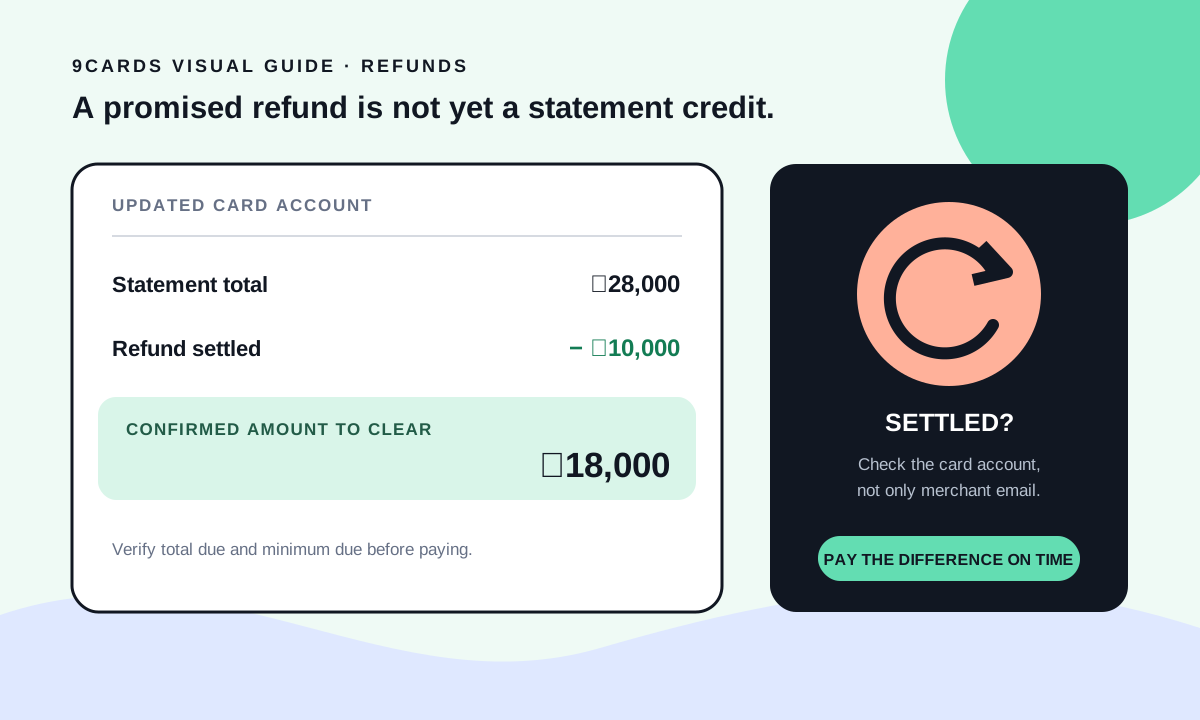
If a credit card refund arrives after the bill is generated but before the payment due date, check the settled credit and the issuer's updated amount due before paying. A refund or reversal for the previous billing cycle that has actually reached the card account before the due date should be adjusted against the payment due under RBI rules. A merchant's promise, email or pending status is not enough.
Do not simply subtract a refund you expect. Until the credit posts, the statement obligation remains. If the refund arrives after you already paid, it will usually create available credit or a positive card balance that can be used against later spending or requested back under the issuer's process.
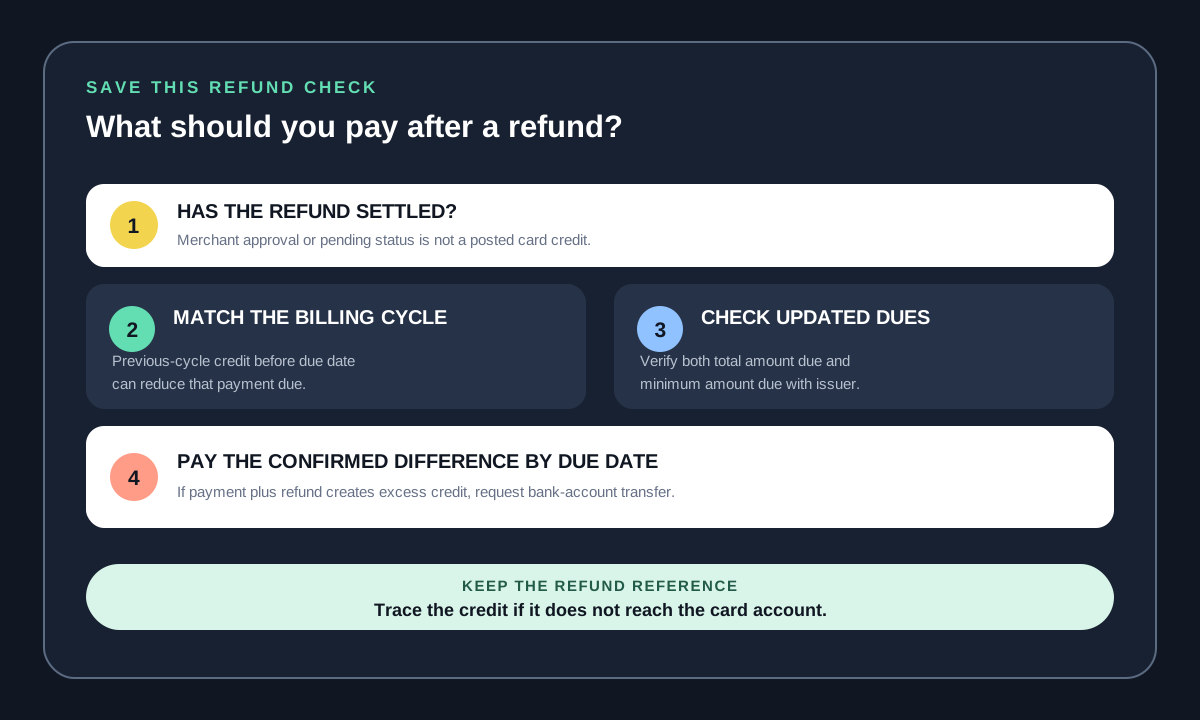
Refund, reversal and credit balance mean different things
A merchant refund is a new credit sent after a completed purchase is cancelled or returned. A reversal cancels or reverses a transaction that may have failed or not completed. A credit balance exists when credits and payments exceed everything owed, so the issuer owes money on the card account.
| Statement event | What it means | Safe response |
|---|---|---|
| Merchant says refund approved | Merchant started or promised the process | Keep enough money to pay until the card credit settles |
| Refund appears as pending | Issuer can see an unsettled credit | Do not treat it as final yet |
| Refund appears as a posted credit | Card account has received the amount | Check the updated payment due and minimum due |
| Refund arrives after full payment | Card may show excess or negative balance | Use later or request a credit-balance refund |
| Original purchase was converted to EMI | Purchase and loan plan can be separate | Confirm whether the EMI was also cancelled |
The RBI's current credit-card directions govern how eligible refunds, failed transactions and reversals affect payment due. The practical principle is simple: the credit must be received by the card issuer, not merely approved by the merchant.
Should you pay the credit card bill after a refund?
Use three checks in order.
1. Has the refund settled?
Look at posted transactions in the issuer app or download an updated statement view. An SMS from the merchant is evidence to retain, but it does not prove that the card account has been credited.
2. Does it relate to the billed cycle?
A refund for a purchase in the previous statement cycle can reduce that cycle's payment due when it reaches the account before the due date. A refund for a new transaction in the current cycle is not automatically a payment against an older bill.
The SBI Card MITC, for example, distinguishes credits linked to the previous billing cycle from credits linked to the current cycle. This is an issuer example of why the transaction's effective date matters, not a universal wording to apply to every bank.
3. What amount does the issuer now show as payable?
Check both total amount due and minimum amount due. If the app is unclear, ask the issuer in writing for the amount that must be credited by the due date to avoid late status and finance charges. Save the reply.
Worked example: refund before the due date
Assume a statement contains ₹28,000 of purchases, including a ₹10,000 order later returned. The merchant refund settles to the card before the statement due date, and there are no other balances or charges.
| Item | Amount |
|---|---|
| Original statement total | ₹28,000 |
| Settled refund for billed purchase | -₹10,000 |
| Updated amount to clear | ₹18,000 |
The cardholder should verify that the issuer has applied the ₹10,000 credit against the payment due, then pay the confirmed ₹18,000 by the due date. Paying only ₹18,000 while the refund is still pending would leave ₹10,000 unpaid and could create the consequences covered in our late-payment guide.
If the cardholder had already paid ₹28,000 before the refund settled, the later ₹10,000 credit could create an excess balance. That money is not reward income; it is the cardholder's credit on the account.
What if the refund is smaller than the minimum due?
A small refund may reduce the outstanding without satisfying the minimum amount due. Do not assume any credit prevents late status. Compare the posted refund with the issuer's updated minimum due and pay the difference—or the full updated total if you want to retain eligible interest-free treatment.
A larger refund can cover the minimum due while leaving a revolving balance. That may avoid one late-payment consequence but still leave finance charges if the total amount due is not cleared. The billing-cycle guide explains why minimum due and total due have different effects.
Refund after payment: how to recover a credit balance
If payment plus refund takes the card below zero, first confirm there are no pending purchases, EMIs, fees or disputes. Then use the issuer's official credit-balance refund channel. Do not share a PIN, CVV or OTP with anyone offering to “release” the money.
The SBI Card credit-balance refund FAQ illustrates one issuer's NEFT process, account-name checks and validation requirements. Its documentation thresholds and processing times are change-sensitive issuer terms, not RBI-wide amounts.
Ask for:
- the credit balance currently eligible for transfer;
- the destination account and name-match requirement;
- the expected processing time;
- the service-request number;
- treatment of any active EMI or blocked card.
Under current RBI directions, when a cardholder requests transfer of an eligible credit balance arising from a refund, failed or reversed transaction, the issuer must follow the regulatory timeline. Retain the request and bank-credit proof if escalation becomes necessary.
A merchant refund does not always cancel EMI
When a purchase was converted to merchant EMI or post-purchase EMI, there can be two linked but distinct events: the merchant reverses the purchase, and the issuer closes or adjusts the EMI plan. One does not always trigger the other immediately.
Ask whether future instalments stop, whether a foreclosure fee applies, how interest is adjusted, and whether rewards or an instant discount are reversed. Our credit-card EMI foreclosure guide covers the separate payoff process, while the no-cost EMI guide explains why merchant discount and bank interest can appear separately.
What happens to rewards after a refund?
Issuers generally reverse rewards earned on a refunded purchase according to programme rules. If points have already been redeemed, the reward balance can go negative or an equivalent adjustment may appear. Annual-spend milestones, fee waivers and lounge-spend gates can also be recalculated after a large refund.
Check the effective transaction date and reward statement. A refund may reduce qualifying spend in the month or membership year in which the issuer applies it, depending on the programme terms.
When the refund amount is wrong or missing
Start with the merchant's refund reference or acquirer reference number, refund date and amount. Give those details to the issuer and ask it to trace the incoming credit. Preserve the cancellation invoice and card statement.
If the merchant never initiated the refund, return to the merchant. If it initiated the refund but the card account did not receive it within the promised timeline, raise an issuer dispute. If neither resolves the complaint, use the issuer's grievance officer before considering the RBI complaint route.
For a transaction you never authorised, do not wait for a merchant refund; follow the emergency steps in our unauthorized-transaction guide.
Frequently asked questions
Can I subtract a pending refund from my credit card bill?
No. Treat only a posted credit and issuer-confirmed adjusted due as payment relief. A pending refund may fail, change amount or settle after the due date.
Will a refund restore my available credit immediately?
Available limit normally changes when the credit posts, but timing and holds can vary. Check the issuer app rather than estimating from the merchant message.
Can I ask for the refund in my bank account?
Yes, when an eligible credit balance exists. Use the issuer's official process and expect name, KYC and account validation. Do not ask the merchant to send a second refund outside the original card flow unless formally arranged.
Does a refund remove interest already charged?
Not automatically. Interest depends on transaction dates, prior unpaid balances and issuer rules. Ask for a calculation if the refunded purchase was part of a revolving balance.
What if the card is closed before the refund arrives?
The money remains due to the cardholder after valid adjustment of any outstanding. Contact the former issuer with the closed-account details and use its credit-balance refund process.
The practical answer
A refund changes the bill only after it settles to the card account and is applied to the relevant cycle. Verify the posted credit, updated total due and minimum due; pay the confirmed difference by the deadline. If payment creates a positive balance, request it back through a traceable issuer channel.
Regulatory and issuer materials checked on 31 July 2026. Refund processing, reward adjustments and issuer documentation can change.