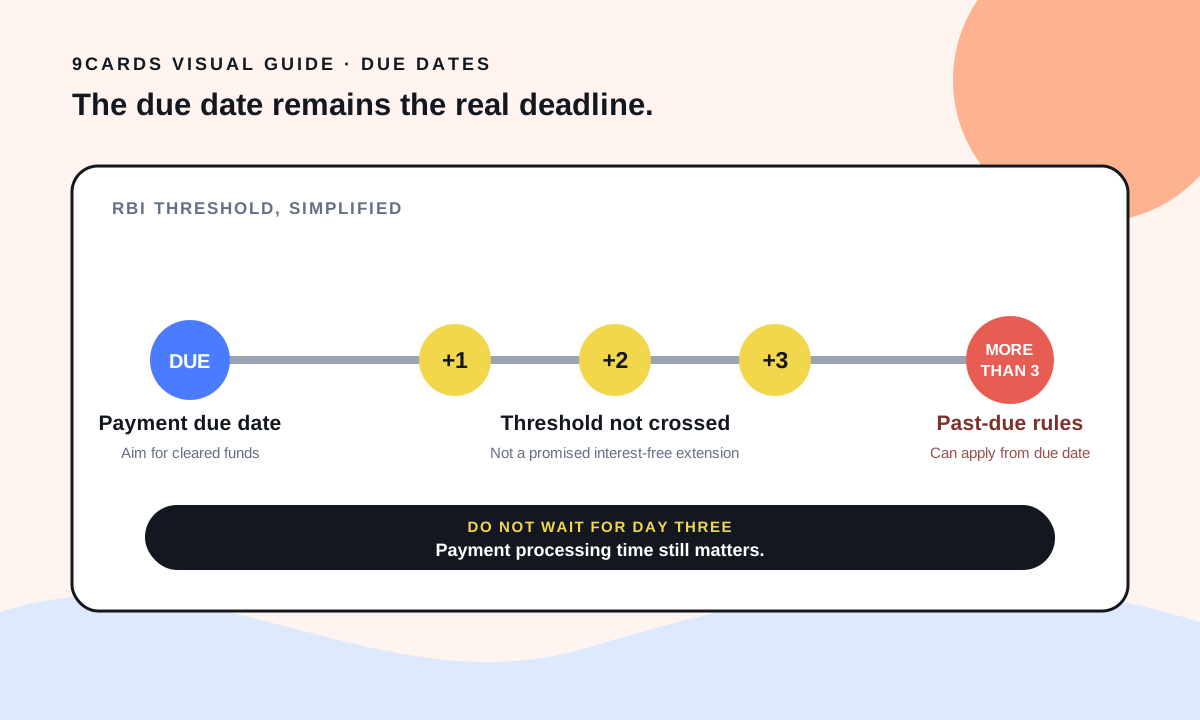
A credit card payment should reach the issuer as cleared funds by the payment due date. RBI rules say an account may be treated as past due for credit-information reporting and penal charges only when it remains past due for more than three days, but that does not turn the next three days into a guaranteed extension of the interest-free period.
If the account crosses that threshold, the applicable days past due and late-payment charge are calculated from the due date shown on the statement. Finance charges can also follow the card's disclosed terms when the total amount due is not paid.
What the RBI 3-day credit-card rule actually means
The RBI's current credit-card directions use a more-than-three-days-past-due threshold for two specific consequences: reporting the card account as past due to credit information companies and levying penal charges.
It is safer not to call this a universal “three-day grace period.” That phrase can sound like every purchase remains interest-free until day three. The statement due date remains the deadline, payment channels need processing time, and finance charges follow the issuer's terms.
| Timing | What to understand |
|---|---|
| On or before due date | Aim for cleared funds at the card issuer |
| Up to three days past due | RBI threshold for past-due reporting and penal charges has not yet been crossed |
| More than three days past due | Penal charge and past-due reporting rules may apply from the original due date |
| Longer delinquency | Credit-file and collection consequences become more serious |
Do not schedule a payment for the last minute because an app says “instant.” A bank debit, successful UPI screen or cheque deposit does not always mean the card issuer has credited cleared funds.
Total amount due versus minimum amount due
The total amount due is what you generally need to pay to retain the interest-free treatment for eligible purchases, assuming all other conditions are met. The minimum amount due is the smaller required amount that can keep the account from becoming overdue for the cycle, but the remaining balance revolves and can attract finance charges.
| Payment made by due date | Late-status risk for that cycle | Interest consequence |
|---|---|---|
| Full total amount due | Avoided if credited correctly | Eligible purchase grace can be retained |
| At least minimum due, but not total | Usually avoids overdue status | Remaining balance can accrue finance charges |
| Less than minimum due | Account remains past due | Late and finance-charge consequences can apply |
| Nothing | Account remains past due | Highest risk of fees, reporting and collection |
Paying the minimum is not a low-cost EMI. It has no fixed end date and new purchases can lose the normal grace treatment. The worked explanation in our billing-cycle guide shows how revolving a balance changes interest.
Will one late payment affect your CIBIL score?
Late and missed payments can affect payment history, which TransUnion CIBIL identifies as an important part of credit health. There is no authoritative table saying one late payment costs a fixed number of points. The effect depends on the full credit file, how late the account becomes, whether it is repeated, current balances and other factors in the scoring model.
A one-day delay and a 90-day delinquency should not be described as equivalent. The most useful response is still immediate: pay the required amount, stop adding balances, keep confirmation and check the next statement and credit report.
High balances can create a separate utilisation issue even when payment is on time. Use our credit-utilisation ratio guide rather than assuming every score movement came from one late payment.
What charges can appear after a missed due date?
Depending on the card terms and how much remains unpaid, the statement may contain:
- a late-payment or penal charge after the regulatory threshold is crossed;
- applicable tax on that charge;
- finance charges on revolving purchase balances;
- finance charges already running on cash advances;
- a payment-return or dishonour fee if an auto-debit failed;
- loss of the interest-free period on new purchases;
- overlimit consequences if charges push the balance above the limit.
Issuer fee slabs and annualised rates are product-specific. The SBI Card MITC, for example, publishes its own late-fee slabs, minimum-due formula and clear-funds wording. Use it only as an example of what to locate in your issuer's terms—not as a universal price list.
What to do immediately after a late credit-card payment
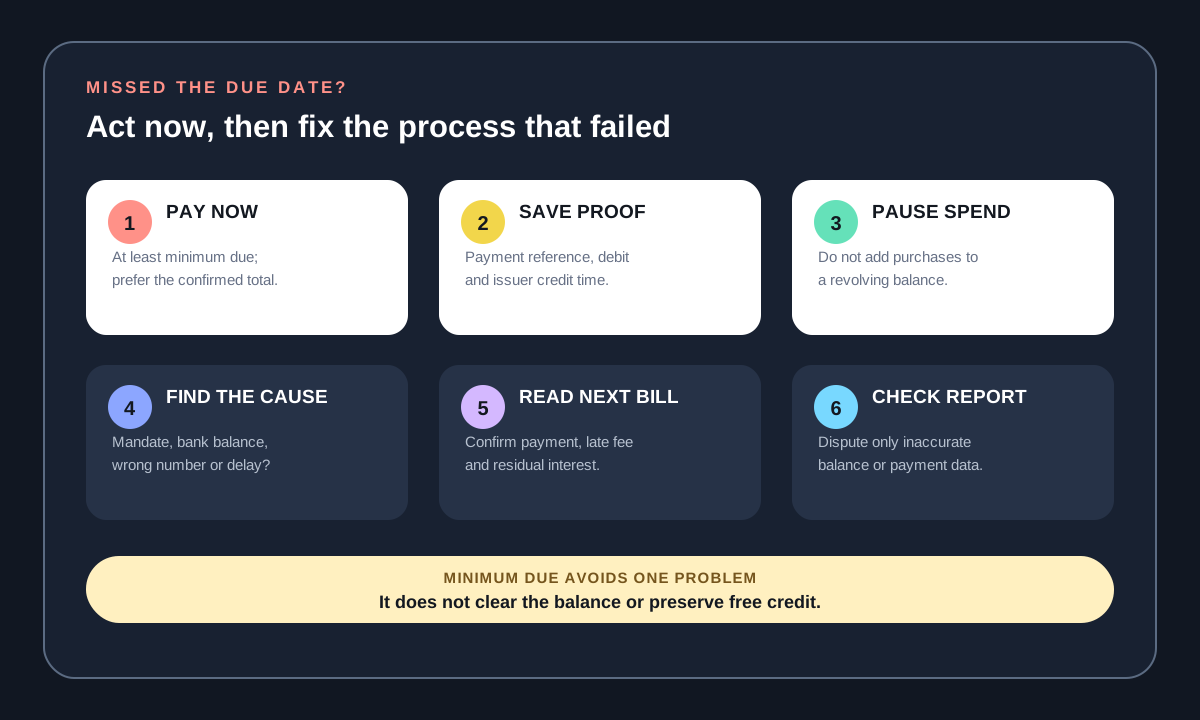
- Pay at least the minimum due immediately. If possible, clear the total amount shown plus any amount the issuer confirms is now payable.
- Use an official, fast payment route. Save the reference number and timestamp.
- Pause new card spending. New purchases can complicate the balance and may not receive normal grace treatment.
- Check why it happened. Insufficient auto-debit balance, an expired mandate, wrong card number or a slow payment method needs a different fix.
- Ask for the current payoff amount. Residual interest may post after payment.
- Read the next statement. Confirm the payment, charges and any reversal the issuer promised.
- Check the credit report later. Do not expect same-day bureau updates.
A fee reversal offered as goodwill does not necessarily erase accurate delinquency data. Ask separately how the payment status was reported.
If the late payment on your credit report is wrong
Gather the statement, payment confirmation, bank debit and issuer complaint number. Raise a correction with the card issuer and a dispute through the credit bureau's official process. CIBIL cannot independently rewrite data owned by a lender; the lender must investigate and confirm the update.
TransUnion CIBIL's dispute-resolution guide explains the correction process. Give it the account, month and field that is wrong rather than submitting a vague score complaint. Keep tracking until the balance and payment status—not merely the score—are accurate.
How to prevent the next missed payment
Set reminders several days before the due date and keep auto-debit as a safety net, not the only plan. Verify the mandate after replacing a bank account or card. Maintain enough bank balance before the debit attempt, and review every statement even if auto-pay is enabled.
If cash flow is already tight, stop reward chasing. A cashback cap or welcome bonus is much smaller than repeated finance charges. Contact the issuer before the account becomes seriously delinquent rather than borrowing from another card to hide the minimum due.
Frequently asked questions
Is a payment one day late reported to CIBIL?
The RBI threshold says a card account may be treated as past due for credit-information reporting only when it remains past due for more than three days. Still, pay immediately and verify how cleared funds were credited.
Are late charges calculated only from day four?
If the account remains past due beyond the threshold, RBI directions say the number of days past due and associated late charges are calculated from the payment due date.
Does paying minimum due protect my score?
It can keep the account from being overdue for that billing cycle when paid correctly, but it leaves revolving debt, raises utilisation and can create substantial finance charges. It is not the same as paying in full.
How quickly will CIBIL recover?
There is no guaranteed point increase or recovery date. First ensure the issuer reports accurate updated data, then build a consistent record of on-time payments and manageable balances.
The practical answer
Treat the printed due date as the real deadline. The RBI more-than-three-days rule limits when penal charges and past-due reporting can begin; it does not make late payment a safe habit or preserve every interest-free benefit. Pay promptly, document the credit and fix the process that failed.
Regulatory and issuer materials checked on 31 July 2026. Card fees, payment channels and bureau procedures can change.