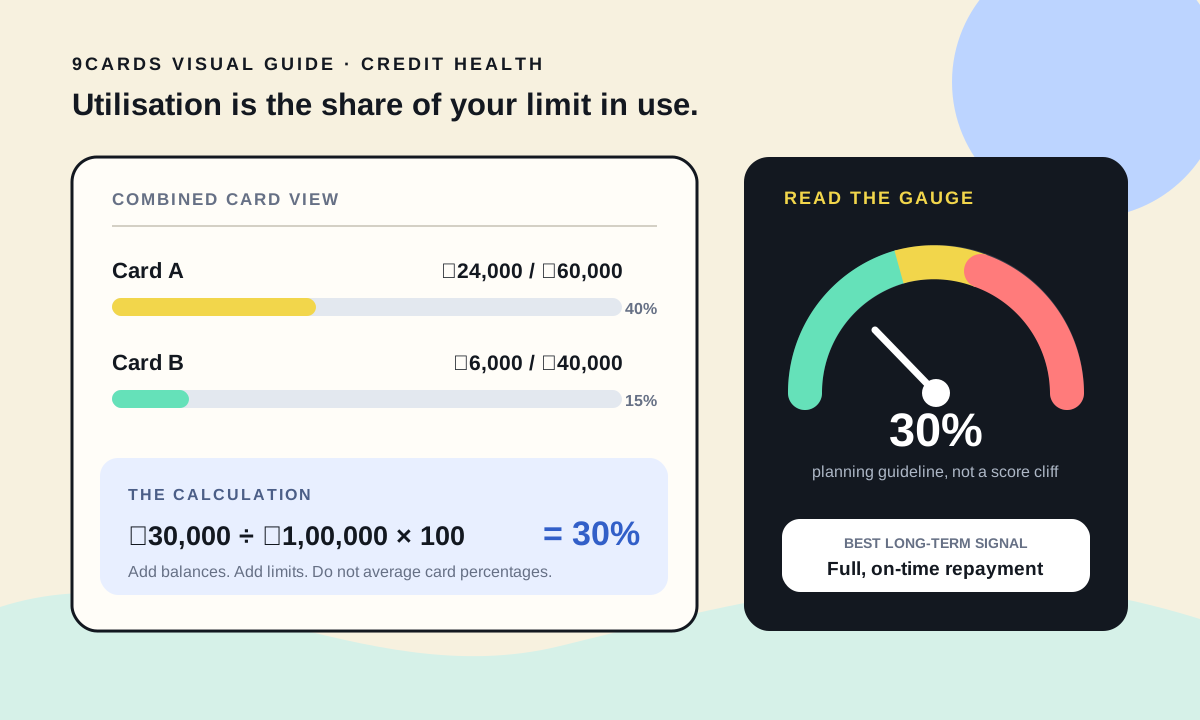
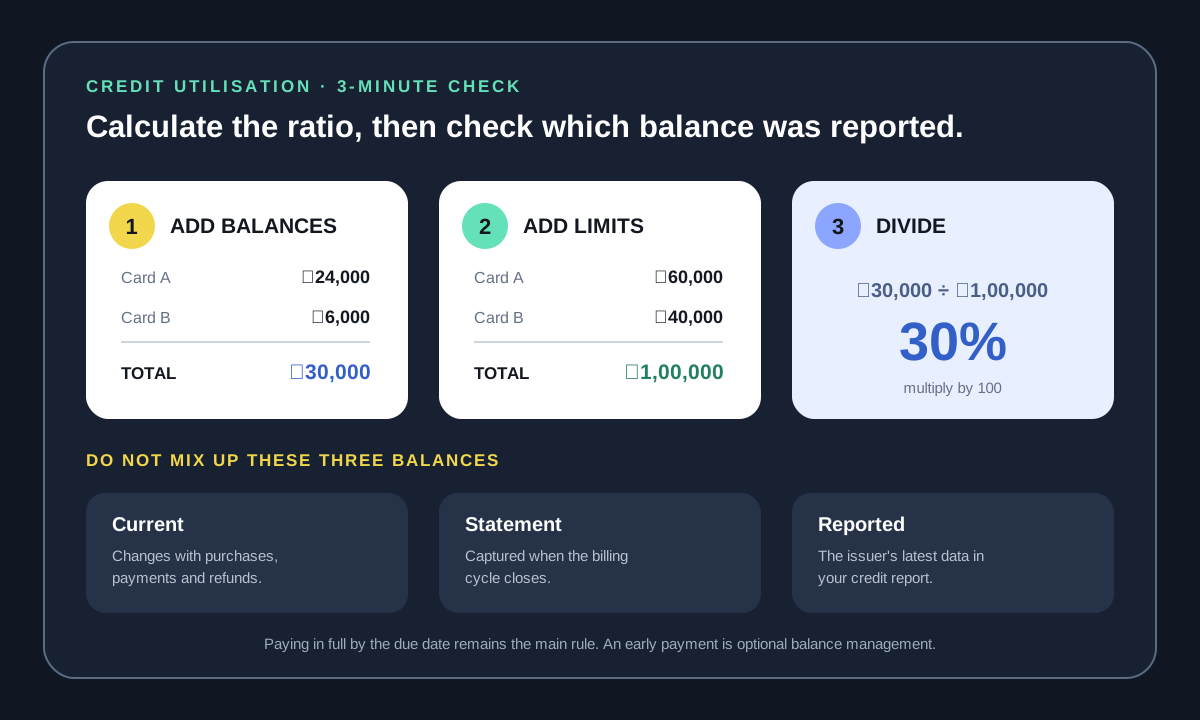
Your credit utilisation ratio is the percentage of available revolving credit you are using. If your credit cards show ₹30,000 of balances against ₹1,00,000 of total limits, the ratio is 30%.
The formula is simple:
total reported card balances ÷ total reported card limits × 100
Credit utilisation matters because consistently high use can suggest that you depend heavily on available credit. It is only one part of a credit profile: payment history, the age and mix of accounts, recent applications and the accuracy of reported data matter too. There is no honest formula promising that moving from one exact ratio to another will add a fixed number of CIBIL points.
How to calculate credit utilisation across multiple cards
Start with the balance and limit for every open credit card that appears in your credit report. Add the balances, add the limits, then divide. Do not average each card's percentage; that gives every card equal weight even when their limits differ.
| Card | Illustrative balance | Credit limit | Individual utilisation |
|---|---|---|---|
| Card A | ₹24,000 | ₹60,000 | 40% |
| Card B | ₹6,000 | ₹40,000 | 15% |
| Combined | ₹30,000 | ₹1,00,000 | 30% |
The combined ratio is 30%, not the average of 40% and 15%. Both the overall ratio and a heavily used individual card can be relevant to a lender's assessment, so moving every purchase onto the card with the smallest limit is not necessarily helpful.
The often-quoted 30% figure is a guideline, not a cliff. TransUnion CIBIL's own consumer education says restricting overall card spending to around 30% of the available limit is considered healthy. That does not mean 29% guarantees a particular score or 31% automatically damages one. Lower reliance, full on-time payment and stable behaviour are more useful goals than gaming a single percentage.
Current balance, statement balance and reported balance differ
Three numbers are easily confused:
- Current balance changes as purchases, payments and refunds post.
- Statement balance is the amount captured when the billing cycle closes.
- Reported balance is the amount the issuer sends to a credit information company for that reporting period.
Those numbers can match, but they do not have to. Issuers report on their own schedules, and a payment made today may not appear in a credit report immediately. Checking the report is the only way to see what was actually recorded.
This is why “I always pay in full” and “my utilisation is always low” are not identical statements. You can pay the entire statement by the due date and still have a high balance at the time the issuer reports it. Paying in full protects you from revolving interest when the interest-free conditions apply; paying some of a large balance before the statement or reporting snapshot can also reduce the balance that may be reported.
Read our billing-cycle and interest-free-period guide before changing payment timing. A pre-statement payment is an optional balance-management step, not a substitute for paying the final statement in full by its due date.
Does using more than 30% hurt your CIBIL score?
A high ratio can affect a credit assessment, but one large purchase does not create a universal, permanent penalty. Scoring models use the information present in your credit file and do not publish a “points lost per percent” table. Different lenders also apply their own approval policies beyond the score.
Treat 30% as a warning line for planning, not a reason to panic. Ask:
| Situation | Sensible response |
|---|---|
| Normal monthly spending stays below the guideline | Pay the statement in full and monitor the report periodically |
| A planned purchase temporarily raises the ratio | Consider an early payment if cash is already available |
| Utilisation stays high because balances revolve | Stop new card spending and prioritise repayment costs |
| Limit is wrong in the credit report | Dispute the data with the issuer and credit bureau |
| An old card shows a balance you do not recognise | Contact the issuer promptly and use the report's dispute process |
Do not borrow money simply to manufacture a lower ratio. The objective is lower dependence on revolving credit, not a cosmetic number purchased with another loan.
Five ways to lower credit utilisation safely
1. Pay down existing balances
This is the direct route. Focus on balances that are charging interest before making new reward-driven purchases. Rewards are rarely worth more than revolving card interest.
2. Make an early payment before a large statement closes
If you already have the cash, paying part of a large purchase after it posts but before the cycle closes may lower the statement balance. Keep enough liquidity for essentials and still verify the final amount due.
3. Spread necessary purchases, not unnecessary spending
Using a card with more available limit can avoid concentrating the ratio on one small-limit card. This is account management, not permission to spend more overall.
4. Consider a limit increase only when it is appropriate
A higher limit can lower the ratio for the same balance, but the issuer may assess income and eligibility and could make a credit enquiry. Accepting more credit also raises the amount you could overspend. Ask how the request is processed before applying.
5. Keep a useful old card open thoughtfully
Closing a card removes its available limit from future ratio calculations and may change the age of your active credit profile. But keeping a card can involve annual fees, fraud-monitoring work or temptation. Use our fee-table guide to decide whether preserving that limit is worth the ongoing cost.
What not to do for a lower ratio
Avoid these common overcorrections:
- Do not carry a balance or pay interest to “build credit.” On-time reported use can exist without revolving debt.
- Do not make many new card applications merely to inflate total limits. Each account and enquiry changes more than one part of the credit profile.
- Do not pay a card to a large positive balance unless the issuer explicitly supports it and you understand how it will be handled.
- Do not dispute accurate high balances just because they are inconvenient.
- Do not rely on a score shown in a shopping or payment app as proof that every bureau report contains the same current data.
When will a lower balance show in the report?
Not instantly. A payment must post at the issuer, the issuer must include updated data in a reporting cycle, and the credit information company must update the report. Check again after the issuer's normal reporting window rather than making daily payments in pursuit of minute-by-minute score changes.
If the balance remains wrong after a reasonable reporting period, first gather the statement and payment confirmation. Raise a correction with the issuer and use the dispute route offered by the credit bureau. A factual correction is more important than trying to infer the score from an app notification.
The number to remember
Calculate utilisation from balances and limits, use 30% as a planning guideline rather than a guarantee, and pay on time. For a temporary large purchase, an early payment can be useful when the cash is already available. For persistent high utilisation, the solution is reducing debt and new spending—not rearranging it to look smaller.
A healthy credit file is built by accurate reporting and repeatable repayment behaviour over time. The ratio helps you see pressure building before a due date is missed; it should not become another reason to borrow or obsess over a one-day score movement.