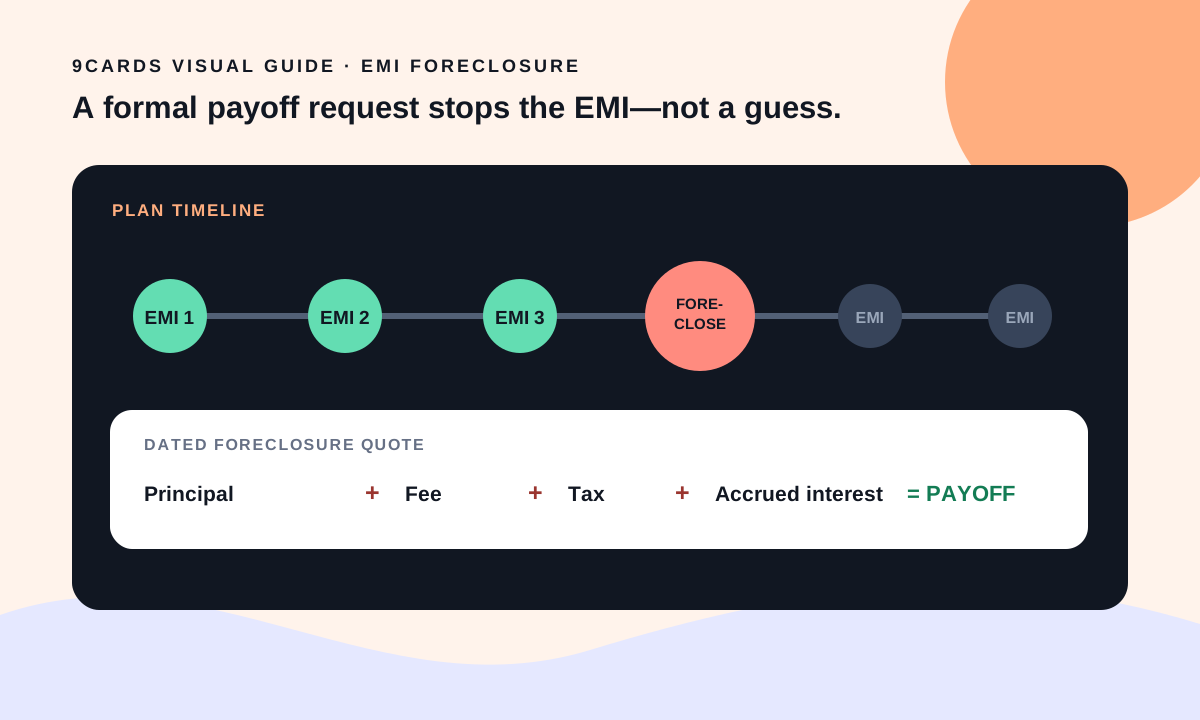
Credit card EMI foreclosure means ending an active instalment plan before its scheduled final EMI and paying the issuer's calculated closure amount. That amount can include outstanding principal, accrued interest, a foreclosure or pre-closure fee and applicable tax. It is different from cancelling a new conversion within the issuer's initial cancellation window.
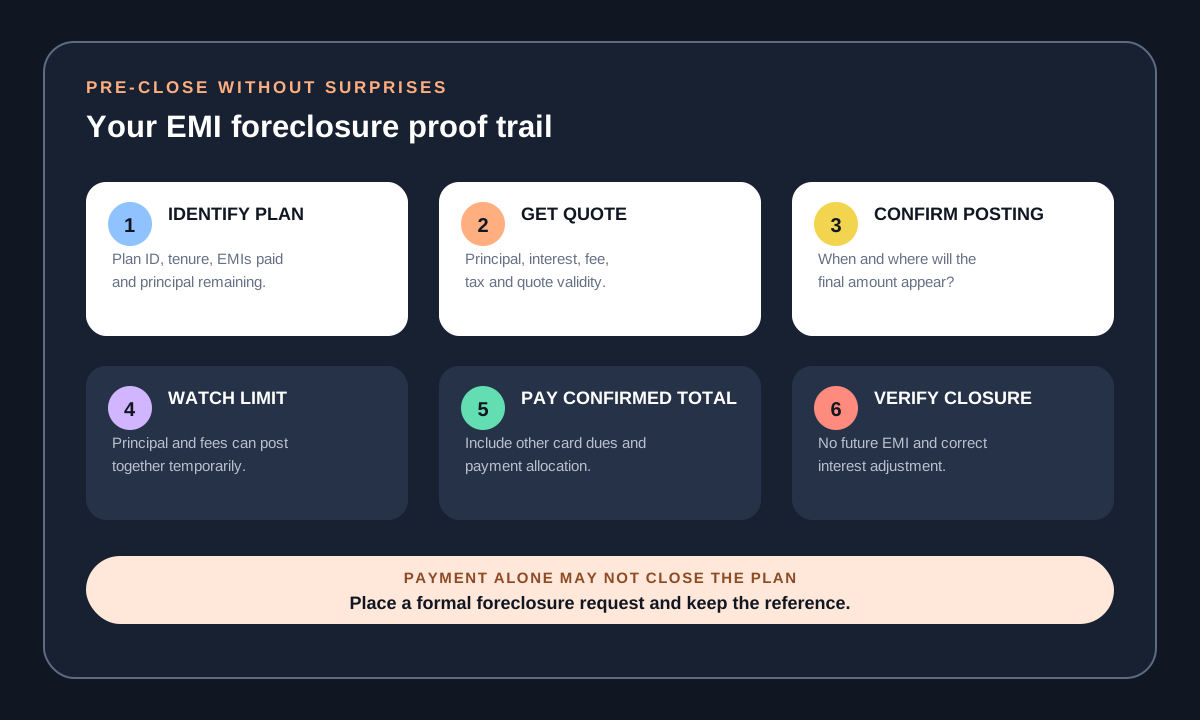
Do not pay the principal you estimate and assume the plan is closed. Place a formal request, obtain a dated quote and verify that future EMIs stop after the final adjustment reaches the statement.
Cancellation versus foreclosure
Issuer language varies, but these are the common distinctions:
| Action | Typical timing | Possible result |
|---|---|---|
| Conversion cancellation | Soon after EMI booking | Purchase returns to retail balance; fee treatment depends on terms |
| Merchant order cancellation | Merchant reverses original purchase | EMI may continue until issuer separately adjusts it |
| EMI foreclosure or pre-closure | After the cancellation window | Outstanding principal plus fee, tax and interest adjustment becomes payable |
| Card-account closure | Entire credit-card facility ends | Active EMI must be resolved as part of final dues |
A merchant refund and EMI foreclosure are not interchangeable. The merchant controls the purchase refund; the card issuer controls the loan or instalment plan.
What is included in a credit card EMI foreclosure amount?
Ask for each line separately:
- outstanding principal after instalments already credited;
- interest accrued up to the foreclosure date or billing boundary;
- foreclosure fee, often calculated on outstanding principal;
- applicable tax on the fee and other taxable charges;
- reversal or adjustment of future interest;
- any processing-fee treatment;
- rewards, discount or cashback reversal if programme terms require it.
The SBI Card Flexipay FAQ, for example, states that a cancellation within its published initial period has different treatment from a later request, when a percentage fee on outstanding principal plus tax and an interest adjustment can apply. That is a current issuer example, not a universal fee or window.
Worked foreclosure example
Assume an illustrative EMI plan has ₹42,000 of principal left. The terms charge a 3% foreclosure fee and 18% GST on that fee. Assume the issuer's dated quote also includes ₹350 of accrued interest.
| Component | Calculation | Illustrative amount |
|---|---|---|
| Outstanding principal | Issuer quote | ₹42,000.00 |
| Foreclosure fee | ₹42,000 × 3% | ₹1,260.00 |
| GST on fee | ₹1,260 × 18% | ₹226.80 |
| Accrued interest adjustment | Issuer quote | ₹350.00 |
| Total foreclosure amount | Sum | ₹43,836.80 |
If future interest avoided by closing the plan exceeds ₹1,836.80 and the cardholder has the cash without creating other expensive debt, foreclosure may reduce total cost. The comparison must use the issuer's actual remaining schedule and quote.
How to decide whether pre-closing EMI saves money
Calculate two totals on the same date.
Continue cost: sum of every remaining EMI, plus any known plan or account charges.
Foreclosure cost: issuer's final principal + accrued interest + fee + tax + any benefit reversal.
Then subtract the foreclosure cost from the continue cost. A positive difference is the estimated saving. Do not count principal as a “fee”: principal is owed under both choices.
| Question | Why it matters |
|---|---|
| How many EMIs remain? | Early foreclosure usually avoids more future interest than late foreclosure |
| Is the fee based on original or outstanding principal? | The base can materially change cost |
| Is tax extra? | Headline percentages often exclude it |
| Is the rate reducing-balance or flat? | Remaining interest differs |
| Will a reward or merchant discount be reversed? | Benefit loss can offset interest saved |
| When will the final amount be billed? | Payment must match the statement timeline |
The no-cost EMI guide explains why the merchant discount, processing fee and bank interest need separate treatment.
Step-by-step: how to close a credit card EMI
1. Identify the exact plan
Record the purchase, booking date, plan ID, tenure, interest rate, EMIs paid and outstanding principal shown by the issuer. A card can have several plans at once.
2. Ask for a foreclosure quote
Use the authenticated app, website or official helpline. Request the total payable if the plan is closed today and how long that quote remains valid.
3. Confirm where the amount will appear
Some issuers post the foreclosure principal and charges to the card's retail balance or next statement. Others require a payment after booking the request. Ask before transferring money.
4. Stop relying on the old available limit
Foreclosure can temporarily reduce available limit when the remaining principal and fees are posted together. Wait for all adjustments before making another large purchase.
5. Pay the confirmed amount
Account for any other statement dues. A payment is allocated under the issuer's hierarchy, so transferring only the estimated EMI principal may not close the plan.
6. Verify the next statement
Look for plan closure, no future EMI, correct interest adjustment and the promised fee treatment. Save the service request and final statement.
What if the merchant cancelled the purchase?
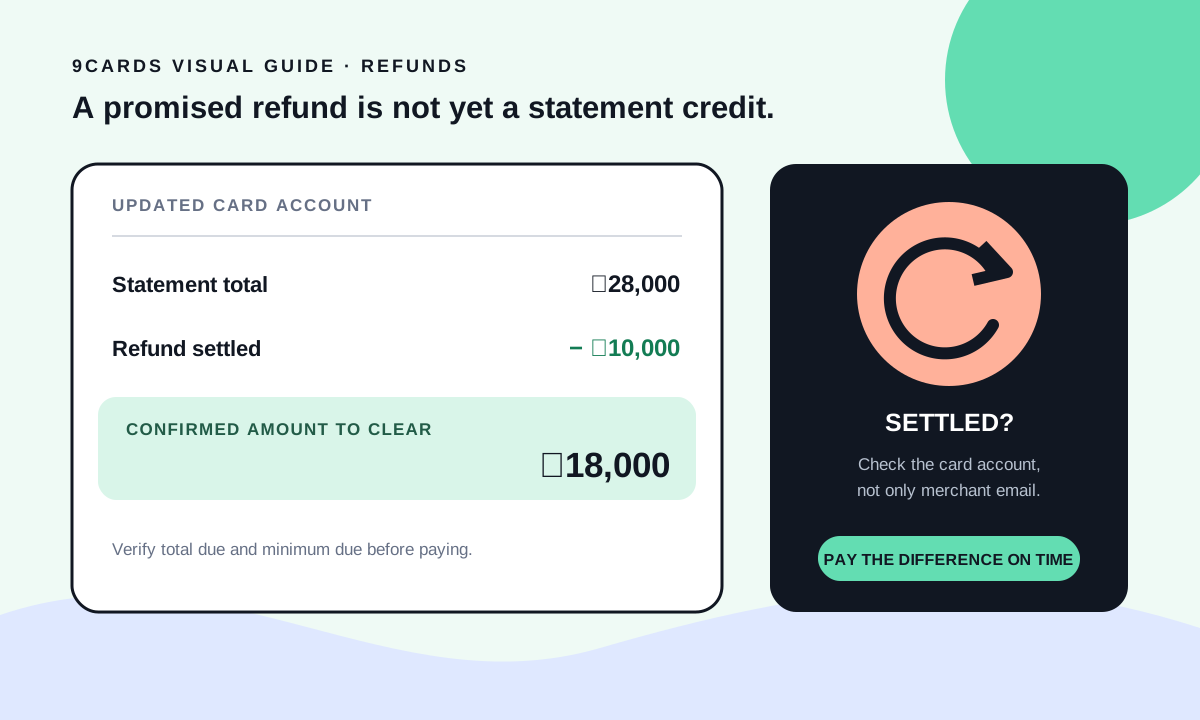
A refund can arrive after the EMI has already been booked. The credit may reduce the card balance while the EMI schedule remains active until the issuer processes a separate cancellation or foreclosure.
Follow both tracks:
- obtain the merchant's refund reference and settlement date;
- tell the issuer that the EMI purchase was refunded;
- ask whether the plan will auto-close;
- request waiver of avoidable charges if issuer policy provides it;
- check whether rewards or an instant discount are reversed;
- pay the amount the issuer confirms is due meanwhile.
Our refund-after-bill guide explains why a pending refund cannot safely be subtracted from the bill.
Can you close the credit card while EMI is active?
The account cannot be treated as fully closed while valid amounts remain due. An issuer may require the EMI to be foreclosed and add the resulting amount to final dues, or use another contractually permitted treatment.
Resolve the plan before submitting account closure where possible. Ask for the EMI-closure quote, wait for it to post, pay the final balance and then follow the credit-card closure checklist. Cutting the card does not cancel its instalments.
Does EMI foreclosure affect CIBIL score?
There is no published fixed CIBIL-point penalty simply for pre-closing a normal card EMI. Credit reporting should reflect the account and payment status supplied by the issuer. The bigger risks are missing the enlarged final payment, carrying a high balance or creating a dispute that leaves the account past due.
After foreclosure, review the next statements and later credit report for accurate balance and status. If data is wrong, dispute the specific field rather than asking the bureau to change a score directly.
Foreclosure is not always the right use of cash
Do not empty an emergency fund to avoid a modest amount of future interest while leaving rent, insurance or essential expenses uncovered. Also avoid paying a low-cost EMI by taking an expensive cash advance; the cash-withdrawal guide explains why day-one interest can defeat the saving.
If you cannot meet the scheduled EMI, contact the issuer before the due date. Foreclosure accelerates principal and therefore needs more cash now, not less.
Frequently asked questions
Can I cancel a card EMI immediately after converting it?
Many issuers allow an initial cancellation process, but the window and charges vary. Contact the issuer immediately and obtain written confirmation.
Is the foreclosure fee charged on every remaining EMI?
Usually terms define a percentage of outstanding principal or another base. Read the exact clause and ask for the rupee calculation.
Will future interest be removed?
A valid foreclosure should account for unearned future interest under the plan terms, but accrued interest and adjustments can still post. Use the dated quote.
Can I partially foreclose a credit card EMI?
Some plans do not allow part-prepayment. Ask whether the only options are scheduled EMIs or full foreclosure.
Does paying the current card balance automatically close EMI?
Not necessarily. An advance payment can sit as credit and be allocated over time while the plan remains active. Place a formal foreclosure request.
The practical answer
Foreclose a credit card EMI only with an issuer-generated payoff quote. Compare remaining EMIs with principal, accrued interest, fee, tax and benefit reversals; then verify plan closure on the next statement. A large payment without a formal request can leave the EMI running.
Issuer and regulatory materials checked on 31 July 2026. Cancellation windows, fees, tax treatment, interest adjustment and plan controls can change.