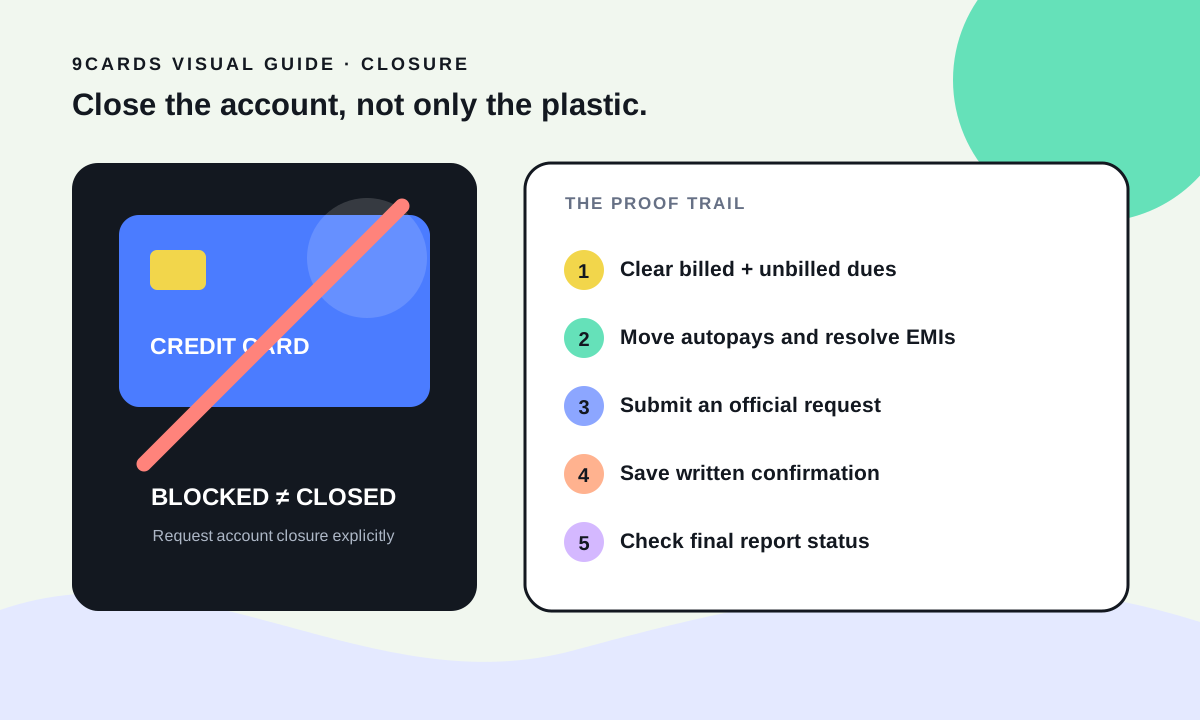
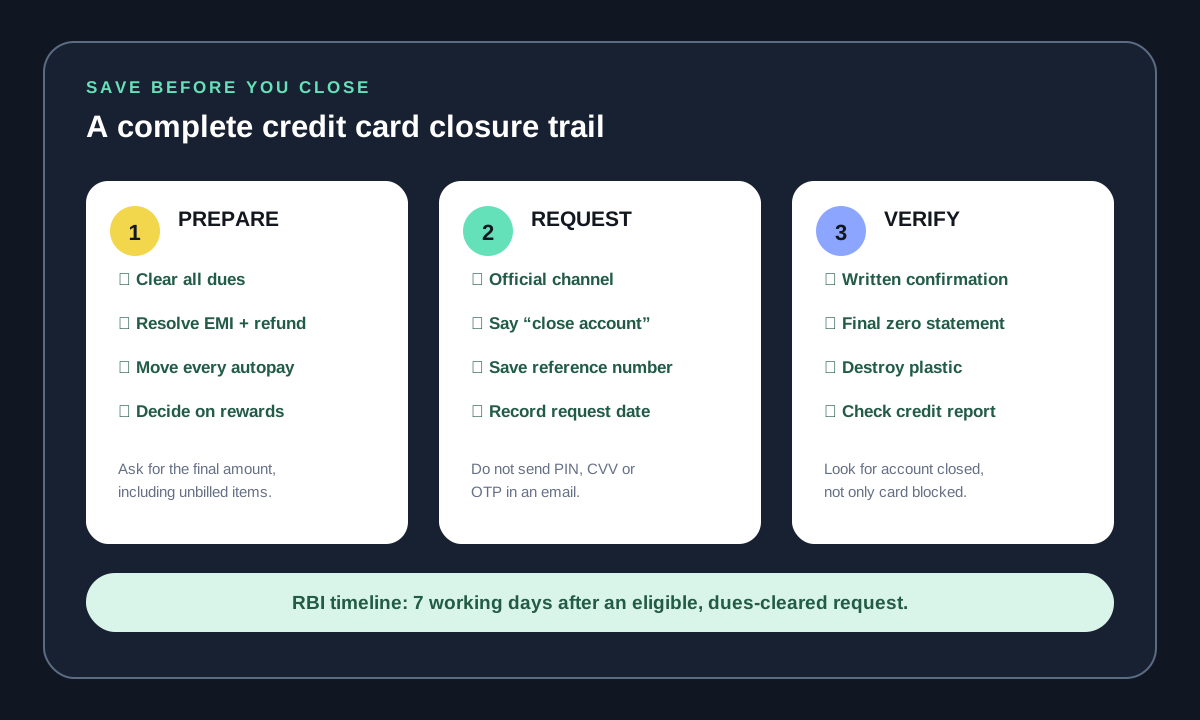
To close a credit card in India, first identify all billed and unbilled dues, active EMIs, recurring payments, pending refunds and rewards. Pay the amount the issuer confirms is outstanding, submit the request through an official closure channel, save the acknowledgment and obtain written confirmation that the account—not just the plastic card—is closed.
Under current RBI directions, the issuer must complete an eligible closure request within seven working days, subject to payment of all outstanding dues. If no balance is due and the issuer delays beyond that period, compensation of ₹500 per calendar day of delay applies under the regulatory rule.
RBI rules for credit card closure
The RBI's 2025 card directions require issuers to offer multiple closure modes, such as a helpline or email, IVR, a prominent website link, internet banking or a mobile app. An issuer should not make closure difficult by insisting only on a postal request or another inconvenient route.
The core protections are:
| Rule | What it means for the cardholder |
|---|---|
| Seven-working-day closure | Starts from a valid request, subject to all dues being paid |
| ₹500 per calendar day for delay | Applies when closure is delayed beyond seven working days and no outstanding balance exists |
| Multiple request channels | Closure cannot be restricted to an intentionally difficult method |
| Inactive-card process | Issuer may initiate closure after more than one year of non-use and required notice |
| Credit balance return | Money owed back to the cardholder must be transferred appropriately |
These are closure requirements, not a promise that an account with unpaid transactions or an unresolved balance will disappear in seven days.
Before closing: find the real final balance
A current balance of ₹0 can coexist with transactions that have not settled. Review:
- the latest statement and purchases made after it;
- pending or unbilled card transactions;
- active merchant EMI and post-purchase conversion plans;
- annual, renewal or other fees that may be about to post;
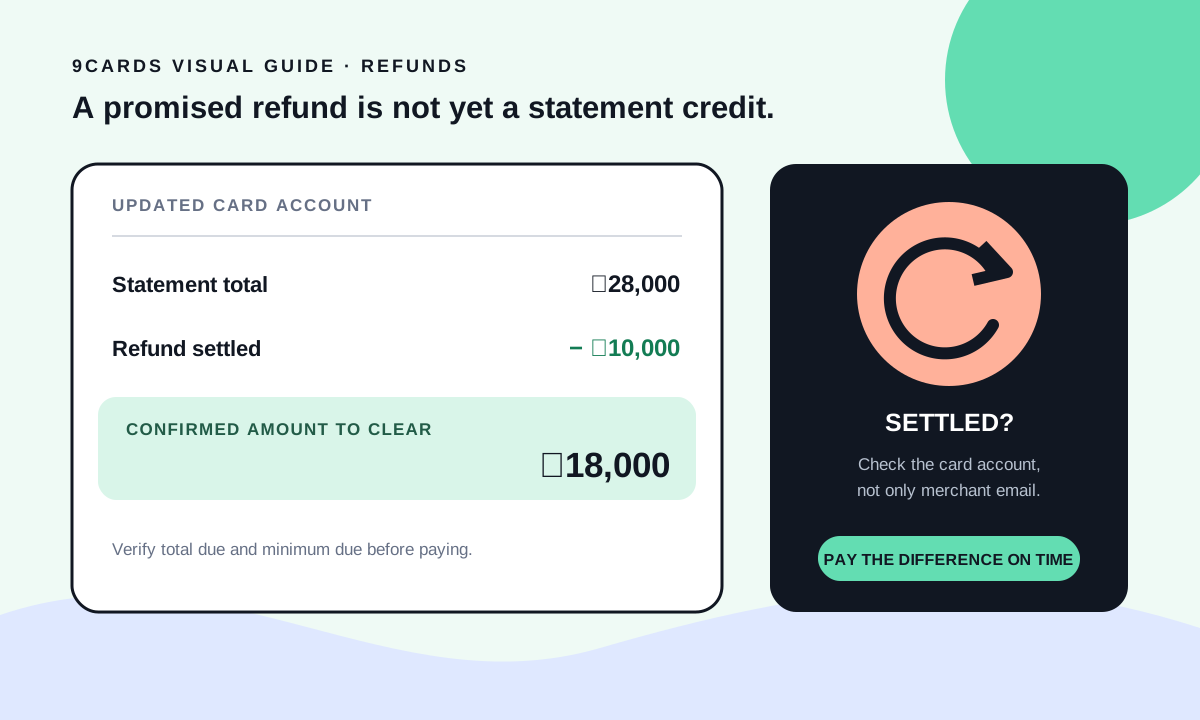
- refunds in transit and disputed transactions;
- supplementary or add-on card spending;
- a positive credit balance the issuer owes you.
Ask the issuer how an active EMI is handled. Some plans may need foreclosure with a fee or may become immediately payable. A product return does not automatically close its EMI. Our no-cost EMI guide explains why merchant cancellation and loan closure are separate events.
Move autopays and redeem useful rewards
List subscriptions, insurance premiums, utilities and app-store mandates linked to the card. Move each one before submitting closure. Blocking the physical card does not guarantee every token or recurring mandate has been migrated correctly, and a failed essential payment can cost more than the card fee you are avoiding.
Check reward expiry and forfeiture rules. Redeem points only when the value exceeds any redemption charge and you actually need the reward. Do not make unnecessary purchases to empty a small points balance.
If the reason for closing is an annual fee, compare the fee with the value of keeping the credit line. Our fee-table guide helps distinguish a one-time joining fee, a recurring renewal fee and a spend-based waiver.
How to close a credit card step by step
- Stop new spending. Wait for recent transactions to settle.
- Move recurring payments. Update every merchant, not just the most obvious subscription.
- Resolve EMIs, disputes and refunds. Get written treatment for each open item.
- Redeem or knowingly forfeit rewards. Record the final points position.
- Pay the confirmed total outstanding. Include unbilled amounts the issuer says are due.
- Submit an explicit account-closure request. Use the issuer's app, website, email or official helpline.
- Save the service-request number and date. A screenshot alone is weaker without a reference.
- Obtain written closure confirmation. Look for “account closed,” not merely “card blocked.”
- Destroy the physical card. Cut through the chip and magnetic stripe after confirmation.
- Check later statements and your credit report. The balance should be zero and the account status closed.
Do not email full card details, CVV, PIN or OTP. Use masked digits and official secure channels.
Blocked, deactivated and closed are not the same
| Status | Can the plastic be used? | Does the credit account still exist? |
|---|---|---|
| Temporarily locked | Usually no | Yes |
| Lost/stolen card blocked | No | Usually yes; replacement may be issued |
| Card expired | No after expiry | Account can remain open with a replacement |
| Account closed | No | Credit facility is terminated after dues are settled |
Cutting a card or deleting it from an app is not a closure request. An issuer retention call is also not proof that a request was cancelled or completed; ask for written status.
Does closing a credit card affect CIBIL score?
It can change parts of the credit profile, but there is no fixed point loss. Closing removes available limit from future utilisation calculations and can change the mix or age of active accounts. If you carry balances on other cards, the same total debt divided by a smaller total limit produces a higher utilisation ratio.
For example:
| Before closure | After closing an unused ₹1 lakh-limit card |
|---|---|
| ₹30,000 balances ÷ ₹2,00,000 limits = 15% | ₹30,000 balances ÷ ₹1,00,000 limits = 30% |
That does not mean a fee-heavy card must remain open forever. Compare the cost, fraud-monitoring burden, age and limit with your actual needs. Use our credit-utilisation guide before closing a large-limit card while another balance is high.
A closed account can remain on the credit report as history. Check that it shows the correct status and zero balance rather than expecting it to vanish.
What if the issuer does not close the card?
If all dues are cleared, reply on the original complaint thread and cite the request date and acknowledgment. Escalate through the issuer's grievance officer. Keep statements showing no balance.
If the response remains unsatisfactory, use the RBI complaint route applicable after first complaining to the regulated entity. The delay-compensation rule is strongest when your evidence clearly shows a valid closure request, no outstanding amount and the dates involved.
If the bureau later shows the account open or with a wrong balance, dispute the specific field with the issuer and credit information company. TransUnion CIBIL's dispute-resolution guide explains why the lender must confirm changes to lender-owned data.
What happens to an unused credit card?
RBI directions permit an issuer to start closure when a card has not been used for more than one year. The issuer must notify the cardholder. If no reply is received within 30 days, it may close the account, subject to payment of dues. Do not use a card unnecessarily just to avoid this process; decide whether you want it, then respond deliberately.
Frequently asked questions
Can a bank charge a credit card closure fee?
Check the MITC for any valid account or EMI-related amount, but the closure request itself should not be turned into an obstruction. Annual-fee refunds and EMI foreclosure are separate product terms.
Can I close a card with active EMI?
Ask the issuer for the exact process. The EMI may need to continue, be foreclosed or become part of the final amount. Do not assume cutting the card cancels the loan.
Should I close my oldest card?
Not automatically. Weigh annual cost, limit, account age, fraud monitoring and spending control. Score impact is individual and should not override an unaffordable or unsafe account.
How long should I keep the confirmation?
Keep the closure acknowledgment, final statement and payment proof until the credit report shows the correct closed status—and longer if a dispute or refund was involved.
The practical answer
Close the account, not merely the plastic. Clear every billed and unbilled item, migrate recurring payments, make one traceable request and keep written confirmation. Then verify the final statement and credit report. That evidence turns an uncertain phone call into an enforceable timeline.
Regulatory and issuer materials checked on 31 July 2026. Issuer channels, reward rules and EMI treatment can change.