A no-cost EMI does not necessarily mean that the bank charges no interest. In a common credit-card offer, the bank charges interest on a reduced transaction amount while the merchant gives an upfront discount intended to offset that interest. You still need to check processing fees, applicable taxes, foregone discounts, reward eligibility and pre-closure terms before deciding that the plan costs nothing.
The right comparison is not “full price today versus smaller amount each month.” It is the total rupees leaving your pocket under every available payment option.
How no-cost EMI works on a credit card
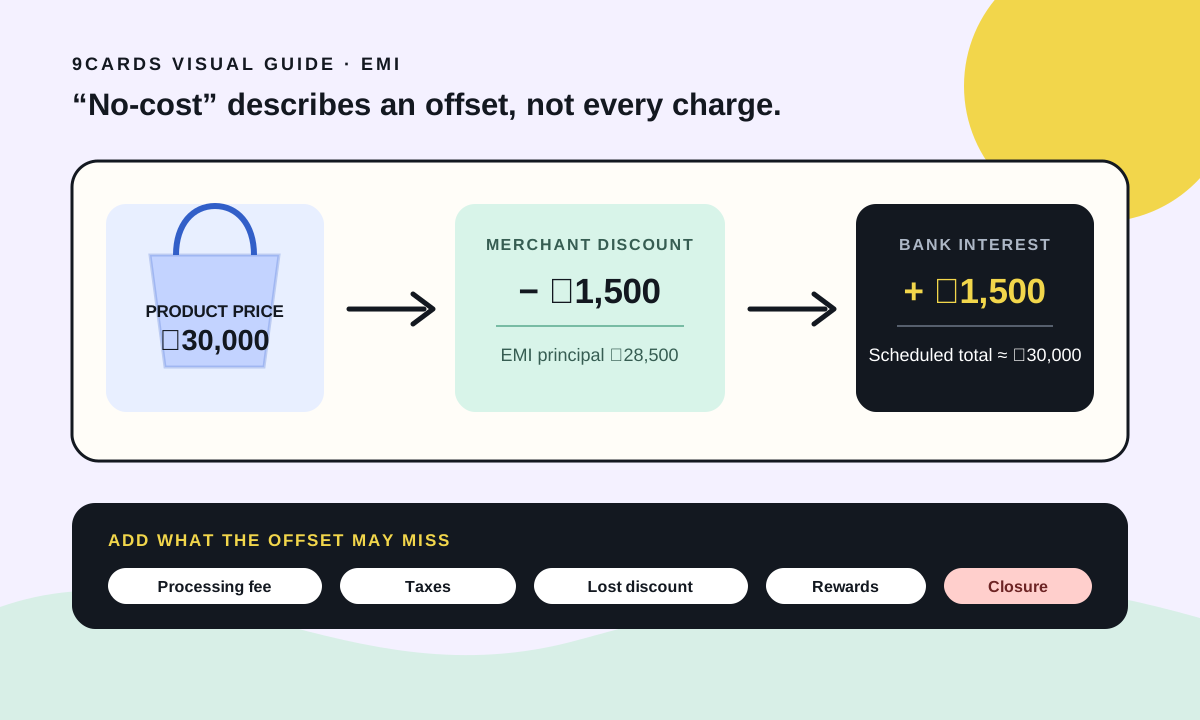
Suppose a product has an illustrative price of ₹30,000. The merchant estimates that the bank's EMI interest over the chosen tenure will be ₹1,500 and discounts the transaction to ₹28,500. The bank then charges principal plus interest through the instalments, bringing the scheduled total back towards ₹30,000.
That is the “no-cost” mechanism: a merchant-funded discount is designed to neutralise the quoted interest. An HDFC Bank offer explanation describes this structure as bank interest being provided to the customer as an upfront discount, subject to the offer's terms.
The illustration is a model, not a quote:
| Component | Illustrative amount | What to verify |
|---|---|---|
| Displayed product price | ₹30,000 | Is there a lower non-EMI price? |
| Merchant no-cost-EMI discount | -₹1,500 | Does it exactly match scheduled interest? |
| Amount converted to EMI | ₹28,500 | Is this the principal shown at checkout? |
| Bank interest over tenure | +₹1,500 | Rate, method and first-instalment treatment |
| Processing fee and applicable tax | Extra | Shown before OTP or confirmation |
| Scheduled purchase total | About ₹30,000 plus extras | Compare with every alternative offer |
A rounding difference can remain, and tax or fees can sit outside the offset. Save the checkout breakdown and the charge slip rather than relying on a banner.
The costs that “no-cost” may not cover
Processing or convenience fee
An issuer may charge a one-time fee for booking the EMI. That fee can have applicable tax added. The amount and label vary by issuer, merchant, card and campaign, so use the confirmation screen rather than an old fee quoted online.
For example, the SBI Card Convert2EMI FAQ says a one-time processing fee may apply and should be communicated on the OTP page. That is a useful general habit for any issuer: stop at the confirmation screen and record the fee before authorising.
Taxes on charges or interest
Applicable GST may be added to the components identified as taxable in the issuer's statement and terms. A merchant discount matching the headline interest does not automatically promise to reimburse every tax entry. Read the schedule supplied for the specific transaction.
Lost instant discount
The cash, UPI or non-EMI card price may include an instant discount that cannot be combined with EMI. Losing a ₹2,000 alternative discount to receive a ₹1,500 interest offset leaves you worse off even before fees.
Lost rewards or milestones
Some reward programmes exclude EMI transactions or reverse points awarded on the original purchase after conversion. EMI spending may also be excluded from annual-fee waivers or milestone calculations. Check the reward and fee-waiver definitions, not just the EMI page. Our guide to reading a credit card fee table explains why “eligible spend” needs its own check.
Foreclosure and cancellation cost
Returning the product and closing the EMI are separate processes. The merchant can reverse a purchase while an EMI plan or fee remains until the issuer processes it. Later pre-closure can attract a percentage fee, accrued interest or tax under the plan terms.
Merchant EMI, post-purchase conversion and card-balance EMI are different
The word EMI is used for several products that do not share the same price.
| EMI type | When selected | Typical pricing clue |
|---|---|---|
| Merchant no-cost EMI | During checkout | Merchant discount is intended to offset interest |
| Merchant standard EMI | During checkout | Interest and fees are added without a matching discount |
| Post-purchase conversion | After a card transaction posts | Issuer quotes rate, tenure and processing fee |
| Outstanding or balance conversion | After debt is already on the account | A restructuring product with separate eligibility and cost |
Do not assume that converting a purchase later preserves the checkout's no-cost offer. The merchant-funded discount generally belongs to the original eligible checkout path. A post-purchase invitation from the issuer can be convenient, but it needs a fresh total-cost calculation.
Does EMI block your credit-card limit?
Usually, the purchase or EMI principal reduces available credit when the plan is booked. Limit is then restored according to the issuer's process as instalments are repaid or the plan is closed. This means a ₹60,000 purchase can occupy roughly ₹60,000 of limit even though only one instalment is due this month.
That matters in two ways. First, another planned purchase may decline because the available limit is smaller than expected. Second, a large balance relative to total card limits can raise your credit utilisation. Read our credit-utilisation ratio guide before using EMI solely to make a purchase “fit” the monthly budget.
EMI also appears within the card statement. It is not a separate excuse to ignore the total amount due. Missing the statement due date can trigger the account's normal late-payment consequences even if the underlying purchase was advertised as no-cost.
A worked comparison: EMI versus paying upfront
Consider an illustrative purchase where you have enough cash to pay the card statement in full. The checkout offers either a non-EMI instant discount or no-cost EMI.
| Option | Product amount | Extra fees/tax | Rewards or discount | Effective outflow |
|---|---|---|---|---|
| Pay upfront with ₹1,500 instant discount | ₹28,500 | ₹0 | Included in price | ₹28,500 |
| No-cost EMI at list price | ₹30,000 | ₹236 | No rewards | ₹30,236 |
| Standard EMI | ₹30,000 | ₹236 plus interest | No rewards | Above ₹30,236 |
These figures are deliberately illustrative. Their purpose is to show the comparison: even a correctly structured no-cost EMI can cost more than a discounted upfront option. On the other hand, if there is no alternative discount and the only extra is a modest disclosed fee, preserving cash for a known need may be worth that amount. That is a budgeting decision, not proof that the credit is free.
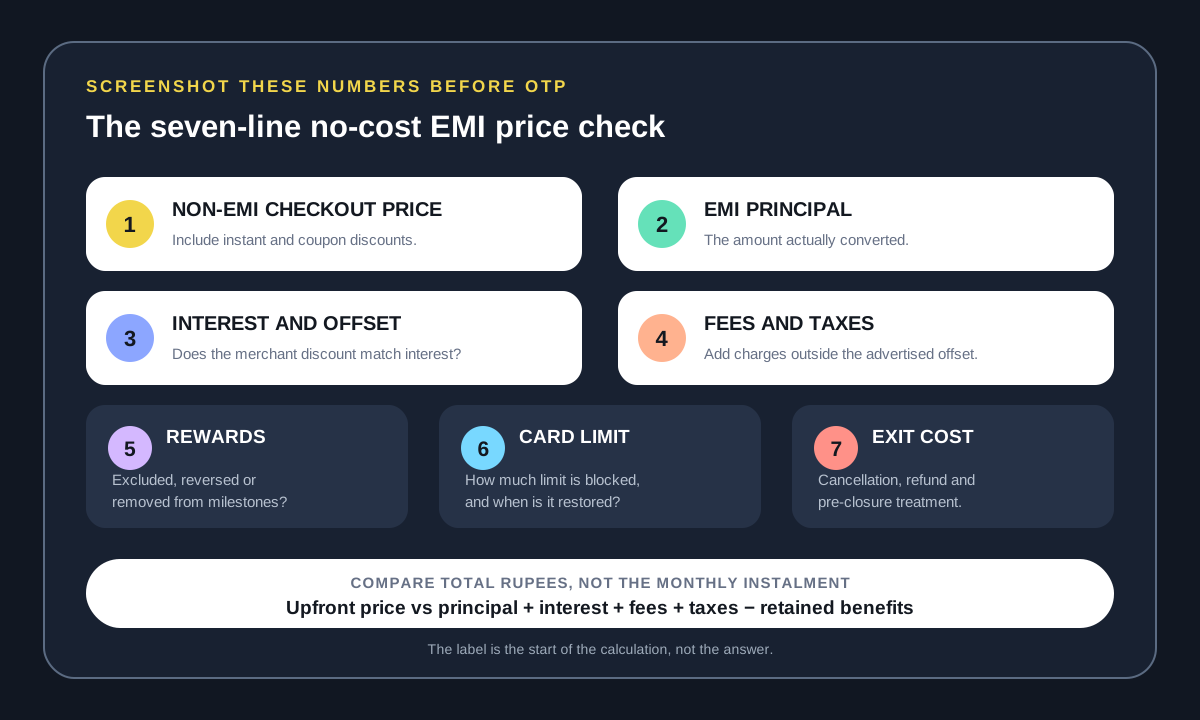
Seven checks before selecting no-cost EMI
- Write down the non-EMI checkout price. Include any instant card, coupon or exchange discount you would otherwise receive.
- Open the EMI breakdown. Record principal, annual rate, tenure, total interest and each instalment.
- Find the merchant discount. Confirm whether it equals the quoted interest or only part of it.
- Add processing fees and taxes. Include anything charged now or on the first statement.
- Check rewards and milestones. Look for EMI in the exclusion list.
- Read cancellation and pre-closure terms. Ask what happens if the order is returned after the plan is booked.
- Check available limit and monthly cash flow. Every instalment must fit alongside new purchases and existing bills.
Only then compare total outflow. A smaller monthly number is not a cheaper purchase; it is a different repayment schedule.
What happens if you cancel the order?
Keep the merchant cancellation confirmation, issuer EMI booking record and every statement until all entries settle. Check whether the principal reversal, interest adjustment, processing fee and reward reversal arrive separately. If an instalment remains due while the cancellation is processing, follow the issuer's written payment guidance rather than withholding the entire card payment.
If the refund and EMI do not reconcile, raise a service request with exact transaction and plan references. Do not initiate a card dispute merely to bypass a valid EMI or cancellation term; use the dispute route when the transaction or handling is actually incorrect.
The practical answer
No-cost EMI can be a real, useful merchant subsidy, but the label describes the intended interest offset—not every consequence of choosing instalments. Compare the final non-EMI price with principal, interest, processing fee, taxes, rewards lost and closure risk.
Choose the plan only when the total cost and the monthly obligation both make sense. If paying upfront would empty an emergency buffer, postponing the purchase may be safer than either option. If you already carry card debt, adding another instalment because it says “no-cost” does not remove the cost of the balances already revolving.