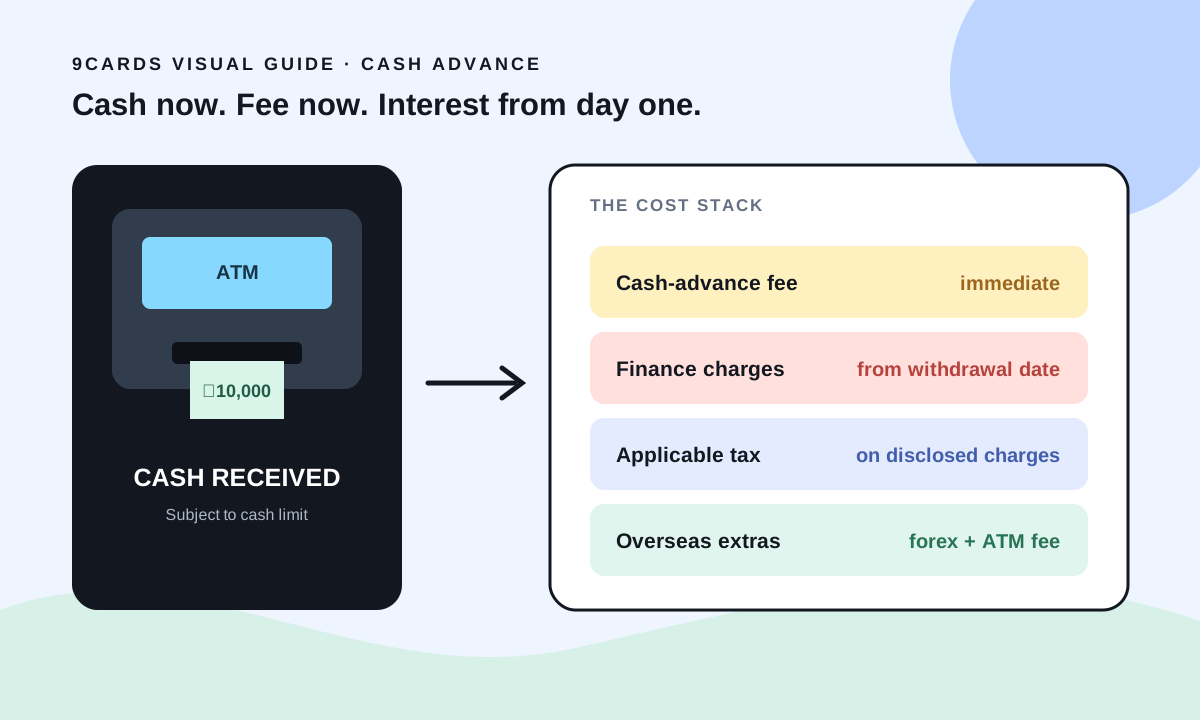
You can withdraw cash from many credit cards at an ATM, subject to a cash limit and PIN, but it is usually one of the card's most expensive ways to borrow. A cash-advance fee can apply immediately, finance charges normally run from the withdrawal date, and there is generally no interest-free period for the cash amount.
The cash limit is also not the same as the total credit limit. A card may have ₹1,00,000 of overall limit but allow only a smaller part to be withdrawn as cash. The amount shown in the issuer app or latest statement is the relevant limit.
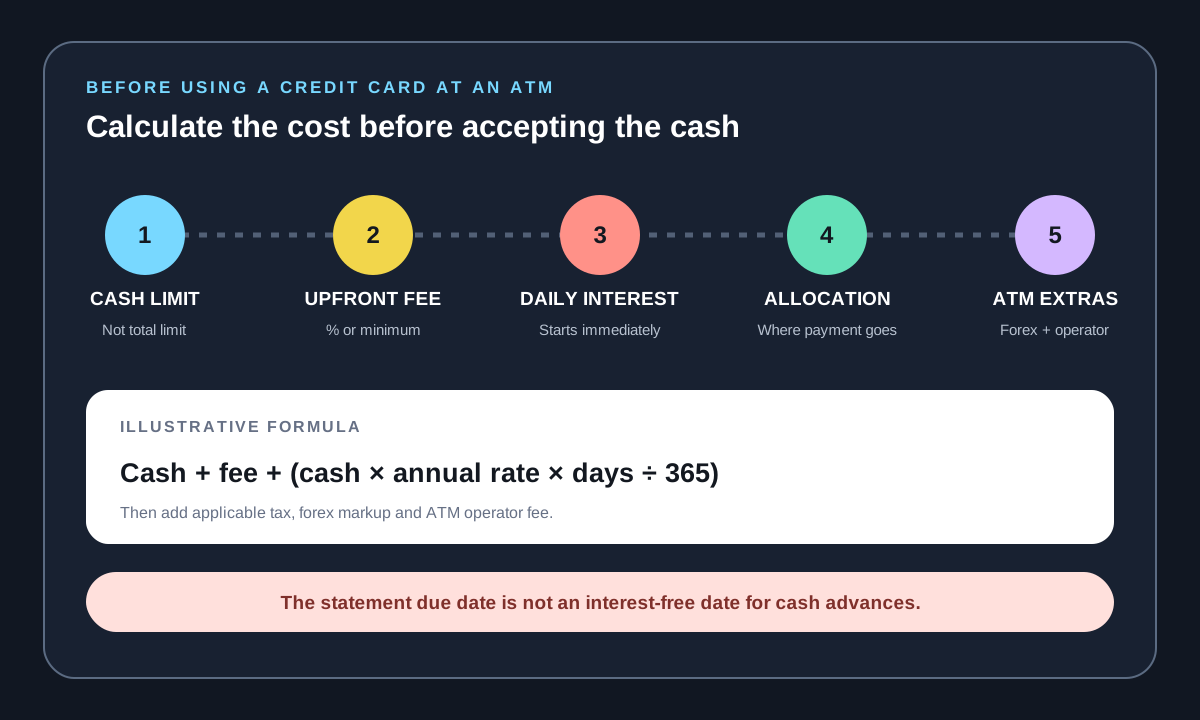
What charges apply to a credit card cash withdrawal?
A domestic ATM cash advance can create three statement components: the amount withdrawn, a cash-advance transaction fee and finance charges. Applicable tax can be charged on fees and interest according to the issuer's terms.
An overseas ATM can add more: foreign-currency conversion, the card's forex markup and a fee charged by the ATM operator. If the machine offers to convert the withdrawal into rupees, that is dynamic currency conversion and needs a separate exchange-rate comparison.
| Possible cost | Domestic ATM | Overseas ATM |
|---|---|---|
| Cash-advance fee | Common | Common |
| Interest from withdrawal date | Common | Common |
| Applicable tax on charges | Can apply | Can apply |
| Card forex markup | No | Can apply |
| ATM operator fee | Depends on machine | Common in some locations |
| Dynamic currency conversion | No | Offered by some ATMs |
The RBI does not set one fee or interest rate for every credit card. Issuers must disclose their rates and cash limit in the card terms. As a dated example, the SBI Card MITC lists a percentage cash-advance fee subject to a minimum, no free-credit period and finance charges from the withdrawal date. Those numbers are an example only; use your own issuer's latest schedule.
Why there is no normal interest-free period
The interest-free period described for purchases usually depends on eligible retail spending and full statement payment. A cash advance is treated differently. Interest begins on the transaction date and can continue until the cash balance is fully repaid under the issuer's allocation rules.
That means withdrawing shortly after the statement date does not create 40 or 50 free days. Waiting for the next bill merely gives interest more days to accrue. Our billing-cycle guide explains why purchase timing can affect eligible retail credit; cash advances are the important exception.
A worked credit card cash-withdrawal example
Suppose you withdraw ₹10,000. Use illustrative—not quoted—terms of a 2.5% fee with a ₹500 minimum and an annual finance rate of 42%. Assume payment reaches the card after 20 days and omit tax for simplicity.
| Component | Calculation | Illustrative amount |
|---|---|---|
| Cash received | ATM withdrawal | ₹10,000.00 |
| Cash-advance fee | Higher of 2.5% or ₹500 | ₹500.00 |
| 20 days of interest | ₹10,000 × 42% × 20/365 | About ₹230.14 |
| Cost before applicable tax | Fee plus interest | About ₹730.14 |
If the issuer also charges interest on billed fees under its terms, or allocates your payment to other balances first, the actual total can differ. The example shows why “I will pay it on the due date” is not enough to make cash cheap.
Cash limit versus credit limit
Four controls can affect the amount available:
- Overall credit limit: total revolving capacity on the card account.
- Cash limit: the portion permitted for cash advances.
- Available cash limit: what remains after balances and previous withdrawals.
- ATM or daily limit: a machine, issuer or transaction control that can be lower still.
A failed withdrawal can occur even when the card has available purchase limit. Repeated ATM attempts can also produce operator fees in some countries, so check the app before retrying.
How repayment is allocated
A payment is not always applied to the most expensive balance first. Issuer terms define the order across taxes, fees, finance charges, EMIs, balance transfers, retail purchases and cash advances.
The current SBI Card terms, for example, place cash advance after several other categories in their stated allocation order. On another issuer the order can differ. This matters because a payment that looks large enough to cover the ATM cash may first clear billed fees, EMI and purchase balances, leaving part of the cash advance accruing interest.
Ask the issuer for a current payoff amount and allocation explanation. Paying the card's displayed current balance is safer than transferring only the cash withdrawn, but pending interest can still appear on a later statement because it accrued between the previous statement and payment date.
Does withdrawing cash affect your CIBIL score?
The ATM transaction type does not come with a published, automatic CIBIL-point penalty. The resulting balance can raise your credit utilisation, and missed or late payments can damage payment history. Frequent reliance on expensive cash can also signal a budget problem even if it is not labelled separately in a consumer score.
Use the formula in our credit-utilisation guide to see how the new balance affects total limits. Never take a cash advance to manufacture a score or pay another card's minimum due without first understanding the debt cycle.
Extra checks at an overseas ATM
- Confirm international and ATM controls are enabled.
- Read the operator fee before accepting.
- Compare the displayed rupee conversion with withdrawing in local currency; do not assume the ATM's conversion is favourable.
- Include your card's forex markup and tax.
- Keep the receipt until the amount settles.
- Avoid repeated small withdrawals because each can trigger a minimum fee.
Our zero-forex card guide explains why zero purchase markup does not necessarily remove ATM operator fees or cash-advance charges.
What to do after an emergency withdrawal
Stop new spending on the card, check the posted cash amount and fee, and ask the issuer for the amount required to clear the cash advance under its allocation rules. Pay as soon as practical rather than waiting for the due date. Then inspect the next statement for residual finance charges.
If the ATM debits the card but dispenses no cash, report the failed transaction immediately using the issuer's official channel and keep the ATM location, time, receipt and complaint number. That is a failed-transaction dispute, not a successful cash advance you should simply repay without question.
Frequently asked questions
Can I transfer credit-card cash to a bank account instead?
Products that transfer funds or convert limit into a loan have their own rate, fee and tenure. They are not the same as an ATM cash advance and should be compared using their total repayment amount.
Does paying the minimum due stop cash interest?
Normally no. Paying the minimum can prevent the account from becoming overdue for that cycle, but the remaining cash balance and other revolving amounts continue under the disclosed finance-charge rules.
Can rewards offset the cash fee?
Cash advances generally do not earn purchase rewards. Confirm your programme terms, but do not assume points will compensate for the fee and day-one interest.
Is debit-card cash cheaper?
Withdrawing your own bank balance is fundamentally different from borrowing on a credit card. Debit-card and ATM limits or fees can still apply, but there is no revolving cash-advance interest on your own available funds.
The practical answer
Use a credit card at an ATM only after checking the cash limit, fee, daily finance rate and repayment allocation. If you proceed, withdraw once rather than repeatedly and repay promptly. The due date is not the start of the cost: for a cash advance, the clock generally starts at the ATM.
Regulatory and issuer materials checked on 31 July 2026. Fees, rates, limits and allocation rules can change.