Cashback is the easiest reward structure to understand and the easiest to overestimate. The rate is printed in large type, the cap is printed in small type, and the relationship between them decides everything.
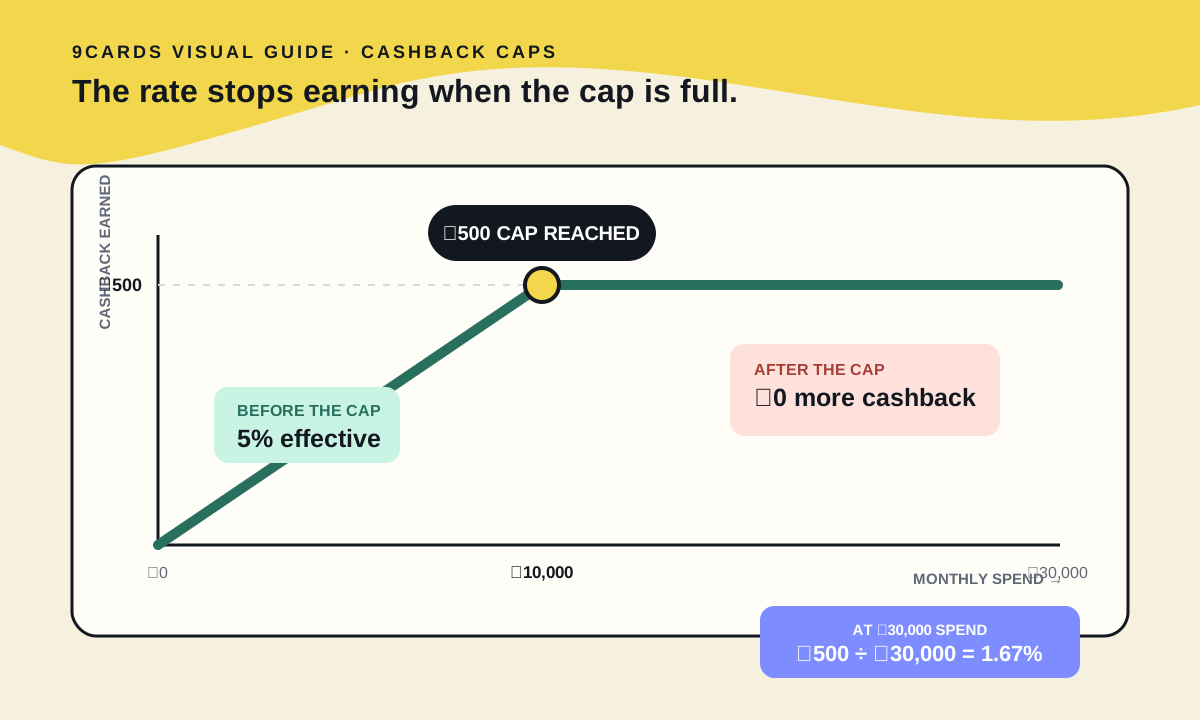
There is one calculation worth doing before any cashback application. Divide the monthly cap by the reward rate. That gives you the spend at which the card stops paying its advertised rate. Everything below is the good case; everything above is arithmetic working against you.
What the cap does to the rate
Take a card offering five per cent, capped at ₹500 a month. The cap is reached at ₹10,000 of qualifying spend. After that, additional spending in the category earns nothing at all.
| Monthly qualifying spend | Cashback earned | Effective rate |
|---|---|---|
| ₹5,000 | ₹250 | 5.00% |
| ₹10,000 | ₹500 | 5.00% |
| ₹15,000 | ₹500 | 3.33% |
| ₹20,000 | ₹500 | 2.50% |
| ₹40,000 | ₹500 | 1.25% |
| ₹60,000 | ₹500 | 0.83% |
The advertised rate is accurate. It is simply the rate on the first ₹10,000 rather than the rate on your spending. Anyone putting ₹40,000 a month through this card is holding a 1.25% card that is marketed as a 5% card, and both descriptions are technically defensible.
Which is better: five per cent capped, or flat one and a half?
This is the most common cashback question and it has a precise answer, which is unusual and pleasant. The crossover is the cap divided by the flat rate. For a ₹500 cap against a flat 1.5%, that is ₹33,333 of monthly spend.
| Monthly spend | 5% capped at ₹500 | Flat 1.5%, no cap | Better |
|---|---|---|---|
| ₹10,000 | ₹500 | ₹150 | Capped card |
| ₹20,000 | ₹500 | ₹300 | Capped card |
| ₹33,000 | ₹500 | ₹495 | Line ball |
| ₹50,000 | ₹500 | ₹750 | Flat card |
| ₹1,00,000 | ₹500 | ₹1,500 | Flat card |
Below the crossover the capped card wins clearly. Above it, the flat card pulls away and keeps going. This is why plenty of people hold both: the capped card for the category it accelerates, the flat card for everything past the ceiling. Two no-fee cards used deliberately beat one card used hopefully.
Where the reset falls matters more than people expect
Most caps reset per statement cycle rather than per calendar month. Those are different periods, and if your statement closes mid-month then "this month's cap" is not a meaningful phrase.
The practical consequence appears with large purchases. A ₹40,000 purchase made just after the cycle closes earns the full cap in the new cycle. The same purchase made two days earlier lands in a cycle where the cap may already be spent, earning nothing. Same card, same purchase, different outcome, decided by a date most people cannot name.
The exclusion list is part of the rate
A rate applies to qualifying spend, and the qualifying definition does a great deal of work.
| Spend type | Usually earns cashback | Note |
|---|---|---|
| Retail and online purchases | Yes | The base case |
| Utility bills | Varies | Often a separate rate, sometimes excluded |
| Fuel | Usually not | Excluded on most cards |
| Rent | Almost never | Excluded, and often surcharged |
| Insurance premiums | Varies | Frequently excluded despite being recurring |
| Wallet loads, gift cards | No | Treated as cash equivalents |
| EMI conversions | Usually not | Converting typically forfeits the reward |
| Cash withdrawals | No | Never |
A card with an excellent headline rate and a long exclusion list routinely loses to a duller card that counts everything. Before choosing on rate, check that the rate applies to what you actually buy.
Cashback is not always cash
The cleanest structure is a statement credit: the money appears on your bill and reduces what you owe, with nothing to claim and nothing to expire.
Plenty of cards described as cashback cards do something else. They award points that convert to a credit at a fixed ratio, sometimes only above a minimum balance, occasionally only through a redemption portal. Each extra step is a place where value leaks, either because the conversion is worse than the headline or because you forget to do it. When comparing two cards, compare what lands in your account.
A five-minute check
- Divide the cap by the rate. That is your spend ceiling for the good rate.
- Compare that ceiling to what you actually spend in the category each month.
- Find your statement date, because that is when the cap resets.
- Read the exclusion list and check your two largest recurring spends against it.
- Confirm whether the payout is a statement credit or something you have to redeem.
If the ceiling sits comfortably above your spending, the headline rate is real for you and the card is a good fit. If your spending is well above it, you are looking at a lower-rate card with better marketing, and a flat uncapped card will probably serve you better.