A pending credit-card transaction usually means the issuer approved an authorisation request and reserved part of your available limit, but the merchant has not yet completed the clearing process that turns it into a posted transaction. It is neither automatically a duplicate charge nor proof that money has finally settled.
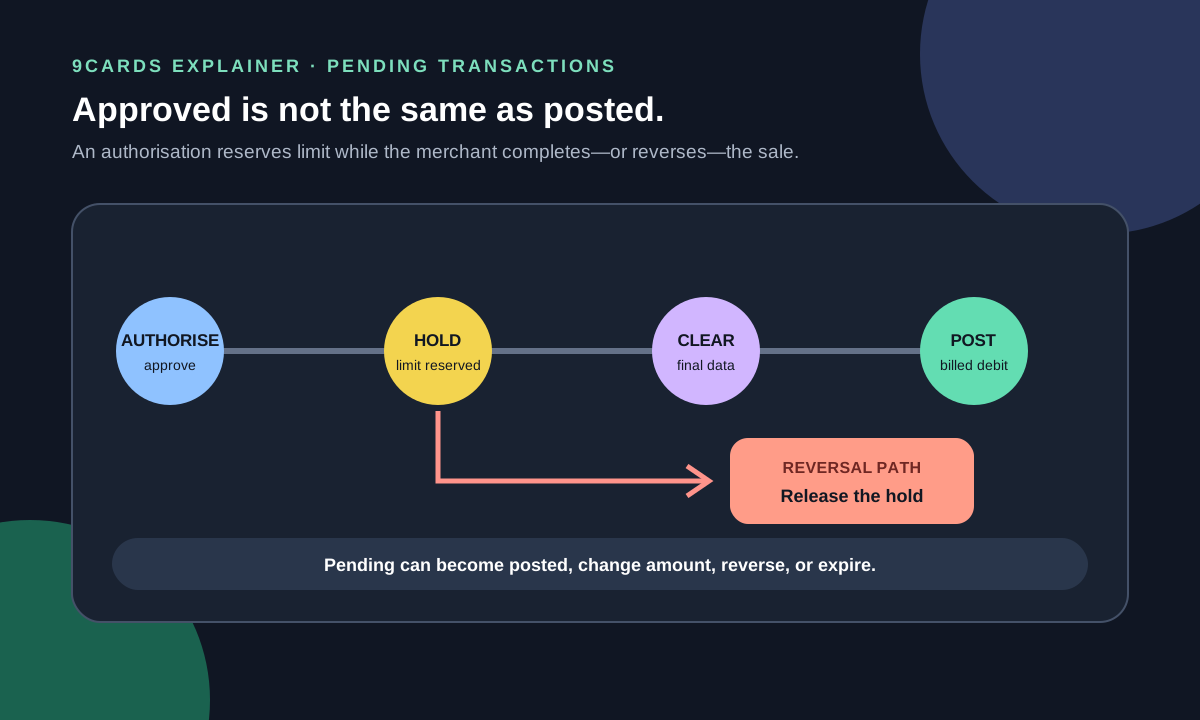
Most card purchases pass through at least two visible stages. Authorisation asks whether the card can support the purchase and places a hold. Clearing or presentment sends the completed transaction data. The issuer then posts the final amount to the account. If the sale is cancelled or never completed, a reversal should release the hold; in some cases the unmatched hold instead drops away after its validity period.
The four stages behind one card purchase
The exact plumbing has more participants, but this cardholder view is enough to diagnose most pending entries.
| Stage | What happens | What you may see |
|---|---|---|
| Authorisation | Merchant requests approval; issuer checks controls and available limit | Instant alert and pending entry |
| Hold | Approved amount reduces available credit | Limit lower even though bill is not final |
| Clearing/presentment | Merchant submits completed transaction data through its acquirer | Pending entry becomes posted, sometimes with changed descriptor or amount |
| Settlement | Institutions exchange funds under network processes | Usually not shown as a separate cardholder event |
| Reversal or expiry | Merchant cancels the approval, or unmatched hold is released | Pending entry disappears and limit returns |
Visa's authorisation and reversal guidance describes an approved authorisation as reducing funds or available credit through an authorisation hold. It also explains that merchants should reverse authorisations that will not be completed. The document is useful for the network mechanism; its merchant time frames are not a universal promise for every Indian card transaction.
Why available credit falls before the transaction posts
The hold protects the merchant from completing a sale that the issuer never approved. If a ₹12,000 purchase is authorised on a card with ₹50,000 available, the app may show only ₹38,000 available immediately even though the ₹12,000 remains pending.
This is not the same as interest being charged. A pending retail authorisation is normally outside the final statement balance until it posts. But it still matters because the reserved amount can cause a later purchase to be declined or bring the card close to its limit.
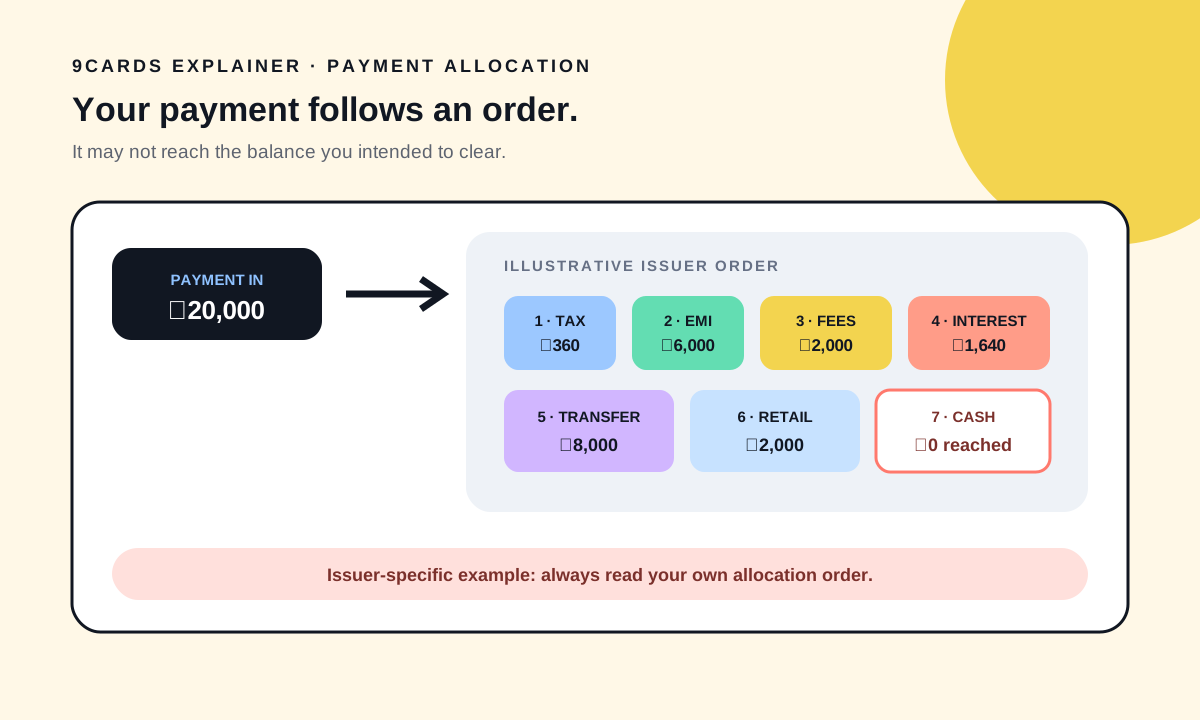
Do not pay a made-up amount merely to “clear” one pending entry unless the issuer confirms what it will do. A card payment reduces account outstanding or creates credit; it does not force the merchant to submit or reverse its authorisation message.
Why the pending amount can differ from the final amount
For an ordinary fixed-price shop purchase, the authorised and posted amounts are often identical. They can legitimately differ when the merchant does not know the final amount at the start.
| Situation | Initial authorisation may represent | Final posted amount may reflect |
|---|---|---|
| Hotel | Estimated room and permitted incidentals | Final room, tax and actual extras |
| Vehicle rental | Estimated rental | Duration, fuel, tolls or agreed adjustments |
| Fuel dispenser | Preauthorisation or estimated amount | Fuel actually dispensed |
| Restaurant in markets with later tipping | Meal amount or estimate | Meal plus final authorised tip |
| Split shipment | Order approval | One or more completed shipment entries |
| Cancelled purchase | Full intended amount | No posted sale if correctly reversed |
Visa's guidance requires an estimated authorisation to be a genuine estimate and explains incremental authorisations and partial reversals when the estimate changes. Rules vary by network, country and merchant type, so treat the table as an explanation—not permission for an unexplained amount.
If the final posted amount is wrong, keep the invoice and contact the merchant. If you did not approve the transaction at all, block or secure the card and follow the steps in our unauthorised-transaction guide rather than waiting for the pending label to change.
Pending, reversed and refunded are different
These words describe different paths.
- Pending: an authorisation is visible but has not become a final posted debit.
- Reversed: the merchant or payment chain cancelled all or part of the authorisation, allowing the hold to be released.
- Expired/dropped: the issuer released an unmatched hold after its validity period; no completed debit remains at that moment.
- Refunded: a completed purchase posted, and a separate credit was later sent back.
- Disputed: the cardholder formally challenged a posted or recognised transaction through the issuer process.
A reversal can make the pending entry disappear without a separate credit because the final debit never posted. A refund normally creates a credit entry because it unwinds a completed purchase. Our refund-after-bill guide explains how a posted refund can affect the amount due.
Why a pending transaction sometimes disappears and returns
One common sequence is:
- The merchant obtains an authorisation.
- The hold is released because the merchant reverses it or does not present it in the expected window.
- The merchant later submits a valid completed transaction.
- A posted debit appears, sometimes without the old pending line.
The temporary return of available limit is not proof that the merchant waived the purchase. Keep enough limit and money available for a genuine completed transaction until the merchant confirms cancellation.
A descriptor can also change between stages. An early alert may show a payment facilitator or abbreviated name; the posted line may show the merchant, location or a different formatting of the same data. Compare amount, date and reference information before concluding that two labels represent two purchases.
Is one pending and one posted entry a duplicate?
Not necessarily. Issuer apps differ in how quickly they remove the pending display after matching the clearing record. For a short period, the same purchase can appear once in pending and once in posted while only one amount is ultimately billed.
Use this test:
| What you see | Likely interpretation | Next step |
|---|---|---|
| Same amount pending and posted; one limit impact | Display overlap during matching | Monitor briefly and retain receipt |
| Two posted debits | Possible duplicate completion | Contact merchant, then issuer if unresolved |
| Two pending entries after one attempt | Multiple authorisations, possibly from retries | Ask merchant to reverse unused approvals |
| One pending entry after merchant says cancelled | Reversal may still be travelling | Get cancellation proof and monitor issuer timeline |
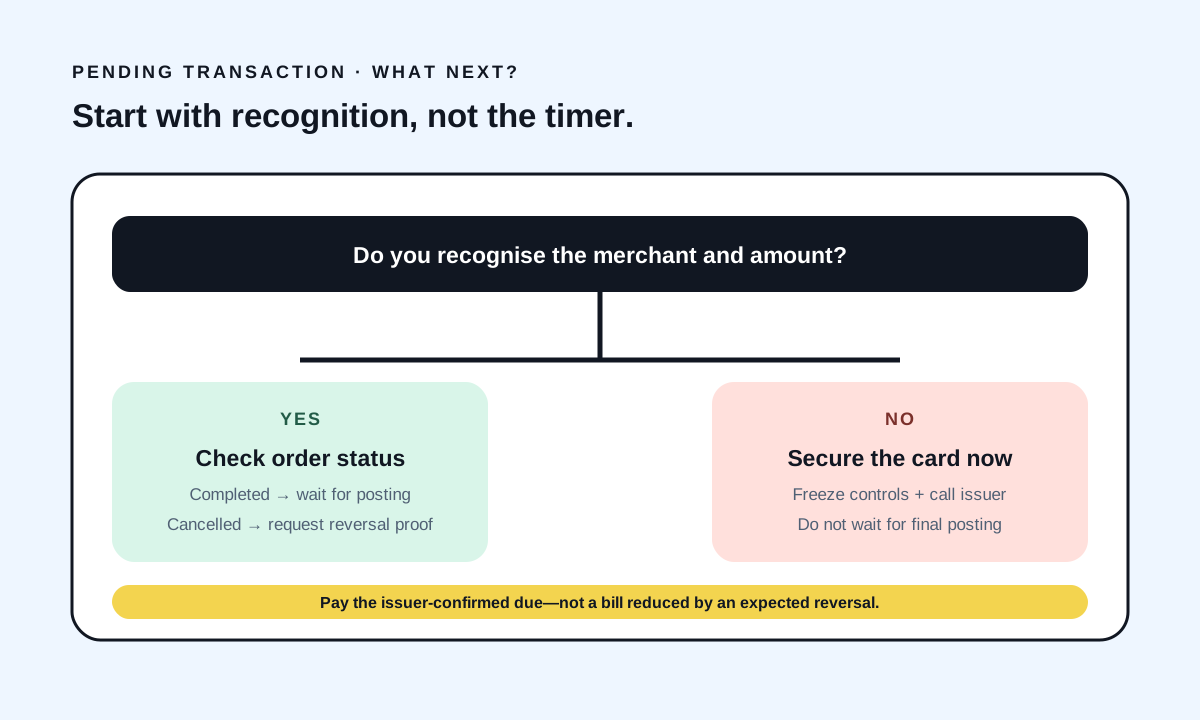
| Unknown pending entry | Possible unauthorised attempt | Secure card immediately; contact issuer |
Never rely only on arithmetic in the available-limit display. Ask the issuer whether each entry has a distinct authorisation or retrieval reference and whether both have been presented.
How long can a credit-card transaction stay pending?
There is no single honest number for every transaction. Network validity windows differ by card-present versus online transactions and by industries such as lodging and vehicle rental. Issuer display behaviour can add another delay. Weekends are not the only factor because card networks operate continuously while merchant accounting and support teams may not.
The Visa authorisation-framework notice illustrates why universal internet answers are unreliable: its maximum authorisation-to-clearing windows differ by transaction type and are stated for a specific regional framework.
Use the time shown in your issuer's current FAQ or support response for the actual transaction. SBI Card's transaction-status FAQ, for example, points cardholders to unbilled transactions and transaction history; it does not turn every unbilled item into a final charge.
What to do when a pending transaction is stuck
If you recognise it and received the goods
Wait for normal posting, keep the receipt and leave sufficient available limit. Contact the merchant if the transaction remains pending beyond the issuer's stated window or if the final amount should have been adjusted.
If the merchant cancelled the sale
Ask for written cancellation and confirmation that the authorisation was reversed, not merely that an order record was closed. Give the issuer the date, amount, merchant and authorisation reference if available.
If the amount is only a hold
Hotels and rentals may release part of an estimate after checkout or return. Ask the merchant for the final folio or receipt and the date it sent the reversal. Your issuer cannot always remove a valid merchant hold solely from a verbal explanation.
If you do not recognise it
Freeze the card or disable relevant transaction controls, call the official issuer number and document the report. Do not wait for posting to take security action. The formal dispute path may depend on status, but card protection does not.
If a due date is approaching
Pay according to the issuer's posted total and confirmed amount due, not by subtracting an expected reversal. Pending entries can post before the statement closes. Once billed, the rules in our billing-cycle guide apply.
Frequently asked questions
Does pending mean the card payment failed?
No. It usually means authorisation succeeded while completion remains outstanding. A failed attempt can also leave a temporary hold, so the merchant's order status and issuer transaction status both matter.
Can I dispute a pending transaction?
Issuers often handle formal disputes after posting because the final amount and merchant data are then available. Still report an unknown pending entry immediately so the card can be secured and the issuer can advise the correct next step.
Will a pending transaction appear in my statement total?
Only posted transactions are normally included when the statement is generated. A pending transaction can post before the cycle closes, so do not assume it will remain outside the bill.
Why did my available limit return without a refund?
The authorisation hold may have been reversed or released before any final debit posted. That is not a refund because there was no completed debit to credit back.
Can a merchant force the issuer to release a hold?
The merchant can send a properly linked reversal through its acquirer. The issuer then matches it and adjusts available credit. A support agent merely saying “cancelled” may not be the same as sending the network message.
Does a long pending entry earn rewards?
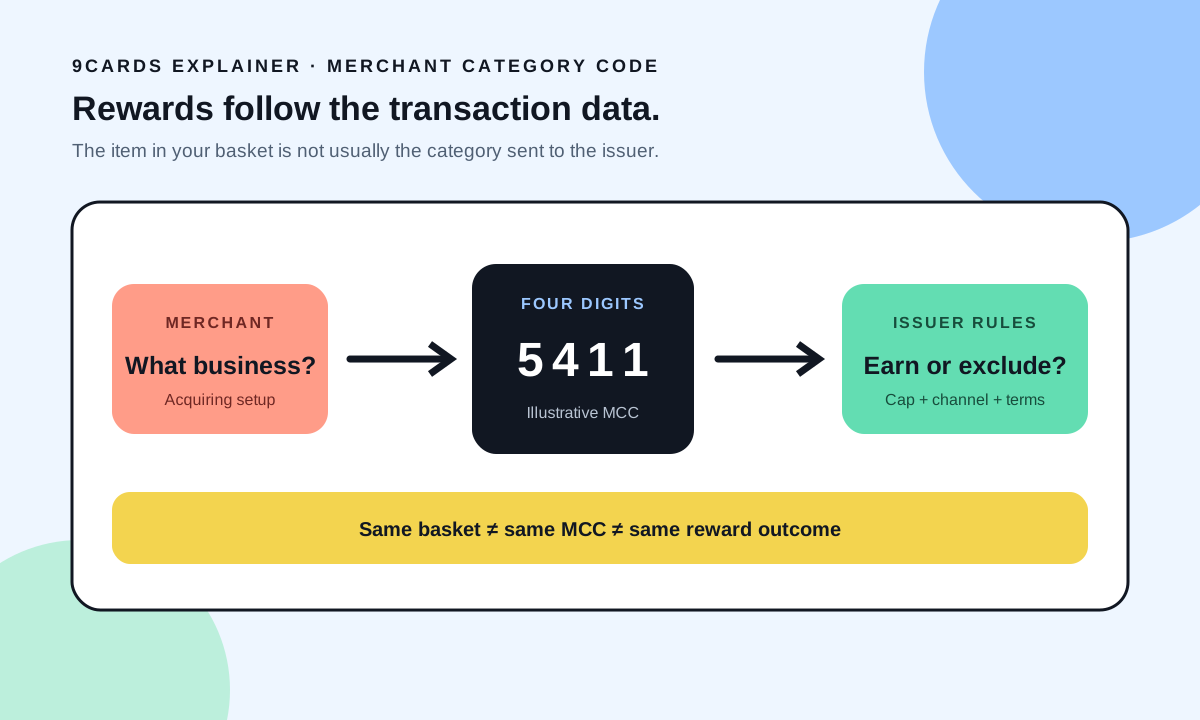
Rewards are usually based on eligible posted transactions, not temporary holds. Wait for final posting before testing the MCC, cap and exclusions described in our MCC explainer.
The practical answer
Pending is a processing state. It means an approved amount is reserved while the merchant either completes the transaction or releases it. Match the entry to the order, wait for final posting before calculating rewards or the bill, and obtain a merchant reversal when a cancelled sale is holding limit.
Treat an unknown transaction differently: secure the card and report it immediately, regardless of whether the app labels it pending or posted.
Network and issuer materials checked on 31 July 2026. Authorisation validity, display labels and release timing vary by network, merchant type, issuer and region.