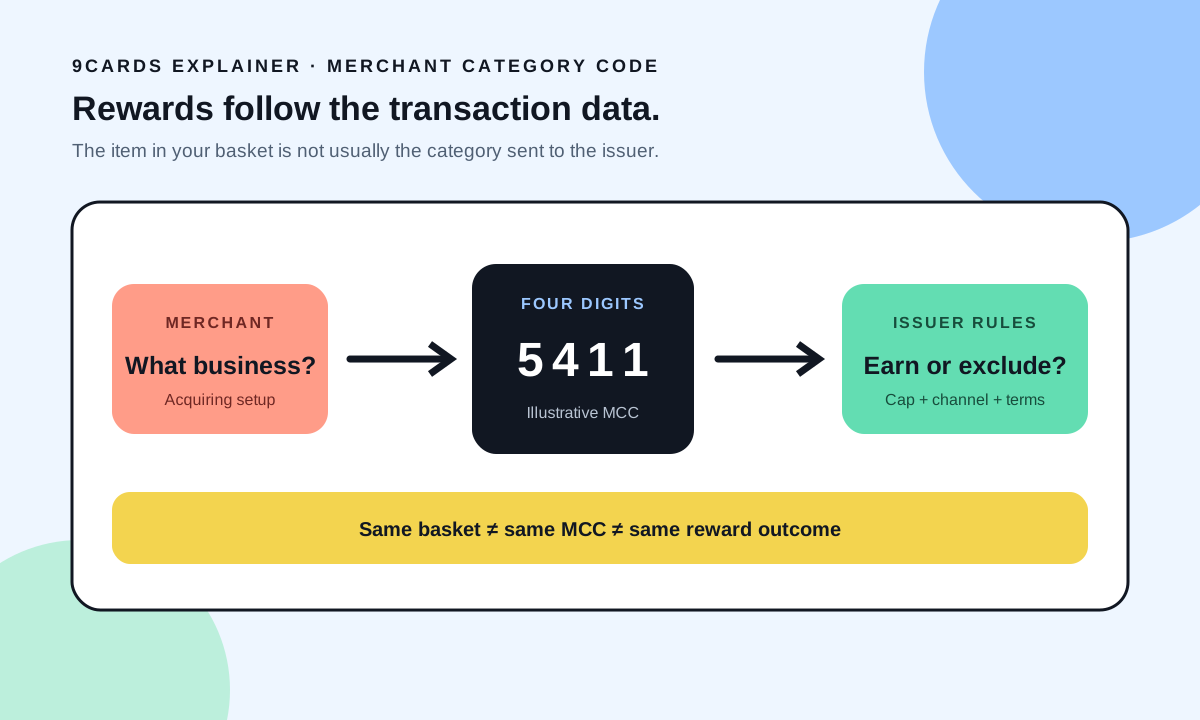
A merchant category code, or MCC, is a four-digit classification carried with a card transaction. It tells the payments system what kind of business accepted the payment: grocery store, airline, fuel station, government service, professional service and so on. Credit-card issuers use that classification for reward eligibility, category bonuses, exclusions, fees and risk controls.
That is why buying something that feels like groceries does not guarantee a grocery reward. Your issuer normally does not receive an itemised basket showing rice, soap and a phone charger. It receives transaction data that includes the merchant identity, amount and MCC. If the accepting merchant is classified as a general retailer, marketplace or another excluded category, the reward engine can follow that code even when the item itself would fit a bonus category.
What an MCC does—and what it does not do
The MCC describes the merchant activity represented by the transaction. It is not a product barcode and it is not a promise about rewards.
| Data or decision | What it describes | Who generally controls it |
|---|---|---|
| Merchant category code | The business category used for card processing | Merchant's acquirer, following network standards |
| Merchant descriptor | The name and location shown with the transaction | Merchant/acquirer data, displayed by the issuer |
| Reward rule | Whether that MCC earns base, accelerated or no rewards | Card issuer and programme terms |
| Item purchased | The goods or service in the basket | Merchant; usually not sent as card reward data |
| Final points or cashback | Result after caps, exclusions, refunds and adjustments | Issuer's reward engine |
Visa's current Merchant Data Standards Manual sets out merchant-data requirements and a detailed MCC listing. It requires merchant data to remain consistent through a transaction's life cycle and explains how members classify merchants. It is useful evidence of how the mechanism works; it is not the reward programme for any Indian card.
An issuer can exclude an MCC, group several MCCs into one reward category, or apply a cap after an eligible transaction earns. The same MCC can therefore produce different rewards on two cards. The network classification and the issuer's programme are separate layers.
Who assigns the merchant category code?
The merchant's acquiring bank or payment provider normally assigns the MCC when setting up card acceptance, using the relevant network rules and the merchant's primary business. The cardholder does not choose it, and the card-issuing bank usually consumes the code rather than creating it.
Classification becomes less obvious when a business does several things. A hotel can sell rooms, food and spa services. A department store can sell groceries and electronics. A marketplace can collect money on behalf of many sellers. Network standards contain rules for when one merchant identity may or must use multiple MCCs, but what reaches your issuer depends on the acceptance setup used for that particular transaction.
This produces three useful conclusions:
- A shop's brand name is not enough to predict its MCC.
- Two outlets under a similar brand can use different acquirers or acceptance arrangements.
- Paying through an intermediary can produce different transaction data from paying the underlying seller directly.
None of those automatically means someone made an error. It means the payment path matters.
Why similar purchases can earn differently
Consider four illustrative transactions. These are mechanisms, not claims about any named card.
| Purchase as the cardholder sees it | How it may reach the issuer | Possible reward outcome |
|---|---|---|
| Groceries paid at a supermarket terminal | Grocery-related merchant MCC | Grocery bonus if that code is eligible and under the cap |
| Groceries bought inside a broad marketplace | Marketplace or general-retail classification | Base reward, another category or exclusion |
| Restaurant order paid to the restaurant | Eating-place MCC | Dining rate if included |
| Restaurant order paid through a platform | Platform, marketplace or food-service MCC depending on setup | Can differ from direct payment |
The word may is important. A platform is not always classified the same way, and a marketplace does not automatically remove rewards. The only reliable answer comes from the transaction data and the card's current terms.
Digital wallets add another distinction. Some transactions are a purchase from an eligible merchant funded through a wallet; others are a wallet load or cash-like funding transaction. Those are economically and technically different. A reward programme may exclude wallet loads even though later spending from the wallet buys ordinary goods.
MCC exclusion versus reward cap
A missing reward can come from several rules that look identical on a statement. Separate them before blaming the MCC.
| Reason for no additional reward | What happened | Best evidence |
|---|---|---|
| Excluded MCC | Transaction category is outside the programme | Reward terms plus issuer-confirmed MCC |
| Monthly category cap reached | Eligible spend exceeded the accelerated band | Reward ledger and cap calculation |
| Minimum transaction rule | Amount was below the programme threshold | Programme terms |
| Channel restriction | Offer applied only online, contactless or through a named route | Offer terms and transaction channel |
| Merchant-specific offer not triggered | The payment descriptor or route did not match the offer | Offer enrolment and transaction details |
| Reward posted later | Transaction is eligible but not yet in the reward cycle | Issuer's posting timeline |
| Refund or reversal | Earlier reward was removed with the transaction | Card and reward statements |
Our cashback-cap explainer shows how to distinguish an earning cap from an excluded transaction. If the programme uses points, the points-versus-cashback guide explains why the posted point count still needs a redemption-value check.
How to investigate missing credit-card rewards
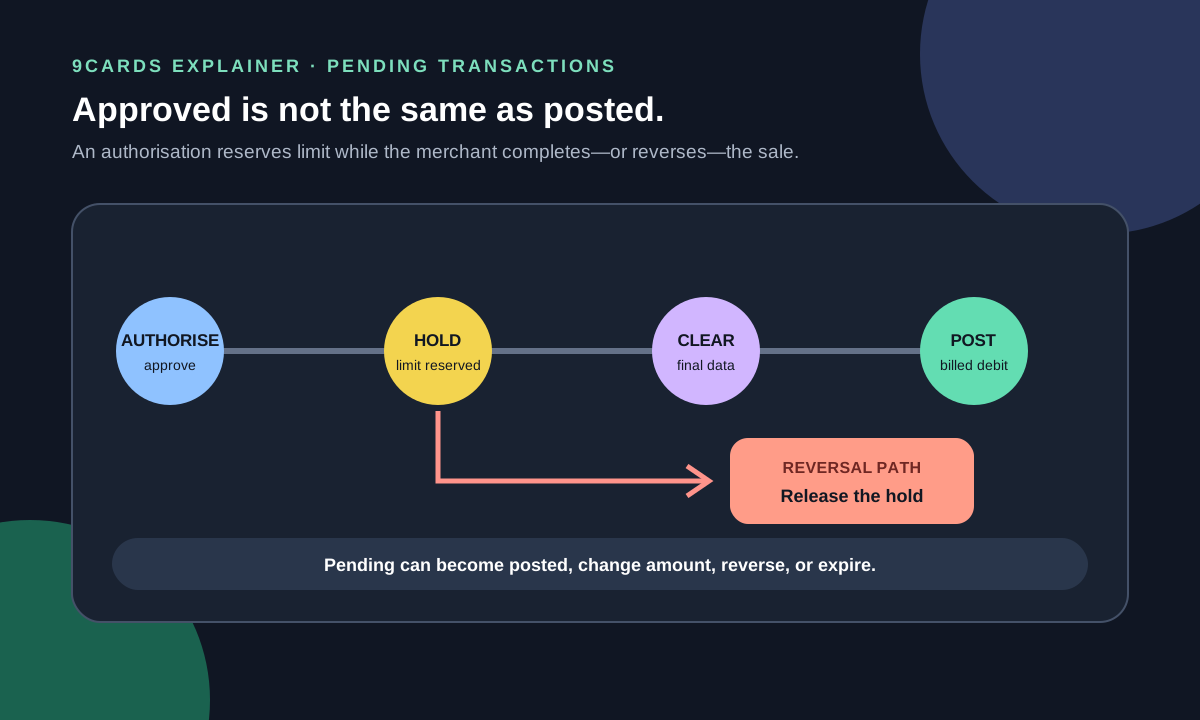
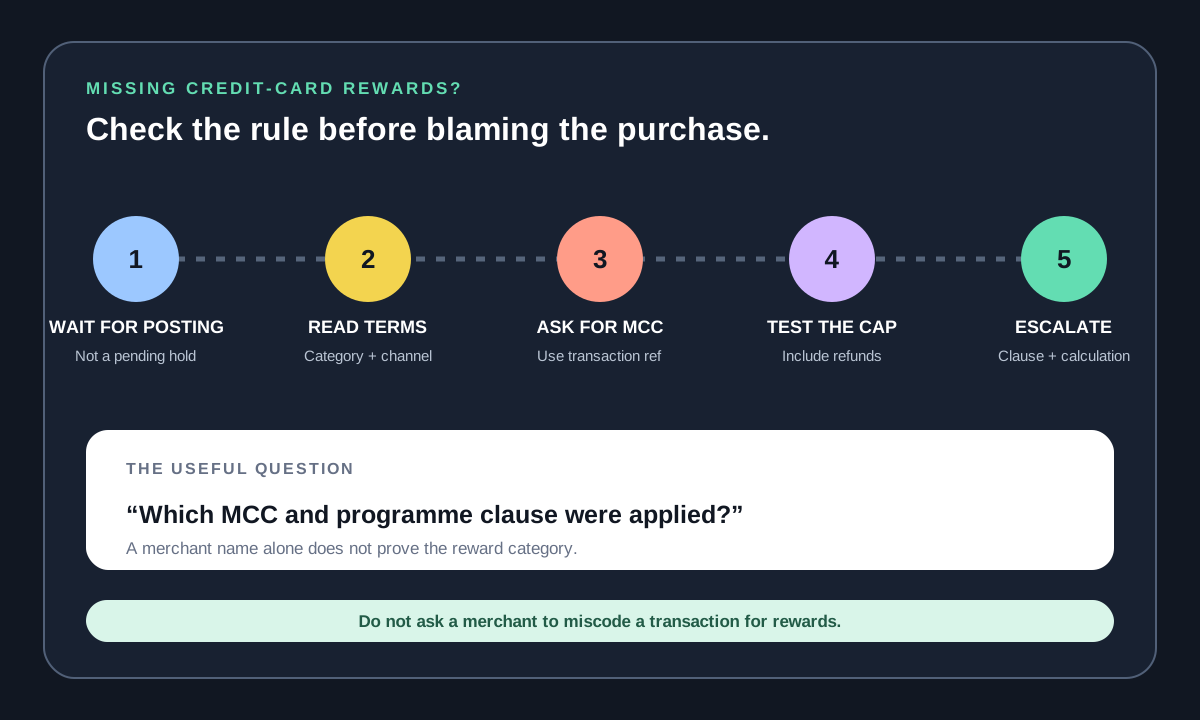
Start only after the transaction is posted. Pending authorisations can change amount, descriptor or status before clearing, as our pending-transaction explainer explains.
Then use this sequence:
- Save the posted transaction details. Record date, final amount, merchant descriptor and reference number.
- Read the current reward terms. Look for eligible categories, excluded MCCs, channel conditions, minimum amounts and caps.
- Check the reward ledger, not only the card statement. Some issuers post points after statement generation or in batches.
- Calculate the cap. Include earlier eligible transactions in the same month or statement cycle and account for refunds.
- Ask the issuer for the MCC used. Request a written answer tied to the transaction reference. The merchant receipt may not display the processing MCC.
- Ask which exact programme clause was applied. “Merchant not eligible” is less useful than an MCC and a cited exclusion.
- Escalate a mismatch with evidence. If the confirmed MCC is listed as eligible and the cap remains, send the calculation to the issuer's grievance channel.
Do not ask a merchant to re-run a genuine purchase under a more rewarding category. Deliberately miscoding transactions can breach acceptance rules. The correct remedy for an incorrect classification is for the merchant to work with its acquirer—not for a cardholder to select a convenient code.
Can an MCC change after you have paid?
A normal completed transaction should carry consistent merchant data through its life cycle, but several events can make the final entry look different from the first alert. The authorisation can use an abbreviated descriptor. Clearing data can add a location or platform name. An initial hold can disappear and a separately presented transaction can post. A refund can reverse rewards later.
Merchant acceptance setups also change over time. A business can change acquirer, payment facilitator or operating model. A transaction that earned last month is evidence about last month, not a guarantee that every future payment to the same visible brand will carry identical data.
This is why screenshots of somebody else's reward statement are weak evidence. They may involve a different outlet, route, issuer, card variant, cap period or MCC.
MCCs and annual-fee waivers
Reward exclusions and annual-spend exclusions are not always the same list. A transaction can earn no points yet still count towards a renewal-fee waiver—or earn rewards but be excluded from a milestone—depending on the terms.
Read each definition separately. Our fee-table guide explains why “qualifying spend” needs its own check. Do not infer fee-waiver treatment from the reward line or vice versa.
Frequently asked questions
Is MCC printed on a credit-card statement?
Usually not. Statements generally show the merchant descriptor, date and amount. Ask the issuer for the MCC associated with a posted transaction if category treatment matters.
Does buying groceries always use a grocery MCC?
No. Classification follows the accepting merchant and payment route, not each item. A supermarket, department store and marketplace can sell similar goods under different merchant categories.
Can the issuer change a merchant's MCC?
The issuer can decide reward treatment, but merchant classification normally originates on the acquiring side under network standards. If classification appears wrong, the merchant should raise it with its acquirer.
Are MCC numbers identical on every network?
Many common categories align, but network standards, descriptions and processing rules can differ. Use the network and issuer documentation relevant to the actual transaction rather than assuming every list is interchangeable.
Why did a refund remove more points than expected?
The original transaction may have earned a category bonus or contributed to a cap or milestone. A refund can reverse that earlier benefit and recalculate the period. Compare both reward entries, not only the refund amount.
Can customer care promise that a merchant will earn next time?
It can explain current treatment, but a future transaction can take a different route or encounter a changed programme. Written terms and the posted transaction remain stronger evidence than a prediction.
The practical answer
An MCC is the bridge between a merchant's card-acceptance setup and an issuer's reward rules. It classifies the transaction; it does not inspect your basket or guarantee points. When rewards are missing, wait for posting, identify the MCC, test the cap and exclusions, and ask the issuer to cite the rule it applied.
That process will not turn every purchase into a bonus purchase. It will tell you whether the outcome came from classification, programme design or a correctable error—which is the distinction that matters.
Visa network materials and issuer practices checked on 31 July 2026. MCC standards and reward-programme terms can change; verify the current issuer terms for your transaction.