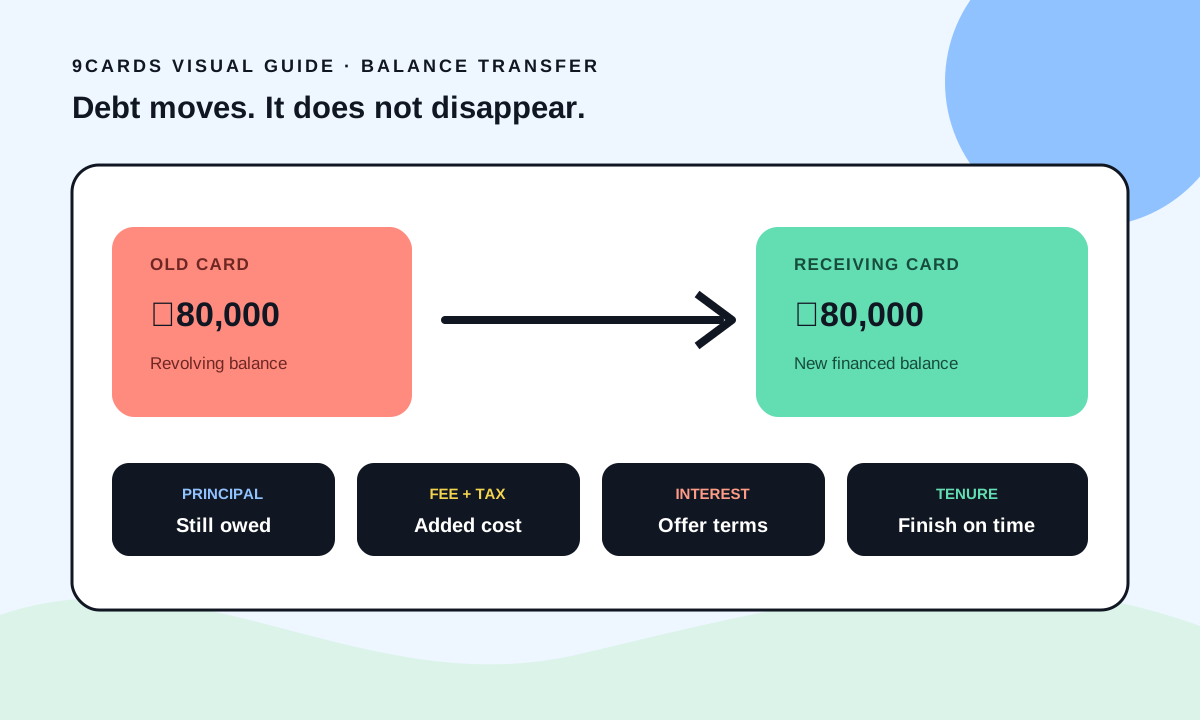
A credit card balance transfer moves eligible outstanding debt from one card to another card, usually under a promotional rate or fixed repayment plan. It does not make the debt disappear. The new card pays the old card, reduces its own available limit and then bills you under the transfer terms.
The offer is useful only when its processing fee, applicable tax, interest, tenure and effect on new purchases cost less than your realistic alternative—and when you can finish repayment before the promotional terms end.
How a credit card balance transfer works
You request a transfer from the receiving issuer, identify an eligible card held in your name and choose from the offers available to your account. If approved, the receiving issuer sends the amount to the old card account, often by NEFT, and records a new balance or instalment plan on the receiving card.
| Stage | Old card | Receiving card |
|---|---|---|
| Before transfer | Carries expensive revolving balance | Has available limit |
| Transfer settles | Receives payment | Available limit falls by transfer amount and charges |
| During offer | Any residual amount still needs payment | Transfer follows promotional rate or EMI terms |
| End of tenure | Should show zero transferred debt | Remaining balance may face standard terms |
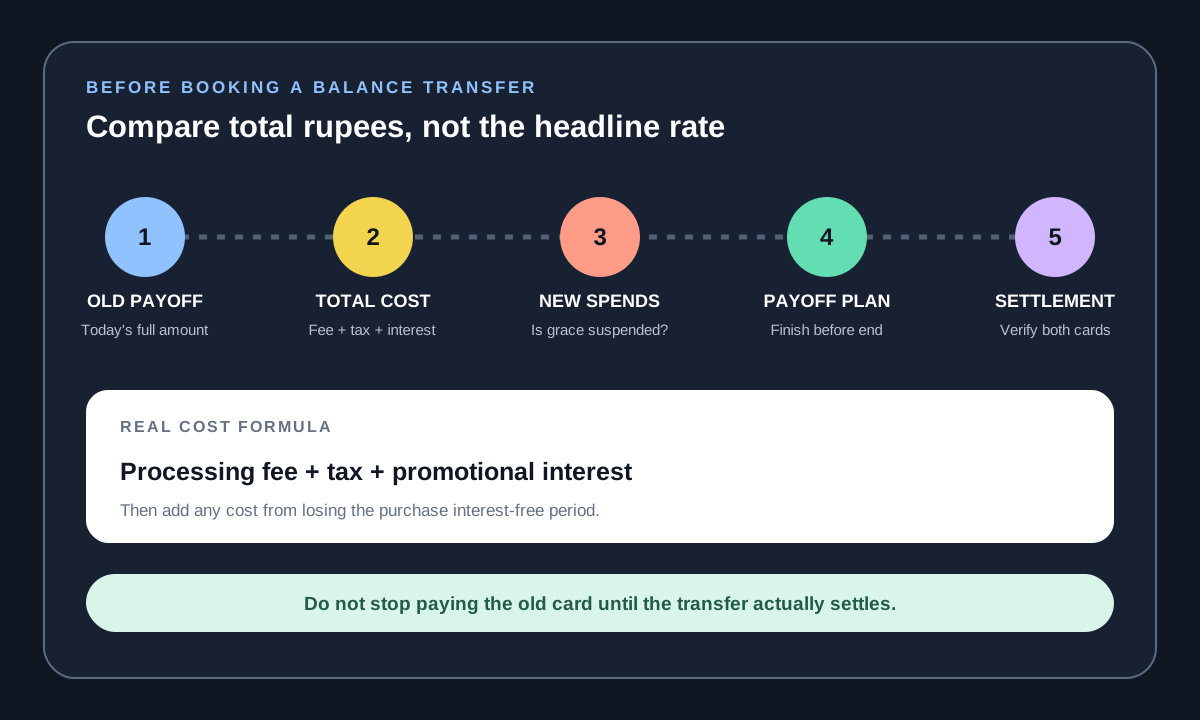
Do not stop paying the old card until the transfer is actually credited. Processing can take working days, and a due date may arrive first.
The SBI Card balance-transfer FAQ, for example, describes transfers from cards issued by other Indian banks, eligibility linked to available limit and direct payment to the other card. Its amounts, percentages and processing time are issuer-specific examples.
What does a balance transfer really cost?
Use total rupees, not the promotional headline:
Total cost = processing fee + tax on fee + promotional interest + other disclosed charges + cost of any lost purchase grace
Suppose an illustrative offer transfers ₹80,000 for six months, charges a 2% processing fee and applies 1.25% interest per month on the transfer balance. Ignore declining-balance differences for this simple ceiling estimate and assume 18% GST on the fee.
| Component | Illustration |
|---|---|
| Debt transferred | ₹80,000 |
| Processing fee at 2% | ₹1,600 |
| GST on processing fee | ₹288 |
| Six months' simple interest at 1.25% monthly | ₹6,000 |
| Illustrative total cost above principal | ₹7,888 |
The actual calculation may use a daily or reducing balance, fixed EMI, different first-period length or tax treatment. Ask for the amortisation schedule and total repayment amount before accepting.
The SBI Card balance-transfer page shows how one issuer publishes a processing fee and rate. Those live prices can change and should never be copied into a general comparison without a “checked on” date.
Balance transfer versus balance transfer on EMI
A short promotional transfer may use a special rate for a limited number of days and expect repayment through the card's normal statement. A balance transfer on EMI converts the amount into scheduled instalments.
| Feature | Promotional balance transfer | Balance transfer on EMI |
|---|---|---|
| Repayment structure | May revolve within a short offer window | Fixed instalments over selected tenure |
| End-date risk | Standard card rate may apply if balance remains | Foreclosure or missed-EMI terms can apply |
| Monthly obligation | Depends on statement and minimum due | EMI forms part of the monthly bill |
| Best comparison | Total cost if cleared by offer end | Total of all EMIs plus fees and tax |
Neither option is “interest free” merely because an advert highlights a low or zero rate. A one-time fee can create a meaningful effective cost, especially over a short tenure.
The purchase-interest trap
A transfer can affect the interest-free treatment of fresh retail purchases on the receiving card. Some issuer terms suspend or restrict the normal purchase grace while a balance transfer remains on the account.
The SBI Card MITC, for example, warns that retail purchases can attract its standard finance charge during a stated balance-transfer offer. This is an issuer-specific rule, but it illustrates the question every cardholder must ask: Should I stop using the receiving card for purchases until the transfer is cleared?
Using a different, fully paid card for essential new spending can keep the transfer account simpler. Our billing-cycle guide explains why a revolving or promotional balance can change purchase interest.
Eligibility and available-limit impact
A receiving issuer may restrict transfers to:
- primary cardholders with an eligible account status;
- debt on cards from other issuers;
- cards held in the same person's name;
- a minimum and maximum transfer amount;
- a percentage of available credit limit;
- offers selected under internal risk policy.
If an ₹80,000 transfer is booked on a card with ₹1,00,000 available, only about ₹20,000 remains before fees and pending entries. This can sharply increase utilisation on the receiving card, even though the old card's balance falls.
A transfer can redistribute utilisation rather than eliminate it. There is no authoritative fixed CIBIL-point gain for moving debt. The best credit outcome comes from reducing the total balance and making every payment on time, not repeatedly shifting the same principal.
Payment allocation can extend the debt
Issuer terms define where your payment goes when the statement contains tax, fees, finance charges, EMI, balance transfer, retail spending and cash advances. You may not be able to direct a partial payment solely to the transfer.
Read the allocation order before booking. If fresh purchases rank ahead of or behind the transfer, the payoff date can differ from your expectation. Request a current closure amount when you intend to finish the plan.
This also affects the card you transferred from. Confirm the old issuer credited the exact amount and pay any residual interest, fee or new transaction. Do not close that card until the final statement shows zero and any expected refund has arrived; use our card-closure checklist.
A five-step balance-transfer comparison
- Get today's payoff amount from the old issuer. The last statement may exclude accrued interest.
- Ask the new issuer for total cost. Include fee, tax, rate, tenure and post-offer rate.
- Check purchase treatment. Plan to stop new spending if normal grace is lost.
- Build a repayment schedule. Use an amount that clears the transfer before the offer ends.
- Verify settlement at both ends. Save the transfer confirmation and old-card credit.
Compare the transfer with a lower-cost fixed loan only after including all fees and understanding whether the alternative is secured or unsecured. This is a cost comparison, not a recommendation to borrow more.
Can you cancel a balance transfer?
Cancellation windows can be extremely short. The SBI Card cancellation FAQ, for example, states that its cardholder must request cancellation on the booking day and cannot refuse disbursement later. Other issuers can use different rules.
Before pressing confirm, verify the destination card number, amount, rate, fee and plan type. If the transfer is sent to the wrong card because you entered incorrect details, recovery can be slower than cancelling an ordinary purchase.
Warning signs that a transfer will not solve the problem
A transfer is unlikely to help when:
- you plan to keep spending on both cards;
- the monthly repayment does not fit your budget;
- the fee consumes most of the interest saving;
- the promotional period is too short;
- you are transferring to free old limit for another large purchase;
- the account is already close to missed payments.
If cash flow is under stress, contact issuers before delinquency. Repeated transfer applications and growing balances can make the situation harder even when each individual offer looks cheaper.
Frequently asked questions
Can I transfer one card's balance to my bank account?
A card-to-card balance transfer normally pays another eligible credit-card account. Cash transfer or personal-loan products are different facilities with different pricing.
Does a balance transfer close the old card?
No. It only credits the transferred amount. The old account stays open until you separately request closure after clearing every residual amount.
Can I transfer more than my available limit?
No. Issuers usually cap the booking at an internal percentage of available limit. Fees can also consume additional limit.
Will I earn reward points on the transfer?
Balance transfers are financing transactions, not normal retail purchases, and typically do not earn purchase rewards. Verify the programme terms.
Is a zero-percent balance transfer free?
Not necessarily. Processing fees, tax, lost purchase grace and a high post-offer rate can create cost even when the promotional interest rate is zero.
The practical answer
A balance transfer is successful only when it helps you finish repayment for fewer total rupees. Compare total cost, stop new spending on the receiving card if purchase grace is affected, verify the old card credit and clear the plan before the promotional end date. Moving debt is not the same as reducing it.
Issuer and regulatory materials checked on 31 July 2026. Rates, fees, eligibility, cancellation windows and settlement times can change.