A credit card overlimit facility lets the issuer consider a transaction that would take the outstanding above the approved credit limit. It is not a permanent increase in that limit, approval is not guaranteed, and an overlimit fee may apply only under the issuer's disclosed terms and the RBI consent framework.
The safest default is to keep overlimit use disabled. If you need capacity for a planned purchase, a confirmed permanent or temporary limit increase is easier to understand than crossing the limit and discovering a minimum fee afterwards.
What does overlimit mean on a credit card?
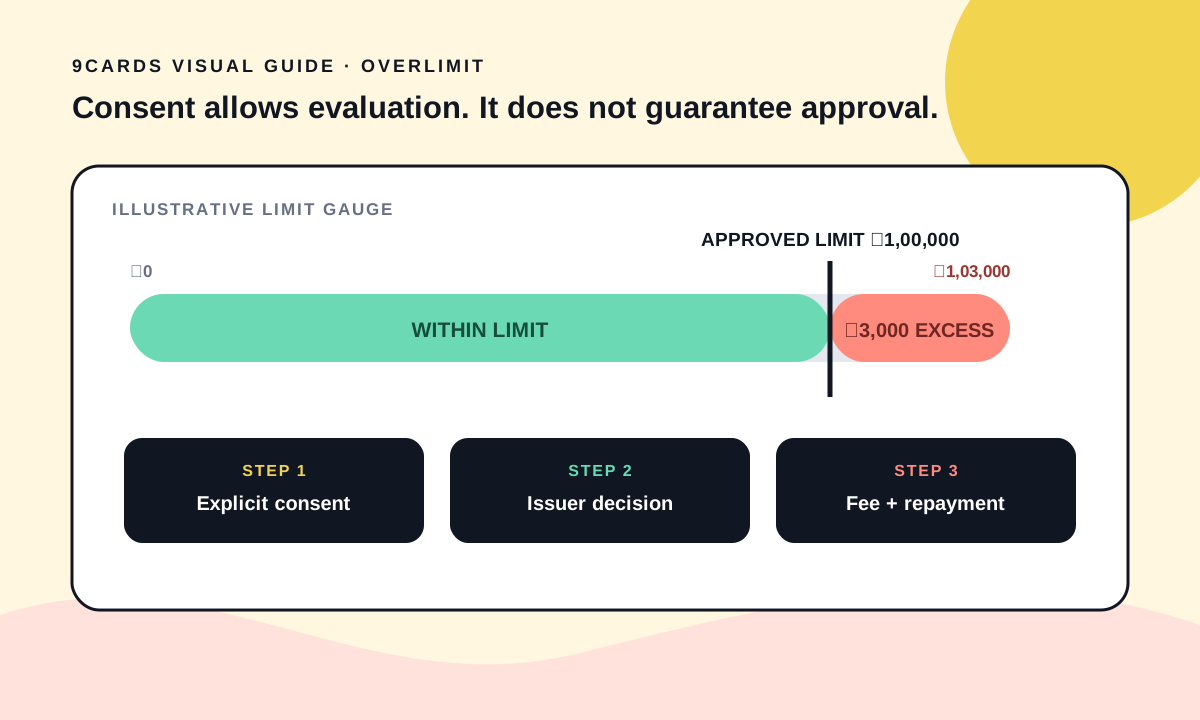
Suppose the card limit is ₹1,00,000 and the posted balance is ₹97,000. A new ₹6,000 purchase would take the account to ₹1,03,000. The overlimit amount is ₹3,000—the portion above the sanctioned limit—not the entire ₹6,000 purchase.
The issuer can decline the purchase even when overlimit is enabled. Approval may depend on account history, internal risk rules, merchant type, pending transactions and how far the account would exceed its limit.
| Term | Meaning |
|---|---|
| Credit limit | Approved maximum revolving limit |
| Available limit | Limit currently unused after posted and relevant pending amounts |
| Overlimit facility | Consent for the issuer to evaluate above-limit transactions |
| Overlimit amount | Outstanding balance above the approved limit |
| Temporary limit increase | A separate higher limit offered for a defined period |
A temporary limit increase changes the limit for its validity period. Overlimit use leaves the original limit unchanged. That difference matters for fee calculations and repayment.
RBI rule: explicit consent comes first
Under the RBI's current credit-card directions, card issuers must obtain explicit consent before providing the overlimit facility. Overlimit charges cannot be treated as an automatic default setting hidden in general terms.
Consent and transaction approval are separate:
- You enable the facility. This permits evaluation under the issuer's policy.
- The issuer evaluates a purchase. It may still approve or decline.
- The account crosses the limit. A disclosed fee may then apply.
- You must repay the excess. The excess can be included in the minimum amount due.
Use the issuer's app, authenticated website or recorded service channel so there is evidence of the setting. If you never opted in but an overlimit charge appears, ask the issuer for the consent record and fee calculation.
How an overlimit fee is calculated
There is no universal RBI-set percentage or rupee amount for all cards. Issuer terms may charge a percentage of the excess subject to a minimum fee, and applicable tax can be added.
Consider a purely illustrative card with a 2.5% overlimit fee subject to a ₹500 minimum:
| Calculation | Amount |
|---|---|
| Approved limit | ₹1,00,000 |
| Statement balance after transaction | ₹1,03,000 |
| Excess over the limit | ₹3,000 |
| 2.5% of excess | ₹75 |
| Minimum fee in this illustration | ₹500 |
| Fee before applicable tax | ₹500 |
A small ₹3,000 excess therefore creates a ₹500 fee in this example because the minimum dominates. This is why the percentage alone can be misleading.
The SBI Card MITC publishes its own current overlimit percentage, minimum charge, cycle treatment and consent mechanics. It also states that approval remains discretionary. Those values are a dated issuer example, not a recommendation or industry-wide price.
How a card can go overlimit without one large purchase
An account may cross the limit through several events:
- a transaction settles for more than its original authorisation;
- a foreign-currency transaction posts at a different rupee value;
- fees, finance charges or applicable tax are added;
- an EMI, annual fee or subscription posts while the balance is high;
- multiple pending transactions settle together;
- a temporary limit increase expires before the balance is reduced;
- a refund or payment is reversed.
The overlimit facility mainly controls whether above-limit transactions may be approved. It does not stop billed interest or other valid charges from moving the account balance. Keep a buffer instead of spending to the exact available limit.
What must you pay after crossing the limit?
Read the statement's minimum amount due formula. Many issuers include the entire overlimit amount, plus fees, finance charges, EMI and a portion of the remaining balance. Paying only the normal percentage of purchases may not satisfy the minimum.
If the account stands at ₹1,03,000 against a ₹1,00,000 limit, pay at least enough to bring it below the limit immediately, then clear the remaining statement amount according to your plan. Waiting can leave utilisation above 100% and allow finance charges to continue.
The credit-utilisation guide explains why high reported balances can affect credit health. There is no published fixed CIBIL-point penalty for one overlimit event, but the resulting balance and any missed payment are not harmless.
Overlimit fee versus late fee
These charges solve different problems.
| Fee | Trigger |
|---|---|
| Overlimit fee | Account exceeds the approved limit under eligible terms |
| Late-payment fee | Required payment remains past due beyond the regulatory threshold |
| Finance charge | Balance revolves or otherwise attracts interest under the card terms |
| Payment-dishonour fee | A payment attempt is returned or fails under the issuer's terms |
One statement can contain more than one. An overlimit fee does not buy extra time to pay, and a timely minimum payment does not necessarily reverse the overlimit fee already triggered.
Should you enable the overlimit facility?
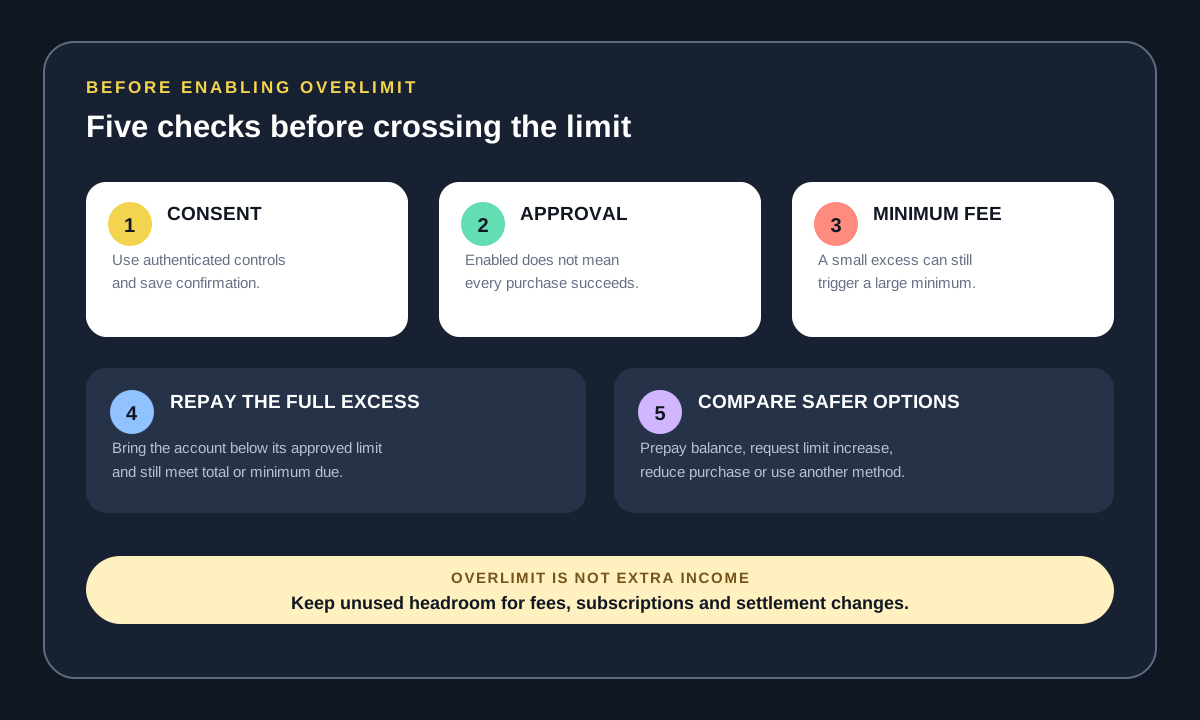
Consider enabling it only for a specific operational reason, such as reducing the chance that an essential travel transaction is declined. Even then, know the fee and keep account alerts active.
For planned spending, compare these alternatives:
- pay part of the balance before the purchase;
- request a permanent credit-limit increase if income supports it;
- accept a clearly dated temporary increase and plan for its expiry;
- use another payment method;
- reduce the transaction amount.
Our credit-limit increase guide explains permanent and temporary offers. Neither route should be used to turn affordability into available credit.
How to dispute an overlimit charge
Download the statement and reconstruct the balance in date order. Record the approved limit, each posting, the point at which the account crossed it, the fee and any payment or refund. Then ask the issuer for:
- the explicit-consent record;
- the transaction or posting that caused the breach;
- the applicable MITC clause;
- the fee calculation and tax;
- whether the breach was caused only by issuer-posted charges.
If the fee conflicts with your consent status or disclosed terms, raise a written complaint. Escalate through the issuer's grievance process if the first response does not address the calculation.
How to disable overlimit use
Use the authenticated control in the issuer app or website, or call the official helpline. Save confirmation and check whether the setting applies per card or across all cards under one account. Disabling future use does not usually erase a fee already validly triggered.
Set transaction and available-limit alerts. A buffer of unused limit can protect against settlement differences, subscriptions and fees more reliably than a last-minute toggle.
Frequently asked questions
Can a transaction above my limit succeed without overlimit consent?
The RBI framework requires explicit consent for the overlimit facility and associated charges. If an above-limit transaction and fee appear without consent, request the issuer's evidence and explanation.
Does enabling overlimit guarantee approval?
No. It permits evaluation. Internal risk rules and the size or type of transaction can still produce a decline.
Is the fee charged on the whole outstanding?
Check the MITC. A common structure uses the excess over the limit, subject to a minimum, but wording and amounts vary by issuer.
Will a merchant refund reverse the fee?
Not necessarily. Some issuer terms state that a later refund or transaction cancellation does not reverse an already triggered overlimit fee. Check the dated terms and dispute only if the charge was applied incorrectly.
Does overlimit affect rewards?
Purchase-reward rules and overlimit charges are separate. A transaction may earn rewards while still triggering a fee, making the net result negative.
The practical answer
Overlimit is an emergency approval setting, not extra free credit. Keep it off unless you have a defined reason, verify explicit consent, understand the minimum fee and repay the excess immediately. For planned spending, create headroom before the transaction rather than paying to cross your own limit.
Regulatory and issuer materials checked on 31 July 2026. Approval policies, fee amounts, tax and app controls can change.