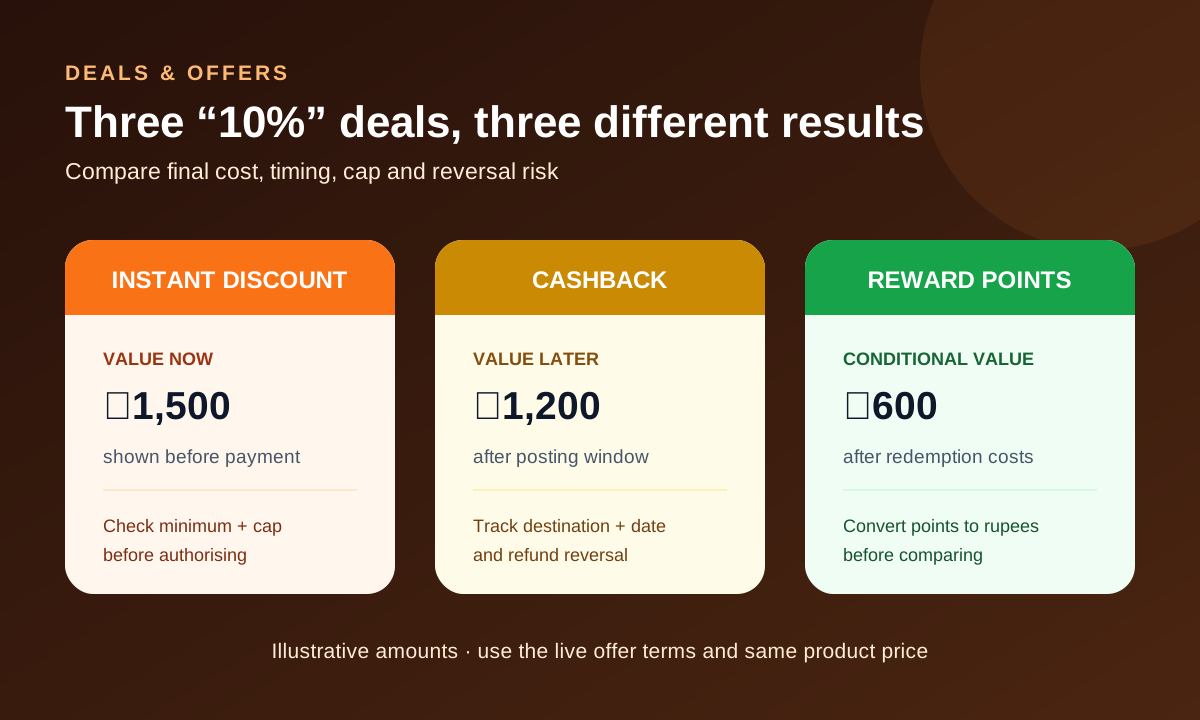
A 10% instant discount, 10% cashback and “10× reward points” are not equivalent offers. One may reduce the amount at checkout, another may arrive weeks later with a cap, and the third may produce points whose value depends on redemption. Each can also have a different minimum spend, merchant list, card variant and refund rule.
To compare them, calculate the net value you expect to keep, then compare the final cost of the same product under the same delivery, warranty and cancellation terms.
First identify the benefit type
| Benefit | When value usually appears | Main uncertainty |
|---|---|---|
| Instant discount | At eligible checkout/payment | Card, product, minimum spend and cap eligibility |
| Cashback | After purchase, statement or campaign period | Tracking, posting delay, cap and reversal |
| Reward points | After transaction posts or reward cycle | Earn rate, exclusions, point value and redemption cost |
| Voucher/coupon | At checkout or later | Eligible items, expiry and stacking |
| No-cost EMI subsidy | Through upfront discount/interest adjustment | Processing fee, GST on interest and lost rewards |
“Usually” is important. The offer terms decide the actual mechanism. Read the bank and merchant pages before paying.
An official HDFC Bank SmartBuy offer-detail page illustrates why an offer must be evaluated from its dated detail page: issuer-hosted promotions specify a validity window, eligible route and conditions beyond the headline. That particular offer is not a universal template and may no longer be active when you read this.
Calculate an instant discount
Suppose an item costs ₹24,000 and an offer provides 10% instant discount capped at ₹1,500 on a minimum purchase of ₹10,000.
The percentage suggests ₹2,400, but the cap limits the benefit to ₹1,500. The checkout should show ₹22,500 before you authorise payment.
instant discount = lower of (eligible price × rate) or cap
Check whether the rate applies to the entire cart, only selected products, or the net amount after coupons. If the payment page does not display the expected discount, stop and verify rather than assuming it will become cashback later.
Calculate cashback after timing and caps
For cashback, record where it will appear—card account, bank account, merchant wallet or voucher—and the promised posting window.
| Input | Example |
|---|---|
| Eligible price | ₹24,000 |
| Cashback rate | 10% |
| Maximum cashback | ₹1,500 |
| Expected gross benefit | ₹1,500 |
| Merchant price premium versus alternative | ₹400 |
| Extra delivery/processing fee | ₹100 |
| Net economic benefit | ₹1,000 |
The ₹1,500 cashback is still the promotional benefit, but the offer route saves only ₹1,000 compared with the credible alternative. The comparison must include the purchase price, not just the reward.
Use our cashback-cap explainer to identify the spend at which the cap stops the advertised rate.
Convert points before comparing
“10×” describes an earning multiplier, not a percentage return. You need:
- the base earning unit, such as points per ₹100;
- whether 10× means ten times total or base plus bonus;
- the eligible amount after exclusions;
- the campaign point cap;
- the usable net value per point;
- whether bonus points arrive later and can be reversed.
If a ₹24,000 purchase earns 2,400 points and your realistic redemption yields ₹0.25 per point after fees, the benefit is ₹600, or 2.5%—not 10%.
The reward redemption-value guide explains how to compare vouchers, statement credit, merchandise and travel routes.
Use one comparison sheet
Compare the same item and payment date:
| Measure | Instant discount | Cashback | Points |
|---|---|---|---|
| Price on eligible route | ₹24,000 | ₹23,600 | ₹23,500 |
| Benefit kept | ₹1,500 | ₹1,200 | ₹600 |
| Extra fees/price difference | ₹0 | ₹100 | ₹0 |
| Time until usable | Checkout | Up to 90 days | After posting + redemption |
| Reversal risk after refund | Yes | Yes | Yes |
| Effective final cost | ₹22,500 | ₹22,500 | ₹22,900 |
These are illustrative figures. The result can reverse if one route has a better base price, no cap or a redemption you value more highly.
Check eligibility before checkout
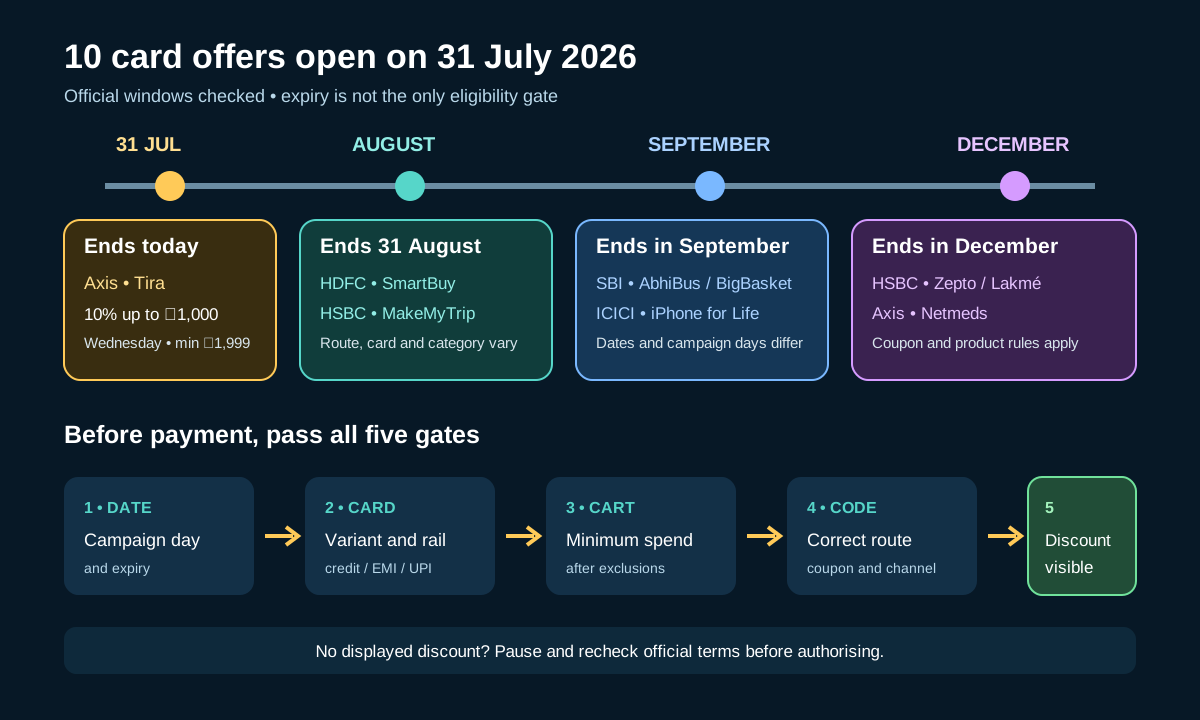
Offer failures commonly come from a detail the headline omits:
- wrong issuer, network or card variant;
- commercial, corporate, debit or EMI cards excluded;
- minimum cart value calculated after coupon;
- offer cap already used per card, account, customer or month;
- product, seller or merchant category excluded;
- payment made through an ineligible wallet or gateway;
- add-on card sharing the primary card’s cap;
- transaction outside the time window;
- cancelled or partially refunded order;
- merchant descriptor or MCC not eligible.
If merchant classification controls eligibility, the MCC explainer shows why a merchant’s public business label may not determine card processing.
Do not ignore EMI costs
A “no-cost EMI” offer may use an upfront discount to offset interest charged by the issuer. GST on interest, processing fees or foreclosure charges may still apply. Rewards may also be excluded or reversed after conversion.
Compare total scheduled payments plus fees and taxes with the non-EMI checkout price. Do not choose EMI merely to unlock a discount if it increases total cost or creates repayment risk.
Preserve proof without exposing card data
Before payment, save:
- dated offer page and detailed terms;
- product, seller and cart value;
- discount displayed at checkout;
- payment method selected;
- order and transaction references;
- expected cashback/points posting date.
After payment, retain the invoice and card statement entry. Redact complete card numbers, addresses and transaction authentication data before sharing evidence.
If the benefit does not arrive, first wait until the stated posting window ends. Then complain with the offer name, date, eligibility calculation and requested outcome. “I saw 10%” is weaker than “the dated terms promised cashback by 30 June, the eligible transaction posted on 2 April, and no credit appears.”
Refunds and partial cancellations
A full refund normally removes the economic basis for the offer. A partial cancellation may reduce the transaction below minimum spend, recalculate the cap or reverse proportionate/all benefit under the campaign terms. The purchase refund and benefit reversal can post separately.
Do not spend cashback or transferred points assuming they are permanent while a return is unresolved. If a refund is close to the statement due date, follow the refund-after-bill checklist rather than reducing payment based only on a merchant promise.
Frequently asked questions
Is an instant discount always better than cashback?
It is more immediate, but not always larger. Compare the final price, cap and eligibility across routes.
Is cashback guaranteed once payment succeeds?
No. The transaction must meet the terms and survive cancellation/refund. Preserve proof and the promised posting window.
Does 10× points mean 10% back?
No. Convert the earning rule into points, then multiply by the net value per point.
Can I combine a merchant coupon with a bank offer?
Only if the terms permit stacking and the cart still meets the bank offer’s calculation rule.
Why did the offer disappear at checkout?
The card, product, seller, payment route, timing, cap or minimum value may be ineligible. Do not complete payment unless you accept the displayed final price.
Should I buy something only because an offer expires today?
No. A discount on an unplanned purchase is still spending, not savings.
The practical answer
Verify the base price, minimum spend, cap, card eligibility, payment route, posting timeline and refund rule. Convert points into a conservative rupee value and subtract extra fees or route-specific price premiums.
The best deal is the lowest defensible final cost for something you had already decided to buy—not the largest number in the banner.
Issuer offer material checked on 31 July 2026. Source material was paraphrased; promotions can expire, change or be withdrawn under their terms.