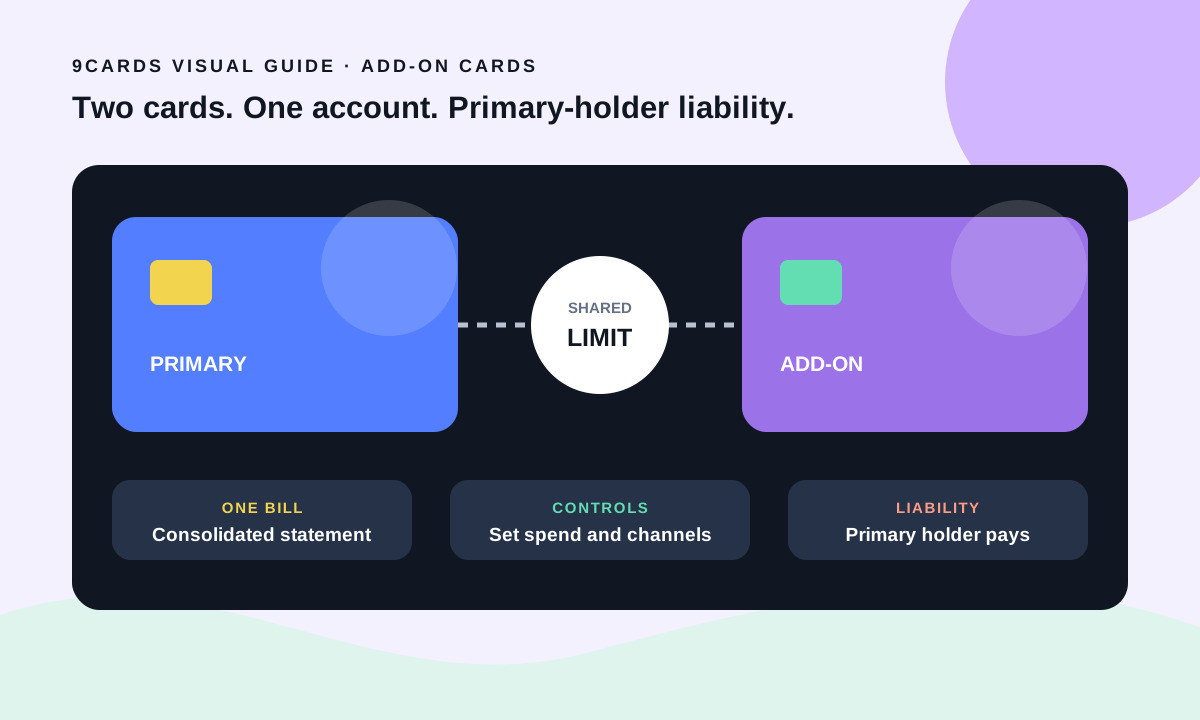
An add-on credit card—also called a supplementary card—lets another eligible person spend through the primary cardholder's credit-card account. It usually has a separate card number and user name, but shares the account's credit limit and produces one consolidated bill. The primary cardholder remains responsible for payment.
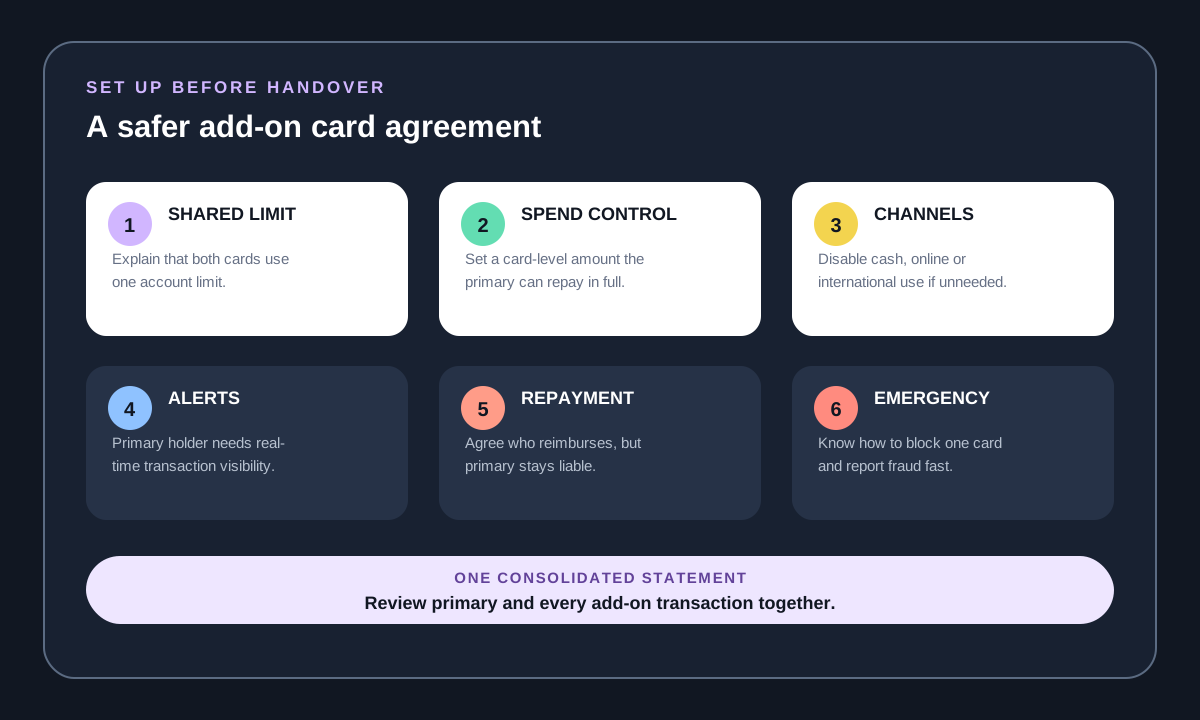
It is therefore a spending-access tool, not a second independent credit line. Before handing it over, set a practical spend limit, switch off transaction types the user does not need and agree how alerts and repayments will be handled.
How an add-on credit card works
The primary holder applies for a card for an eligible family member or other person allowed under the issuer's policy. The issuer completes the required identification and KYC process, creates the supplementary card and links its transactions to the main account.
| Feature | Primary card | Add-on card |
|---|---|---|
| Credit facility | Main account | Uses linked primary account |
| Card number | Separate | Usually separate |
| Credit limit | Approved account limit | Shares account limit, often with a controllable sub-limit |
| Monthly statement | Main or consolidated bill | Transactions appear in consolidated bill |
| Payment responsibility | Primary holder | Primary holder remains liable to issuer |
| Controls | Full account controls | Transaction controls depend on issuer tools |
The RBI's current credit-card directions place complete liability for add-on-card transactions on the principal cardholder. An informal arrangement with the family member does not transfer that contractual responsibility to the issuer.
Does an add-on card have a separate credit limit?
Usually it spends from the same account limit. Some issuers allow the primary holder to assign a smaller spending control to each add-on card, but that is not new credit. If the main limit is ₹2,00,000 and an add-on control is ₹30,000, the household still has one ₹2,00,000 facility.
Example:
| Activity | Shared available limit |
|---|---|
| Starting account limit | ₹2,00,000 |
| Primary holder spends ₹40,000 | ₹1,60,000 |
| Add-on holder spends ₹20,000 | ₹1,40,000 |
| Primary pays ₹25,000 after posting | About ₹1,65,000, subject to other entries |
A sub-limit can restrict that card's use while the account's true available limit also changes with primary-card spending, fees, EMI, pending transactions and payments.
The SBI Card add-on FAQ, for example, describes a shared limit, consolidated statement and add-on spend controls. Its eligible relationships, minimum age, card count and fee are issuer-specific and can change.
Who pays the add-on credit card bill?
The primary cardholder pays the issuer for all valid transactions on the account, including those made by add-on users. A supplementary user can reimburse the primary holder privately, but failure to do so does not excuse the bill.
This means the primary holder should receive every transaction alert and review the statement. If an add-on user makes an unaffordable purchase, the account can still incur finance charges, late fees or high utilisation in the primary holder's name.
Use the billing-cycle guide to explain the due date to every user. “It was not my purchase” is not a defence when the transaction was authorised by a cardholder you chose to add.
Does an add-on card build a CIBIL score?
Do not assume it creates an independent credit history for the supplementary user. The credit facility and repayment obligation usually belong to the primary account, and reporting practices must be confirmed with the issuer. The primary holder's credit profile can be affected by the shared balance and payment performance.
If the goal is to establish independent credit history, ask whether the person needs a card or secured product in their own name rather than relying on supplementary status. There is no RBI or CIBIL rule promising a fixed score benefit from being an add-on user.
The balance can still raise the primary account's utilisation. Our credit-utilisation guide shows how to calculate the combined effect.
Do add-on cards earn rewards and benefits?
Add-on purchases often feed the primary account's reward balance, but eligibility varies by product and merchant category. A separate card number does not guarantee a second set of annual milestones, lounge visits, welcome benefits or fee waivers.
Check four different rules:
- whether add-on retail transactions earn normal rewards;
- whether spending counts toward the primary card's milestones;
- whether the supplementary user receives independent lounge or insurance access;
- whether excluded categories remain excluded.
For lounge access, read whether visits are counted per account, per card or per user. Our lounge spend-gate guide explains why access rules need both eligibility and usage limits.
Essential controls before giving someone an add-on card
Assign a realistic spend limit
Set the issuer's add-on sub-limit if available. Choose an amount the primary holder could repay in full even if reimbursement is delayed.
Disable unused channels
Turn off international, online, contactless or ATM transactions when they are unnecessary. A cash advance can start interest immediately, as explained in our cash-withdrawal guide.
Keep alerts with the primary holder
The supplementary user can also track spending, but the person legally responsible needs real-time visibility. Investigate unfamiliar merchant names immediately.
Agree on return and subscription rules
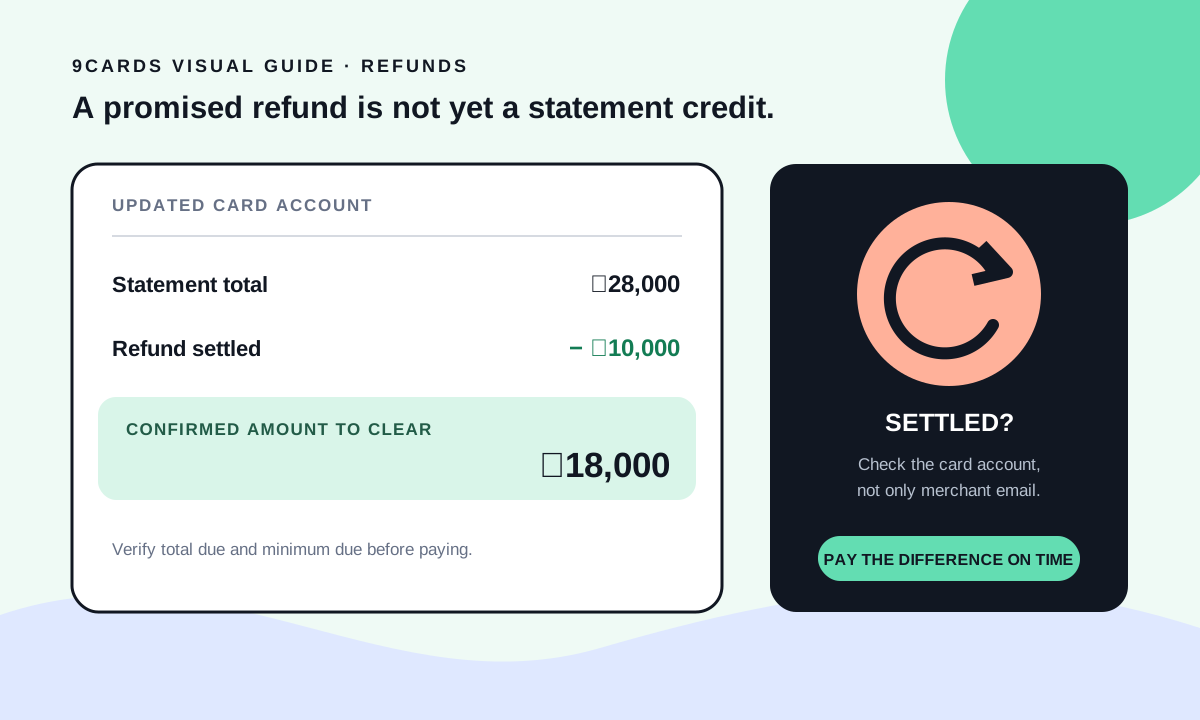
A returned purchase can generate a refund later, and a subscription can continue after the physical card changes. Decide who tracks these entries. Our refund-after-bill guide explains why a merchant message is not yet a statement credit.
Protect credentials separately
Each user should keep their own PIN, OTP and card details private. The primary holder should not ask the add-on user to share OTPs casually, and neither user should approve remote-screen access.
What happens if an add-on card is lost or misused?
Block the specific add-on card immediately through the issuer's official channel and report every unauthorized transaction. Ask whether the primary card can remain active and whether recurring tokens on the lost card need replacement.
RBI's unauthorized-transaction liability framework still depends on cause and reporting speed. Follow the immediate sequence in our unauthorized-card-transaction guide. Because the account is shared, review primary and all supplementary transactions for related fraud.
How to cancel an add-on card
Use the issuer's authenticated app, website or helpline and state that you want to cancel the named supplementary card. Save confirmation and monitor the next statement. Cancelling one add-on card is different from closing the whole credit-card account.
Before cancellation:
- move subscriptions charged to that card;
- wait for returns or document expected refunds;
- redeem no rewards solely to “empty” an add-on balance unless terms require it;
- identify disputed transactions;
- destroy the card after confirmation.
If the primary account itself is being closed, follow the fuller credit-card closure checklist.
Add-on card versus giving someone your primary card
Never lend the primary physical card or share its PIN and OTP. A properly issued supplementary card identifies the actual user, creates separable card credentials and can support card-level controls. It also gives the issuer a legitimate KYC trail.
| Option | Identification | Controls | Risk |
|---|---|---|---|
| Add-on card | Named supplementary user | Possible card-level limits and channel toggles | Primary remains liable but activity is separable |
| Sharing primary card | Transaction appears under primary credentials | Harder to separate use | Can breach safeguards and complicate disputes |
| Independent card | User has own account and limit | User controls own facility | Requires independent eligibility and repayment |
Frequently asked questions
Is an add-on credit card free?
Some issuers charge no fee; others may have an issuance or annual fee depending on card type. Check the current MITC rather than assuming “free for life.”
Can an add-on holder see the whole statement?
Access varies. The primary holder receives the consolidated account statement, while app access for supplementary users can be limited. Agree on transparent expense sharing without exposing unnecessary credentials.
Can an add-on card have a different billing date?
It normally follows the primary account's statement cycle because there is one bill. Confirm with the issuer.
Can the add-on holder convert purchases to EMI?
Product rules differ. The SBI Card Flexipay FAQ, for example, says its facility can be booked only on a primary card. Treat that as one issuer's rule.
Does the primary holder earn all rewards?
Often rewards pool into the primary account, but category exclusions, caps and benefits can differ. Verify the programme terms for supplementary spending.
The practical answer
An add-on card can simplify controlled family spending, but it gives access to the primary holder's credit. Share only a limit you can repay, keep alerts and transaction controls active, and review one consolidated bill. The card is supplementary; the liability is not.
Regulatory and issuer materials checked on 31 July 2026. Eligibility, fees, controls, benefits and credit-reporting practices can change.